Alpha — Review
Source: Neon
After winning the Palme d’Or at the Cannes Film Festival in 2021 with her sophomore feature Titane, it was no surprise that Julia Ducournau’s follow-up film, Alpha, would be one of the most anticipated films at the festival in 2025. What was surprising, however, was that the film was met with a wave of lackluster reviews upon its premiere. Was it possible that the daring auteur behind Titane and 2016’s Raw had directed her first misfire? While I agree with the criticism that this is perhaps her weakest film to date, I’m inclined to disagree with the notion that it is a bad film by any means.
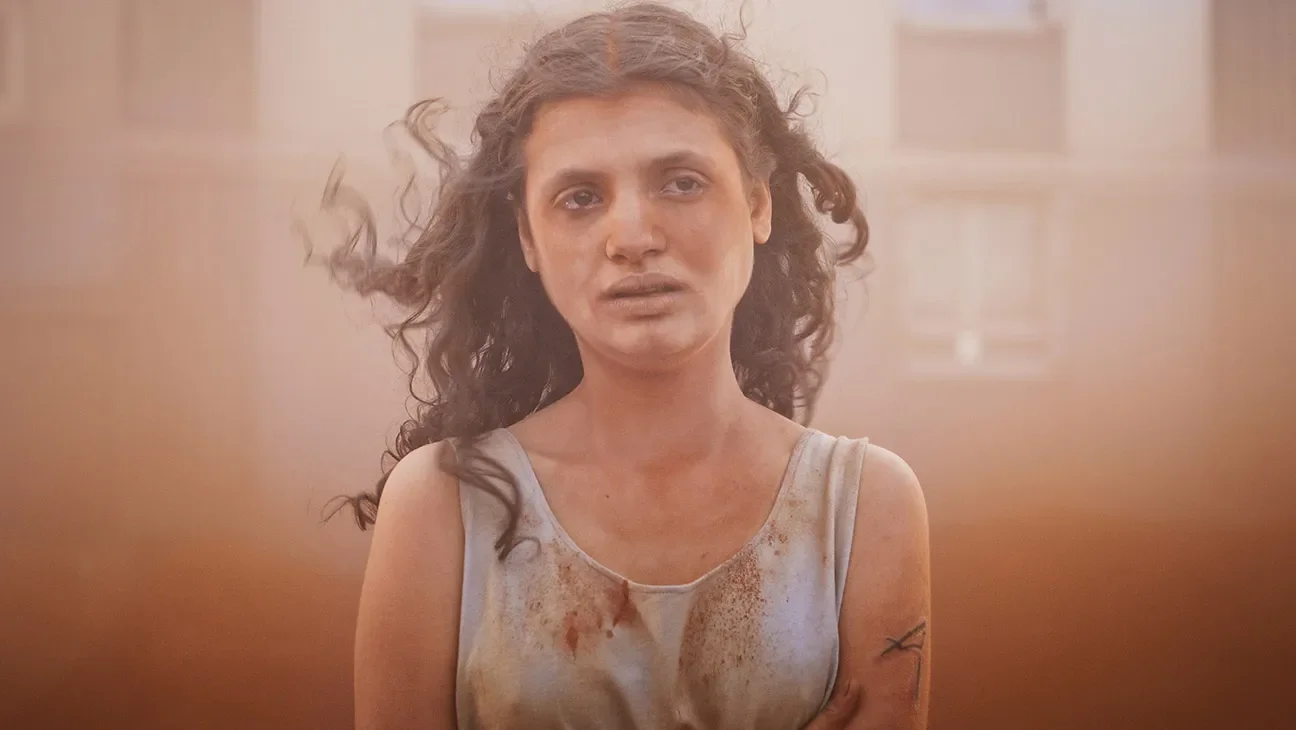
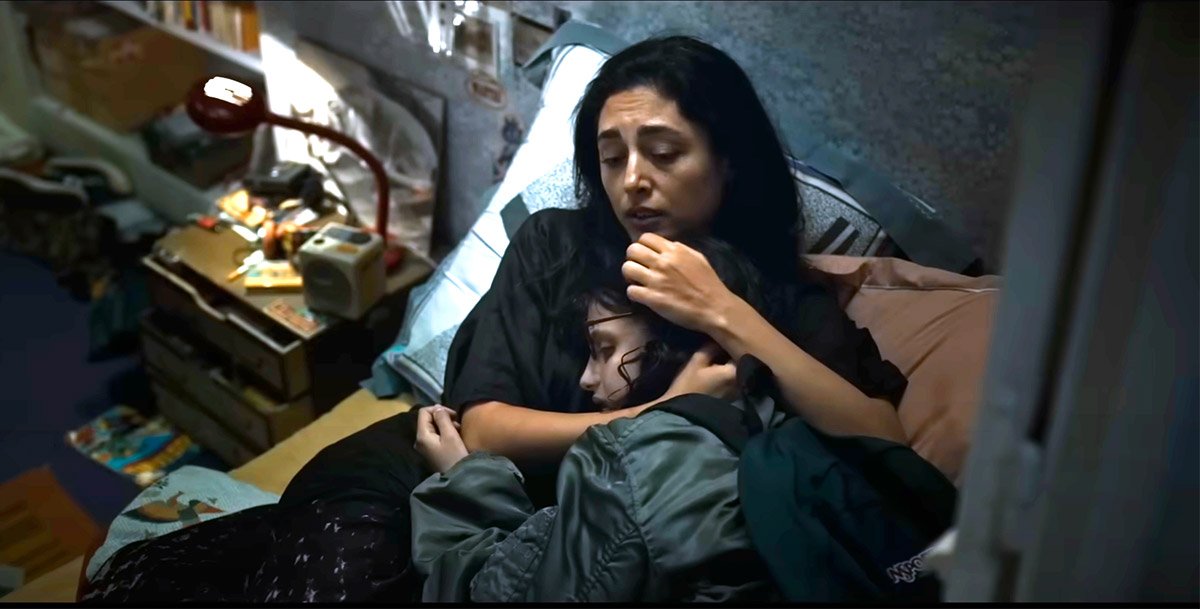
The film follows a rebellious 14-year-old girl, Alpha (Mélissa Boros), who lives with her single mother (Golshifteh Farahani). Her mother is a doctor during a time when a highly contagious, blood-borne disease is spreading, one that gradually turns her patients into marble. This fictional disease is likely the impetus for much of the criticism the film received. It feels like a blatant AIDS allegory, whether that was Ducournau’s intention or not. For a filmmaker who made a name for herself with boundary-pushing stories, this one feels oddly safe. It also feels derivative of other films about AIDS, or even films about disease in general, such as David Cronenberg’s The Fly (1986), another body horror film that was widely interpreted as a metaphor for AIDS regardless of intent.

Source: Neon
While at a party with her friend Adrien (Louai El Amrousy), Alpha receives a stick-and-poke tattoo of the letter A, because both their names start with the letter. However, it’s easy to interpret this as a nod to Nathaniel Hawthorne’s novel The Scarlet Letter, a choice that does little to dispel the sense of derivativeness. When Alpha’s tattoo becomes infected, her mother fears that she may have contracted the disease.
The performances are one of the film’s greatest strengths, giving emotional weight to its abstract concepts. Mélissa Boros captures the curiosity and anxiety of a young girl coming of age in a world full of fear and uncertainty, while Golshifteh Farahani conveys a mother’s mounting dread and exhaustion. Tahar Rahim’s portrayal of Amin is especially affecting, depicting both the vulnerability and volatility of someone battling addiction. Together, their performances ensure that even when the narrative feels disjointed, the film remains emotionally compelling.
The fictitious disease is merely one element of the story, and Alpha is at its strongest in its examination of grief and addiction. When I think back on this film years from now, the scene that will likely linger most in my memory is the opening, in which a five-year-old Alpha (Ambrine Trigo Ouaked) is with her heroin-addicted uncle Amin (Tahar Rahim). There is something haunting about watching this young child draw on her uncle’s arm, connecting his track marks like constellations. That juxtaposition of childhood innocence and adult addiction resonates with me on a personal level, as one of my earliest memories is of running around the living room with my brother on a bright, sunny afternoon while our junkie father was passed out on the couch. The fact that Ducournau chose to open the film with a scene like this made me latch onto the addiction aspect of the story more than the disease angle.
Source: Neon
When Amin moves into his sister’s home as he attempts to overcome his addiction, he reconnects with his niece in the process. The film shifts between the present day and past memories with Amin, which makes the narrative feel muddled and, at times, a bit difficult to follow. Yet, this murky storytelling structure mirrors what it is like to reflect on old memories and to have a loved one in the throes of addiction. Memory is not linear, and neither is addiction. Addiction is an unpredictable, vicious cycle of withdrawal, recovery, and relapse; it is a lifelong battle. One day, a person can be two years sober, and the next time you see them, they are five days sober. So, as difficult as it may be for the audience to keep up with the story and comprehend the timeline of events, it feels fitting. The audience may find themselves asking, “Is this scene happening in the present or the past?” in the same way a family member might wonder, “Are they using again?”
Likewise, it is fitting that Amin reenters their lives at the same time that Alpha’s mother begins to suspect her daughter has contracted the disease. The way the film fluctuates between Amin’s story and Alpha’s feels indicative of her mother’s consternation, of the fear that her daughter is starting to remind her of her brother. Alpha’s mother has already endured so much, having witnessed her brother overdose more than once and struggle constantly to stay sober. The thought of her daughter going down the same path is harrowing. The film’s most powerful moment comes when the past and present scenes converge. However, the messy storytelling leading up to that moment diminishes its impact.

Source: Neon
Nonetheless, there’s something poetic about the concept of an illness that transforms the dead into marble. The choice to have them turn into an immutable substance feels like a reflection of the way, when you’re caring for someone whose health is declining, you don’t see them as this sick person whose body is deteriorating, you still see them as this person you love, as the most beautiful version of themselves. They become immortalized in your memory like a marble statue. And the way their blood turns into a powder that floods the streets like sand feels like a reminder of the fact that grief is a weight that never fully dissipates. At most, we can accept it and stop allowing it to weigh us down, but it will forever remain a part of us.
Alpha may not fully live up to the expectations set by Ducournau’s previous work, and its uneven storytelling and reliance on familiar ideas can at times obscure the power of its imagery. Yet beneath its flaws, it is a haunting portrait of grief, addiction, and the complicated love we hold for those we cannot save. It may not reach the daring heights of Titane or Raw, but its poetic visuals serve as a poignant reminder that the people we love never leave us entirely, and even as they change, suffer, or fade, they remain fixed in our memory like marble.
Alpha hits theaters on March 27, 2026.