Her Private Hell — Review
Source: Neon
It has been a decade since Nicolas Winding Refn’s The Neon Demon hit theaters. In the time since then, Refn’s heart stopped, and he was considered clinically dead for 25 minutes in 2023. After his near-death experience, he decided to start making movies again, which was the impetus for his new film Her Private Hell.
Even more fascinating is that Hideo Kojima used Refn’s likeness for the character Heartman in his 2019 video game, Death Stranding. Heartman suffers from a condition that makes his heart stop every 21 minutes. It may not be the exact same scenario, but it is such a peculiar coincidence that it feels eerily prophetic. It calls to mind a line from Oscar Wilde’s 1889 essay, The Decay of Lying: “Life imitates art far more than art imitates life.” With Her Private Hell, however, the relationship between art and life feels truly symbiotic, as Refn draws from his own brush with death and the concept of fatherhood.
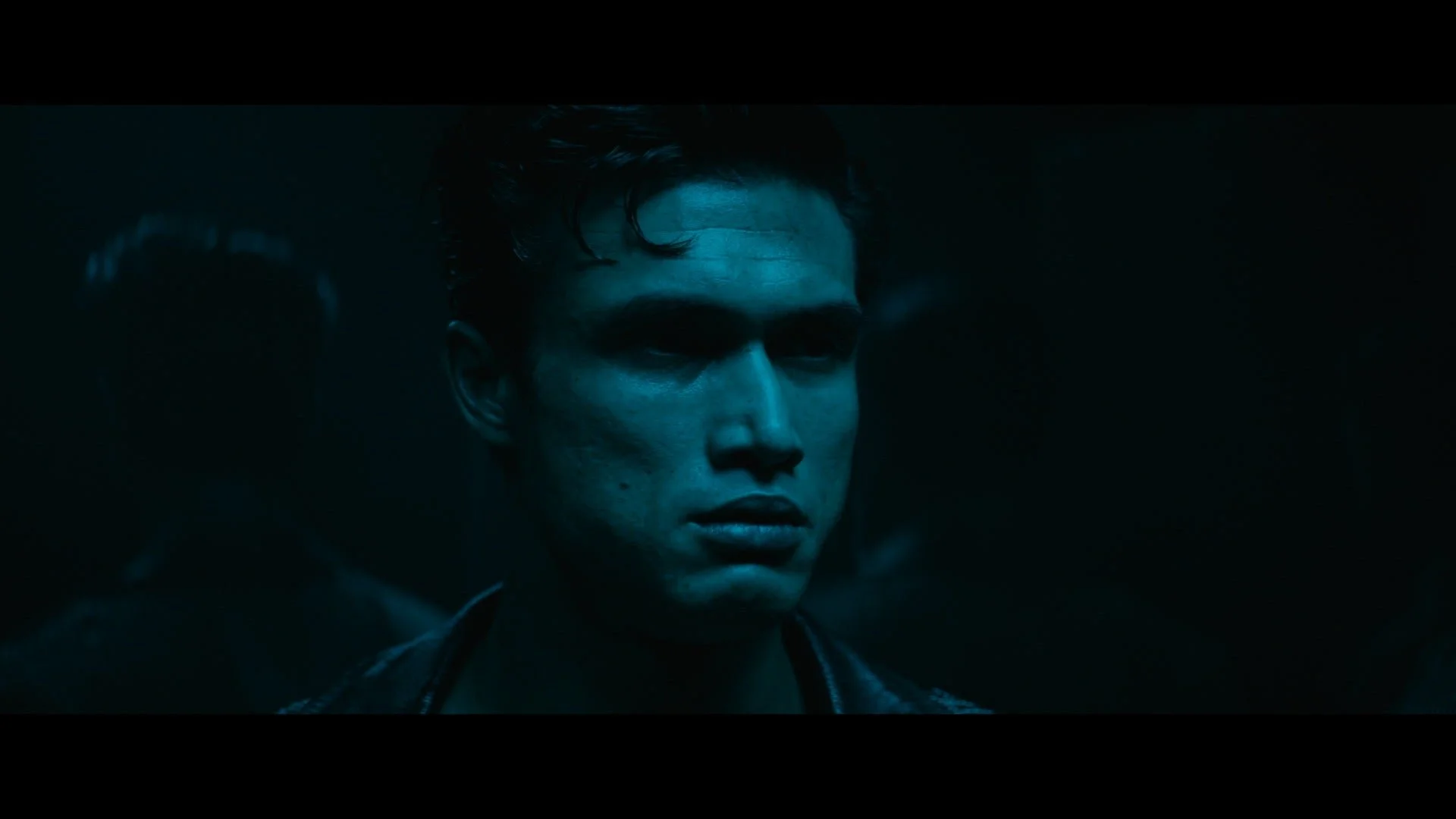
In Death Stranding, Heartman obsessively searches the Beach—a liminal space between the land of the living and the land of the dead—for his wife and daughter. This parallel feels particularly prescient. In an interview with Marya E. Gates, Refn revealed that the character of Private K (Charles Melton) in Her Private Hell is essentially an extension of himself. He clarifies that when he knew he was going to die, he made peace with his wife because they had been together for 30 years. His eldest daughter was old enough to exist without him, but his youngest wasn’t. “I had to come back for her. So, like Orpheus, if I could go to Hell, I would bring her back. That was my gasoline to stay alive, to come back.”
Source: Neon
The relationship between father and daughter is the beating heart of Her Private Hell. In many ways, it serves as a mirrored companion to Refn’s Only God Forgives (2013), which focused on the relationship between mother and son. In Her Private Hell, a serial killer known as the Leatherman targets young women, including Private K’s daughter. Thus, Private K embarks on a personal odyssey through Hell to be reunited with his daughter.
Her Private Hell is perhaps Refn’s most abstract film to date. There is little exposition, and the film exists somewhere beyond traditional narrative. In fact, Refn essentially abandons the concept of narrative filmmaking entirely. The screenplay, which he penned with Esti Giordani, possesses the bare bones of a story, but the film keeps viewers at a distance, offering little explanation or cohesion. The dialogue feels more poetic than realistic and rarely lets the audience in on what is happening in this world.
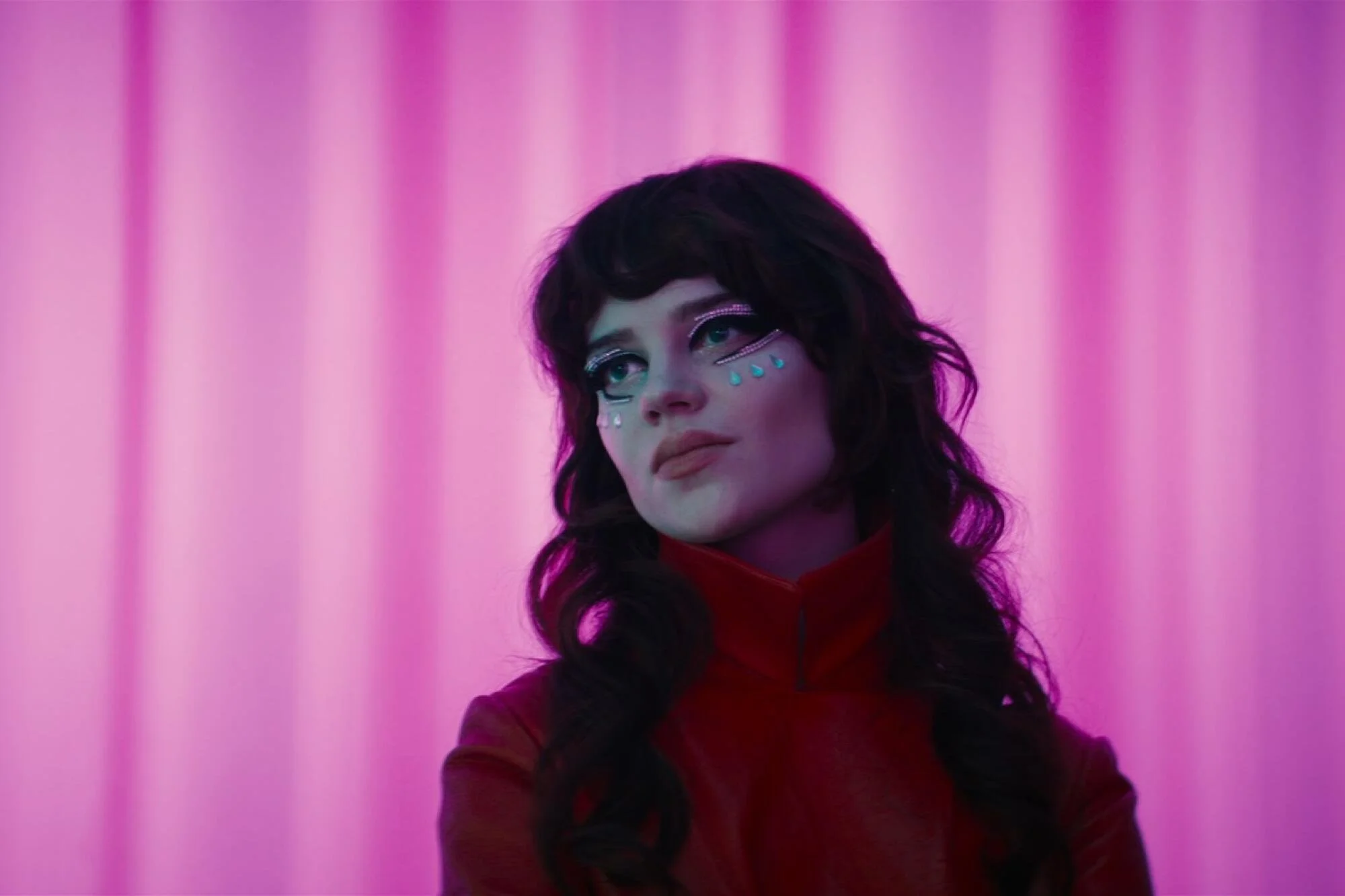
Viewers can best understand the film by dissecting its title. Each of the three words points to a different element of the story. “Her” refers to the protagonist, Elle (Sophie Thatcher), a young actress whose filmmaker father, Johnny Thunders (Dougray Scott), marries her former lover, Dominique (Havana Rose Liu). “Private” stands for the character of Private K, the alter ego Elle creates—the ideal father she wished she had, one willing to go to Hell for his daughter, unlike her own father, who keeps abandoning her. Lastly, “Hell” is embodied by the Leatherman himself. The three characters form a triangle, with each of their stories interconnected.
Source: Neon
The film was shot chronologically, and Refn created a collaborative environment in which new ideas could emerge throughout the production process. It almost feels like something David Lynch would do: allowing a dream he had the night before to dictate what they would shoot the next day, and letting the story change direction and unfold naturally. This means viewers hoping for an easy-to-follow narrative will likely be turned off by Her Private Hell’s freewheeling, fever-dream approach. The film also feels like an endurance test due to its deliberate pacing. Shots linger for much longer than moviegoers would anticipate. It is as though Refn is inviting the audience to either sit back and enjoy the aesthetics or grow impatient and walk out.
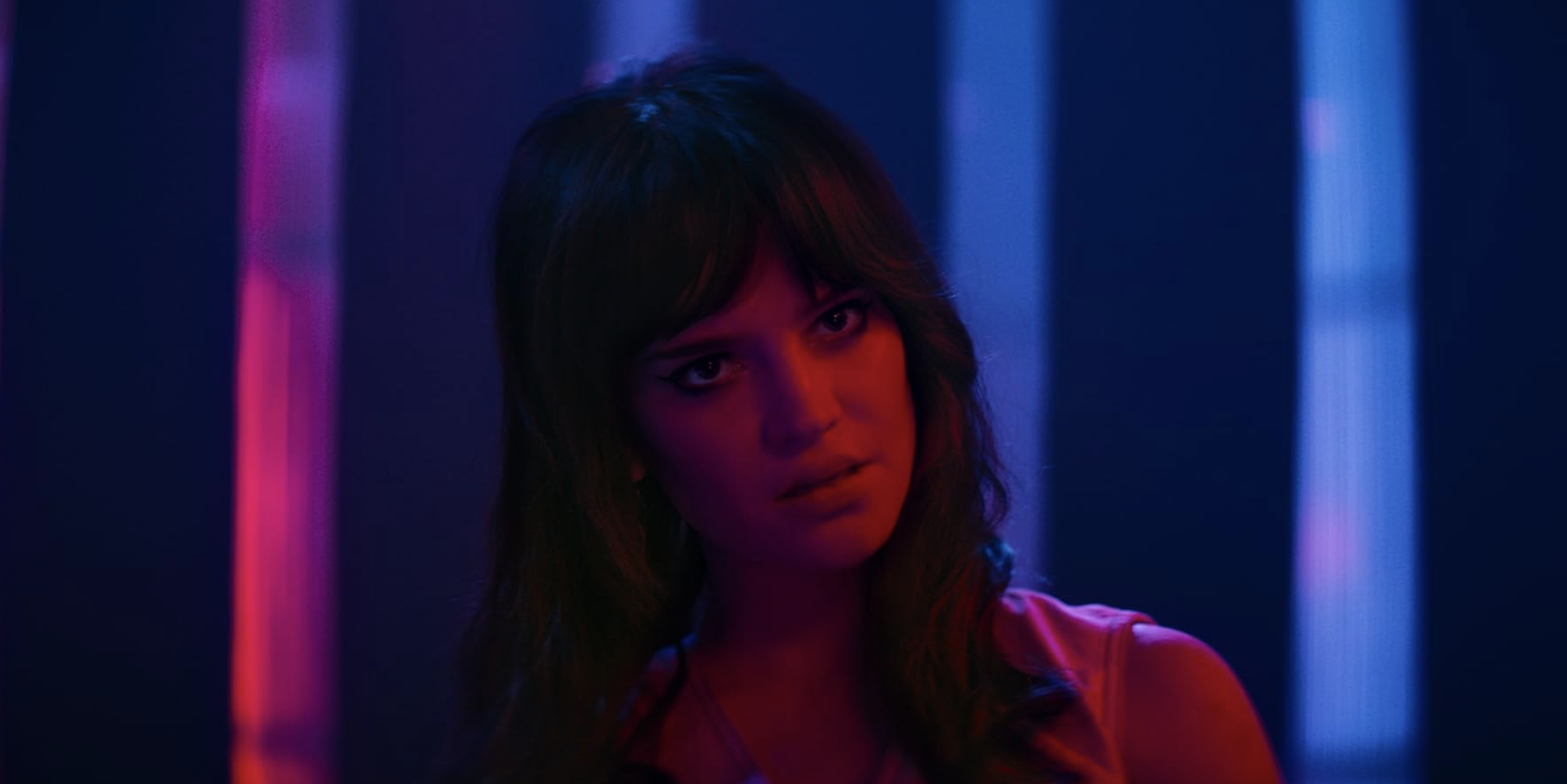
Sophie Thatcher and Charles Melton feel like they were born to be in a Refn film. They have such angular features and chiseled cheekbones that are beautifully complemented by Refn’s masterful use of light and shadow. Refn and cinematographer Magnus Nordenhof Jønck often keep the camera still for prolonged close-ups, allowing the neon lights to dance across the actors’ faces, casting a wide array of shadows and reflecting the characters’ constantly shifting emotional states.

Source: Neon
The film’s greatest strength is Pino Donaggio’s score. Donaggio is a fitting choice, as he previously collaborated with Brian De Palma and Dario Argento—two filmmakers whose work feels as though it inspired a film like Her Private Hell. In fact, Her Private Hell might actually be the closest anyone has come to truly creating a giallo film in the 21st century. While other films may have drawn inspiration from giallo, and critics may have tossed around the label, Her Private Hell actually embodies the spirit and style of the genre.
Donaggio’s score is operatic. In an interview with Courtney Howard, Refn explains meeting with Donaggio for the first time and telling him, “Listen, I want you to write an opera. But write it like a requiem because most likely you’re gonna die soon.” This morbid request perfectly encapsulates how the proximity of death has shaped Refn’s approach to art. The score feels like a reflection of his own encounter with mortality. The gorgeous, orchestral music almost feels like something out of a Douglas Sirk film, evoking a heightened sense of emotion. The score also serves as the throughline, tying the entire film together. Even viewers who are bewildered by the film’s lack of narrative can enjoy the beautiful score and striking cinematography.
Source: Neon
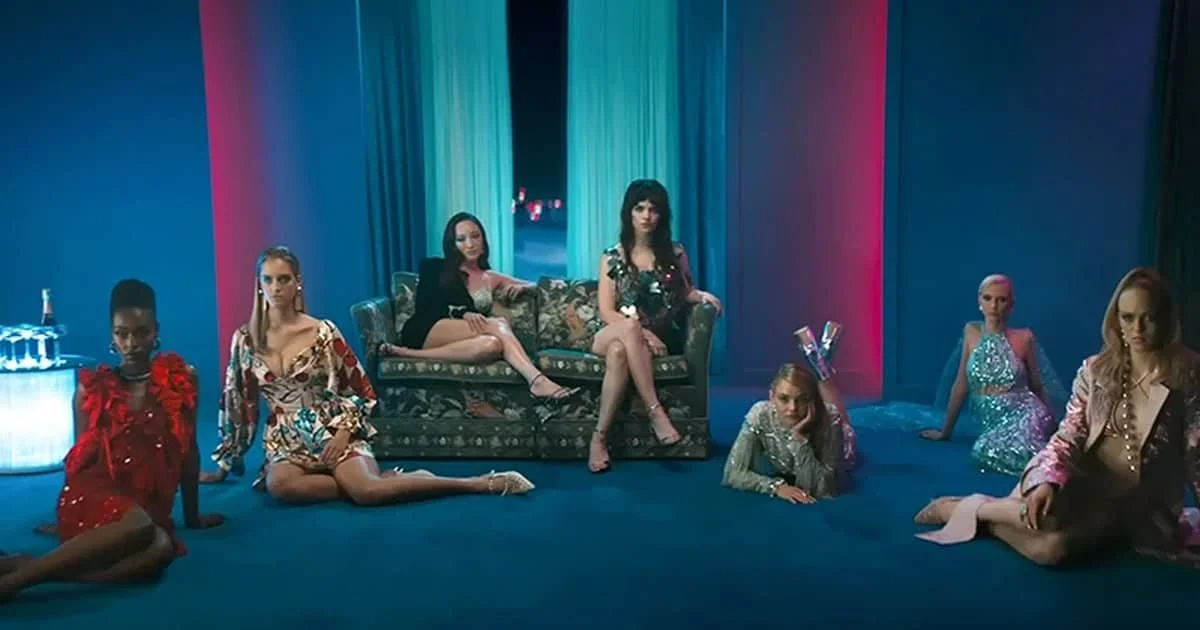
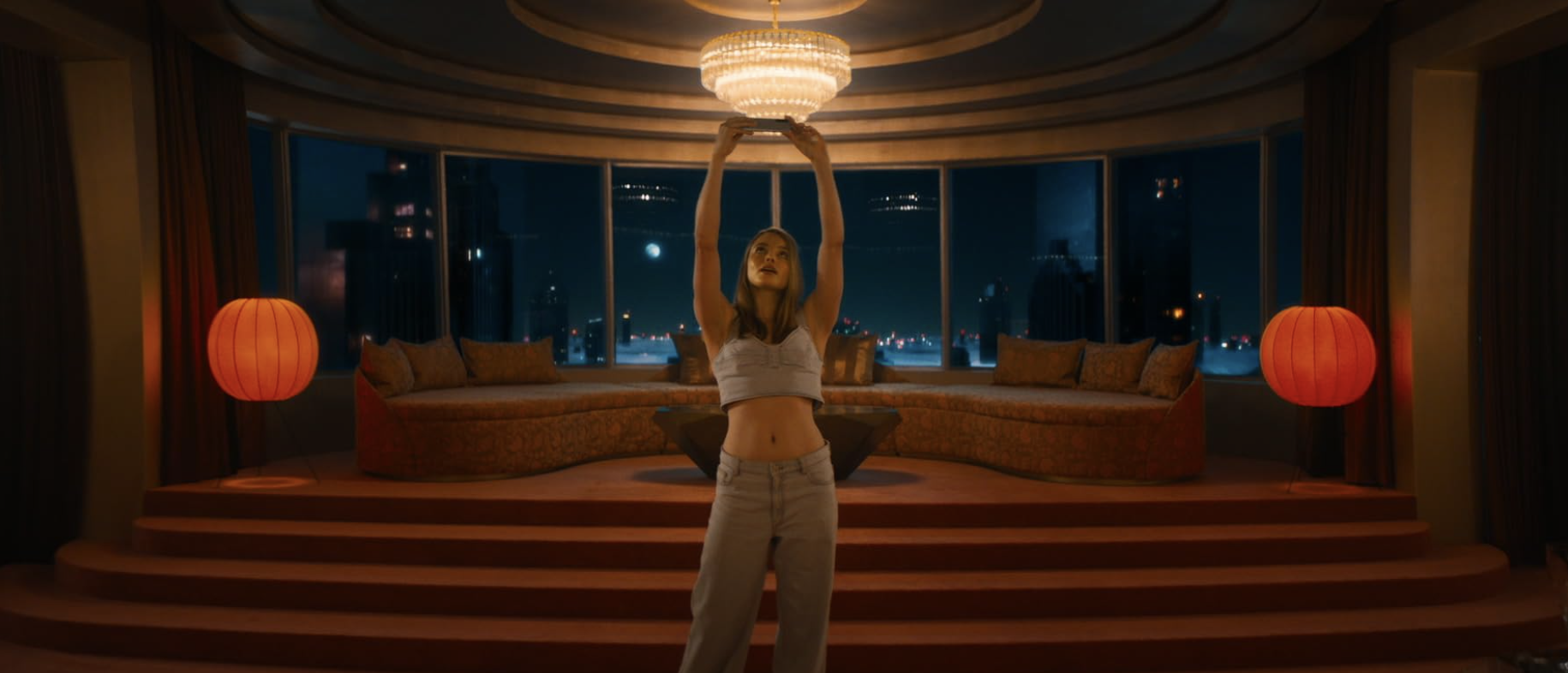
Refn achieved everything he set out to accomplish with Her Private Hell, whether or not audiences are willing to meet the film on its own wavelength. He envisioned the film as an opera, successfully creating a heightened, hyper-stylized world that feels like a fusion of genres. While it evokes the aesthetics of a modern-day giallo with its horror and slasher elements, the film also dabbles in science fiction, noir, melodrama, and camp. The stylized production design amplifies that artificiality. The Tower Hotel appears simultaneously maximalist and minimalist: patterned wallpaper and neon lighting create a visually extravagant atmosphere, yet the space itself feels eerily vacant, with sparse furnishings that suggest it is more of a constructed stage. All of this is by design, but it may be off-putting to mainstream moviegoers.
The performances also contribute to the film's theatricality, with the actors relying more on facial expressions than naturalistic dialogue. Thatcher delivers a layered performance as Elle, initially projecting an aloof sense of ennui. As the film progresses, however, her façade gradually cracks, revealing her vulnerability and desperation. Charles Melton is equally compelling as Private K, conveying the character's brooding, enigmatic presence with minimal dialogue. The hair, makeup, and costume designs are also among the film’s highlights, reinforcing its artificiality and its operatic approach to visual storytelling.
For all its giallo inspirations, Her Private Hell feels closer to something like Francis Ford Coppola’s Megalopolis (2024). Like that film, it is the work of a filmmaker so fiercely committed to a singular vision that mainstream appeal and critical or commercial success feel irrelevant. Refn, like Coppola, is not interested in making something easily accessible, and he refuses to compromise. He practically dares audiences to either love it or hate it. Early in the film, Elle complains about the movie she is starring in, saying, “This movie’s gonna be hell.” I cannot help but feel that Refn intended this line to take on a meta context. He knows his movie will not work for everyone, and that is precisely the response he is striving for. He wants viewers to have a visceral reaction, whether they are hypnotized by the stunning visuals and dreamlike atmosphere, bored by the slow pacing, or frustrated and enraged by its meager narrative.
Source: Neon
In terms of Refn's intentions, Her Private Hell is a success. Whether that vision translates into a compelling viewing experience is another matter. For all its artistic merit,the film feels too abstract, cold, and detached to be truly effective. Viewers criticized The Neon Demon for being "all style, no substance," and I vehemently disagreed. With Her Private Hell, the themes are clearly there, but the film never fully communicates them in a way that fosters an emotional connection. Its agonizingly slow pace allows scenes to linger long after they have made their point, creating distance rather than building tension. It is fitting that part of the narrative involves a mysterious mist engulfing this fictional metropolis, because Her Private Hell itself feels hazy and murky, leaving many of its ideas just slightly out of sight. Ultimately, Her Private Hell is captivating in its contradictions: hypnotic yet hollow, ambitious yet alienating, visually extravagant yet narratively elusive.
Her Private Hell is now in theaters.