I Swear — Review

Source: Sony Pictures Classics
After the controversy at the 79th British Academy Film Awards (BAFTAs), when John Davidson’s tics were audible, and a racial slur went uncensored in the broadcast, it became clear how widely misunderstood Tourette syndrome still is. Many viewers failed to recognize that Davidson’s tics are involuntary and do not reflect his character. This misunderstanding was compounded by the fact that I Swear, a film about Davidson that directly addresses these issues, had not yet been released in the United States before the ceremony. Although the film had already been released in the United Kingdom, where Robert Aramayo won the BAFTA for Best Lead Performance, U.S. audiences had not yet had the opportunity to engage with its perspective. As a result, many American viewers reacted with outrage to the incident, lacking the context the film might have provided. While Kirk Jones’s I Swear does not deviate from the traditional biopic structure, it is evident that Davidson’s story still needs to be told on a global scale, making the film especially urgent.
The film begins in 1983, following 12-year-old John Davidson (Scott Ellis Watson, in his acting debut), who dreams of becoming a football player. He suddenly begins experiencing involuntary tics and coprolalia, a condition that involves the uncontrollable utterance of obscene or inappropriate remarks. It quickly becomes clear that his family, classmates, and teachers do not understand what is happening to him, as he is repeatedly scolded and mistreated for something he cannot control. It is both harrowing and frustrating to watch the people around him make no effort to understand, instead resorting immediately to anger. Years later, at the age of 25, John (Robert Aramayo) finally receives a diagnosis of Tourette syndrome, for which there is no cure.

Source: Sony Pictures Classics
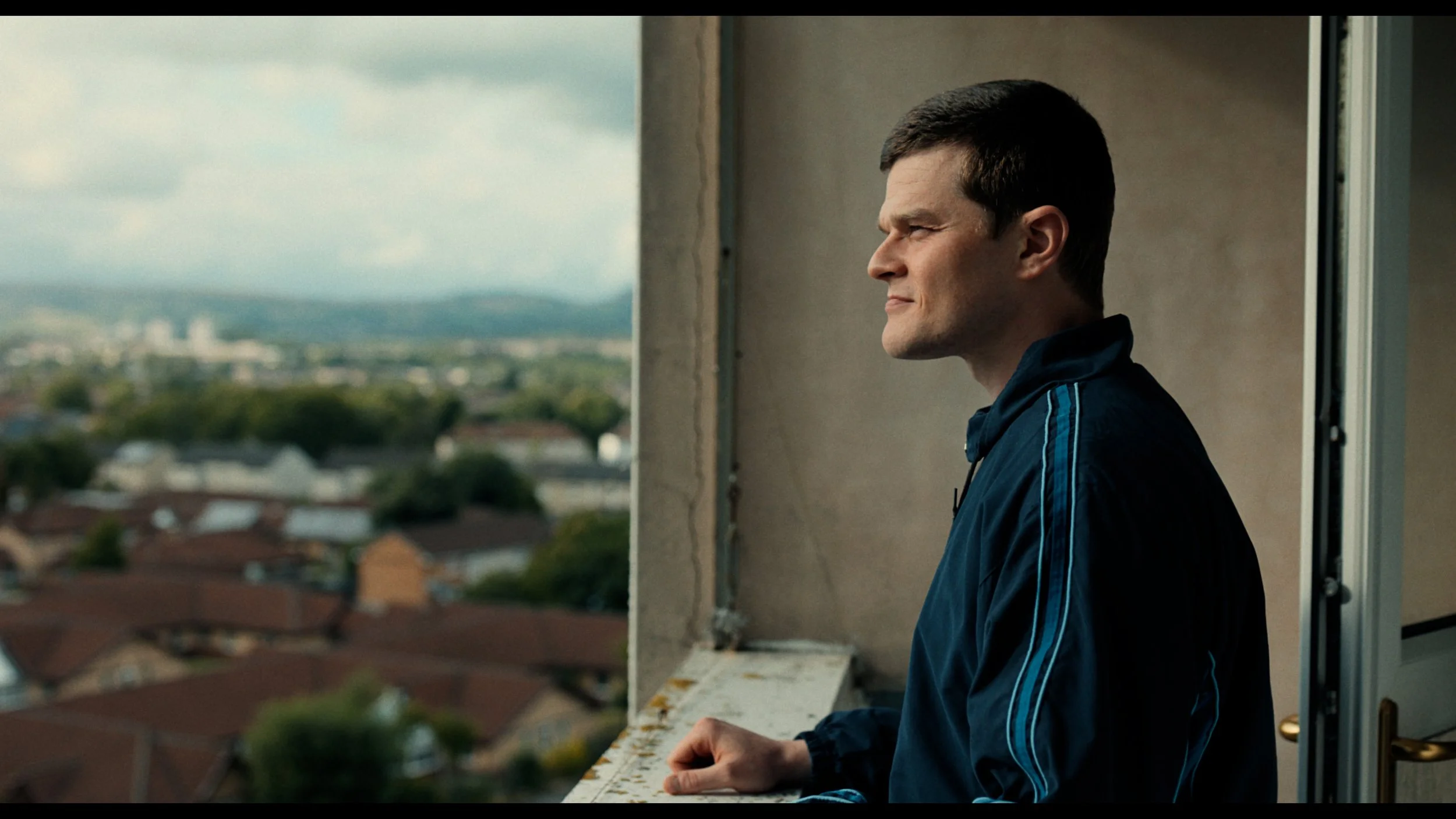
Both actors who portray John are marvelous. Scott Ellis Watson is outstanding in his debut performance, capturing John’s confusion and devastation as he grapples with the onset of his tics. It comes as no surprise that Robert Aramayo earned the BAFTA for his performance, as he portrays life with Tourette syndrome with astounding authenticity and heartbreaking emotional depth. Maxine Peake also shines as Dottie Achenbach, the mother of John’s school friend Murray (Francesco Piacentini-Smith). She serves as a foil to John’s mother, Heather (Shirley Henderson), who treats John like a burden and insists on keeping him medicated despite little evidence that it improves his condition. In contrast, Dottie treats John with warmth, compassion, patience, and understanding, demonstrating how even small acts of kindness can make a world of difference.
Source: Sony Pictures Classics
James Blann’s cinematography is understated and restrained, allowing Robert Aramayo’s performance to take center stage without any visual distractions. Stephen Rennicks’s score is stirring and complements the film’s emotional beats. The use of music in general is equally effective, from the moment New Order’s “Blue Monday” kicks in after the opening scene to the ironic use of Oasis’s “Stop Crying Your Heart Out” over the end credits, a choice that feels especially pointed given how the film is likely to move viewers to tears.
Kirk Jones’s screenplay excels at portraying both the obstacles faced by people with Tourette syndrome and John’s perseverance. He doesn’t sanitize John’s experiences or shy away from the frustration, embarrassment, and misunderstanding that accompany his tics, allowing the audience to fully grasp the challenges he faces. While the story occasionally drifts into schmaltzy territory, those moments serve a purpose. They help audiences connect with John on an emotional level and ensure that the film leaves a lasting impression. By making this story resonate with viewers, it can foster a deeper understanding of Tourette syndrome and hopefully prevent others living with the condition from experiencing cruelties similar to those John endured.

Source: Sony Pictures Classics
I Swear may not be a groundbreaking film from a technical standpoint, but it’s a vital story that illuminates the realities of Tourette syndrome while exposing the ignorance and prejudices that continue to persist today. The film’s impact is amplified by incredible performances, most notably from its star, Robert Aramayo, who brings John’s story to life with honesty and heart. Through the character of Dottie, the film highlights how empathy and kindness can profoundly affect someone living with a misunderstood condition. By telling John’s story with such sensitivity, I Swear educates audiences and encourages them to confront their assumptions and recognize the dignity, resilience, and humanity of those living with Tourette syndrome.
I Swear will screen in select theaters in the United States on April 24, 2026.