Josie and the Pussycats — Retrospective Review
Source: Universal Pictures
Harry Elfont and Deborah Kaplan's Josie and the Pussycats received negative reviews and was deemed a commercial failure upon its release 25 years ago. Over time, however, it garnered a cult following—and rightfully so. I still remember seeing the film for the first time in 2001. I rented it from Blockbuster and absolutely adored it. The music was catchy, and my elementary school mind was blown by the idea of subliminal messages hidden in pop songs. For years, I referenced the movie in conversations, only to be met with responses like "Never seen it" or "Never heard of it." More than two decades later, Josie and the Pussycats remains a film I have never forgotten. I never stopped listening to the soundtrack, especially "3 Small Words" and "Pretend to Be Nice," performed by Letters to Cleo. I never stopped referencing the film, despite how few people seemed familiar with it. And I never stopped loving it.
Source: Universal Pictures
When I looked up reviews for the film, I was baffled to find critics attacking its rampant product placement, arguing that it undermined the movie's anti-capitalist message. I couldn't help wondering whether they had missed the point entirely. The product placement is satirical. Those brands didn't even pay to be featured in the movie. The production design overwhelms nearly every frame with logos and branding, pushing consumerism to such an absurd extreme that it becomes the joke itself. Roger Ebert gave the film half a star, declaring, "Josie and the Pussycats are not dumber than the Spice Girls, but they're as dumb as the Spice Girls, which is dumb enough." He also described it as a "would-be comedy" and observed that the film's plugs for Coke, Target, Starbucks, Motorola, and Evian "may" be part of the joke. The hesitation is revealing. They are the joke. Josie and the Pussycats wasn't misunderstood because it was too silly or not smart enough. It was misunderstood because many critics took its satire at face value, confusing its exaggerated embrace of consumerism for an endorsement rather than a critique.

Source: Universal Pictures
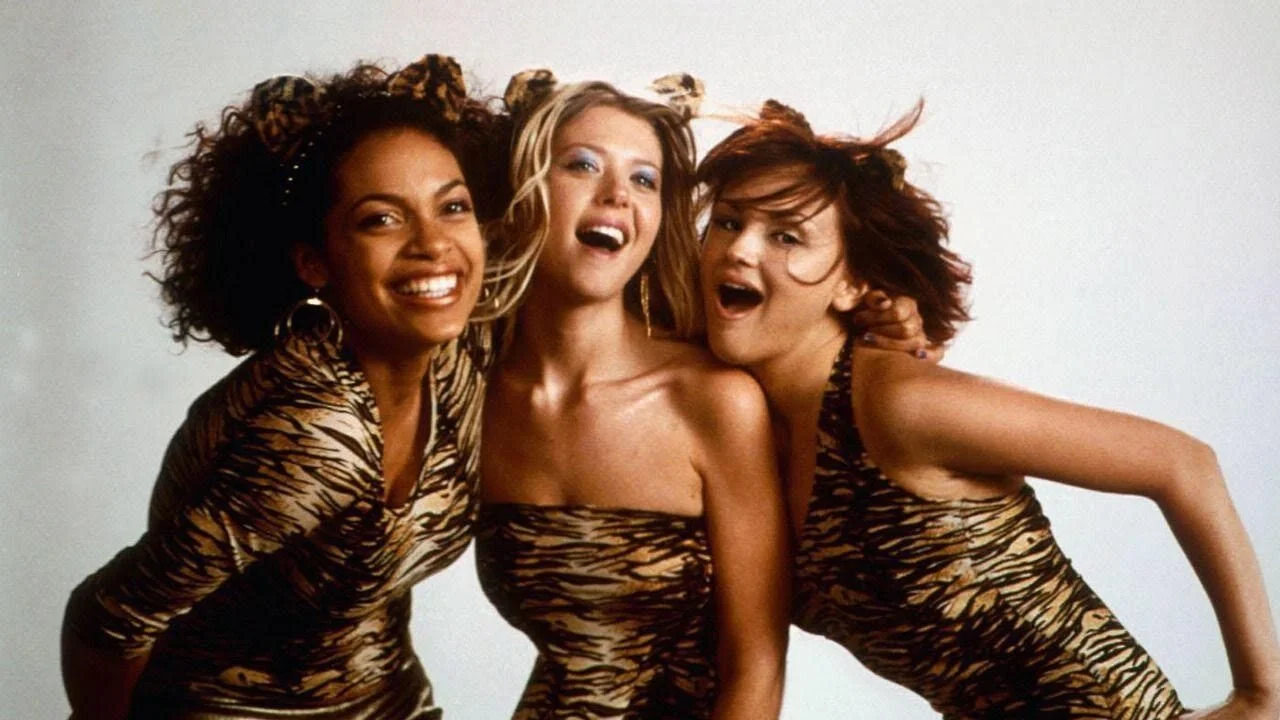
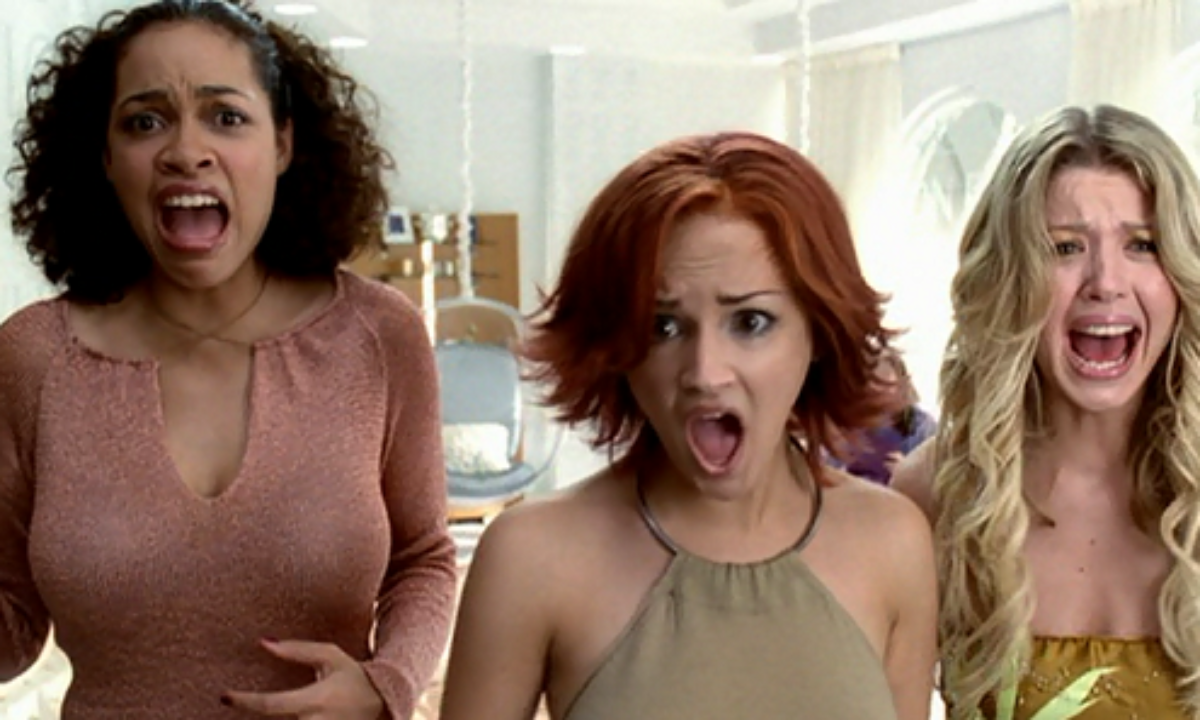
Josie and the Pussycats is based on both the Archie Comics series and the Hanna-Barbera cartoon of the same name. At one point, someone asks Missi Pyle's character, Alexandra, why she's there, to which she cheekily replies, "I'm here because I was in the comic book." It's one of many moments that remind the audience the film is in on the joke. The movie is a hilarious, sharp, self-aware satire that was years ahead of its time. It follows Josie McCoy (Rachael Leigh Cook) and her bandmates: bassist Valerie Brown (Rosario Dawson) and drummer Melody Valentine (Tara Reid). The Pussycats are a garage band playing small-time gigs at local bowling alleys while dreaming of making it big someday. Unlike most stories about aspiring musicians, this one turns their rise to fame into a commentary on how corporations manufacture celebrities and commodify trends.
Source: Universal Pictures
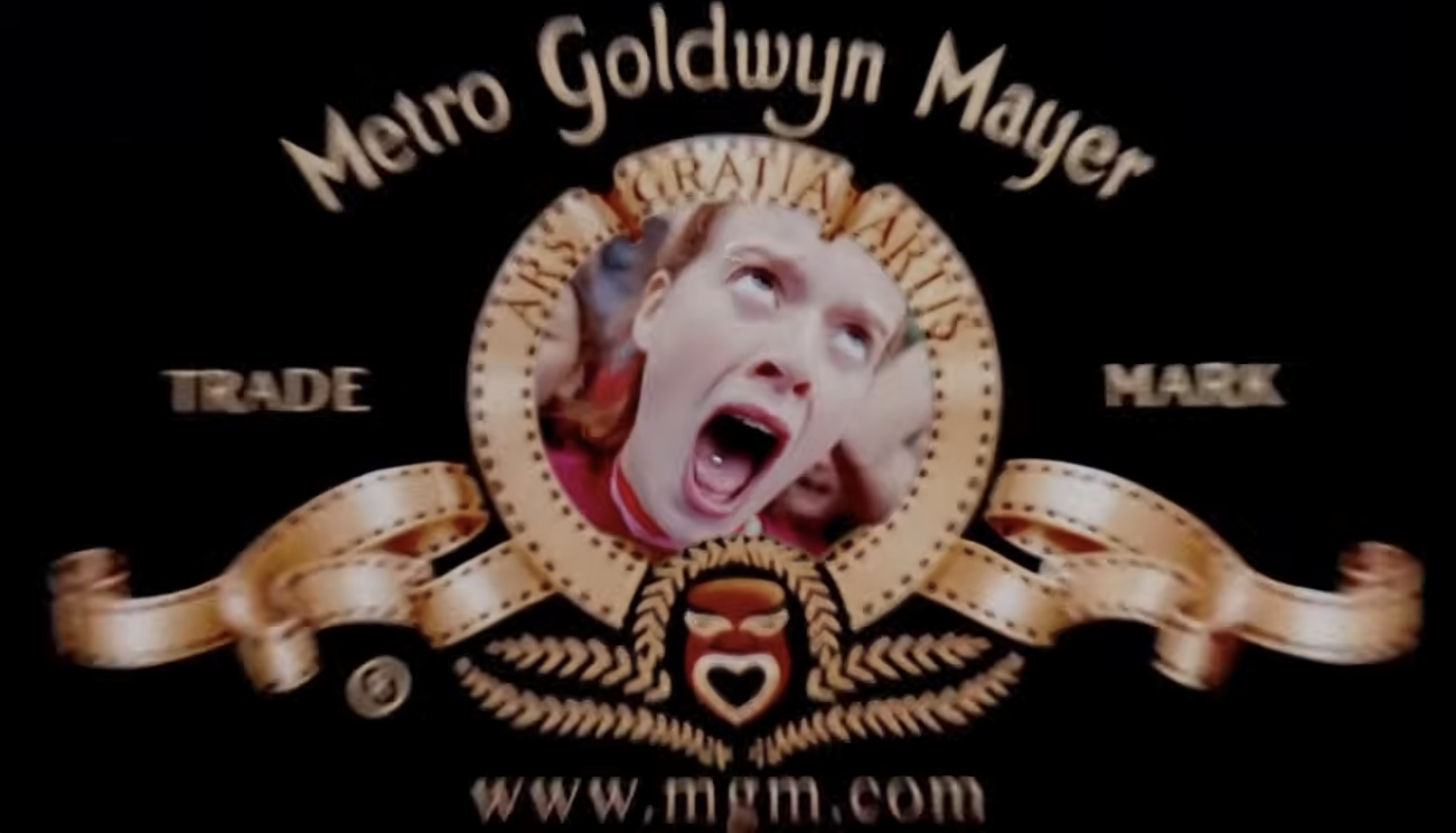
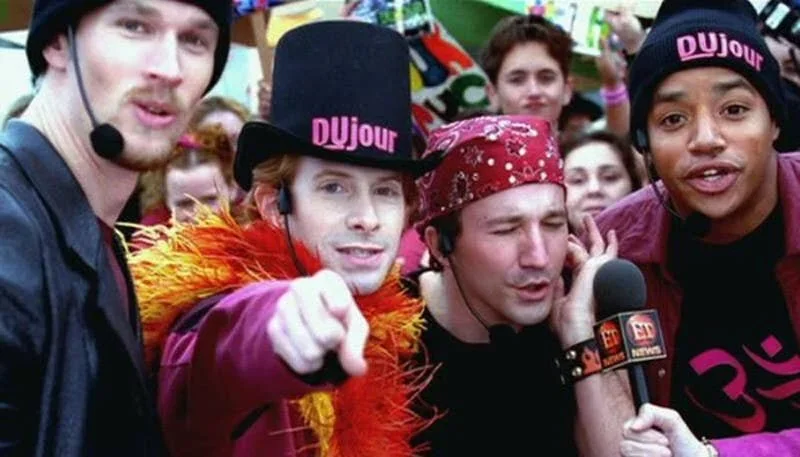
From its very first frame, Josie and the Pussycats establishes its tone and meta-humor as the Metro-Goldwyn-Mayer lion transforms into a teenage girl screaming over the hottest boy band in this cinematic universe: DuJour. A parody of turn-of-the-millennium acts like NSYNC and the Backstreet Boys, DuJour consists of Les (Alexander Martin), D.J. (Donald Faison), Travis (Seth Green), and Marco (Breckin Meyer). As crowds of girls wearing matching pink DuJour shirts erupt into hysteria, their hilariously suggestive single, "Backdoor Lover," blares in the background. The joke isn't simply that boy bands sneak sexual innuendos into songs marketed to teenage girls. It's that the music industry packages and sells those fantasies as products. Before Josie even appears on screen, the film establishes that pop music is more than entertainment; it's a commodity.
Source: Universal Pictures
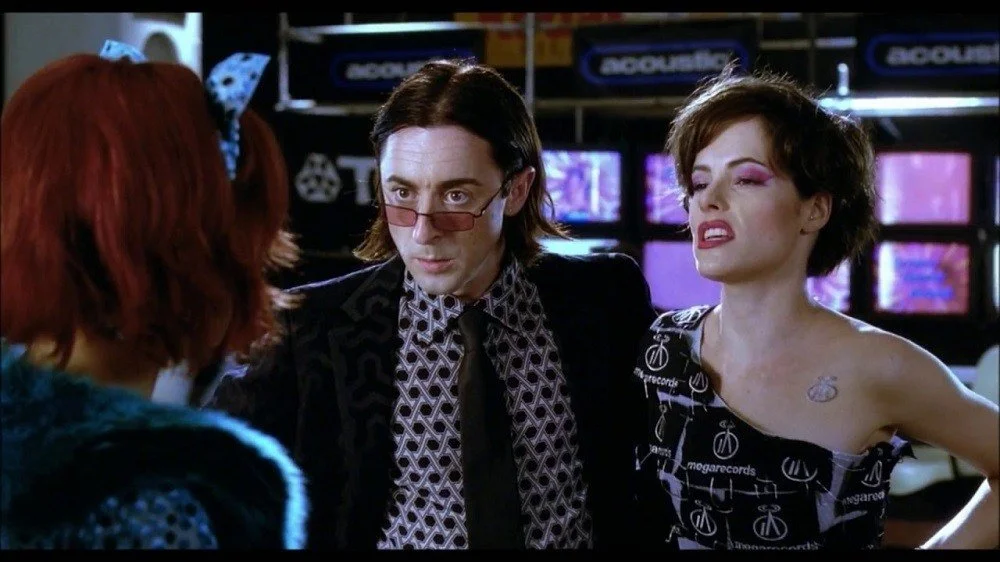
That critique crystallizes in the next sequence. Aboard a private jet plastered with Target advertisements, DuJour informs their manager Wyatt—played with deliciously villainous charm by Alan Cumming—that they noticed a bizarre backing track hidden beneath one of their demos. Wyatt calmly walks into the cockpit, where he and the pilot strap on parachutes and abandon the band. Once news breaks that DuJour died in a plane crash, Wyatt and his boss Fiona—a pitch-perfect Parker Posey—immediately begin searching for a replacement act to distribute subliminal advertising through pop music. The Pussycats are the perfect choice; not because they're the most talented musicians, but because they're the easiest to mold into a marketable brand. But first, they insist on renaming the group. As Wyatt explains, "Are you more interested in a band called simply 'The Pussycats' or are you more likely to buy a CD, read a comic, watch a cartoon, go see a movie about a trio of luscious ladies called Josie and the Pussycats?" The line works on multiple levels. It's a wink to the audience, acknowledging that Josie and the Pussycats has existed as a comic, a cartoon, and now the very movie we're watching. But it also exposes Wyatt's worldview. He isn't interested in the band's music; he's interested in building a brand.
Source: Universal Pictures
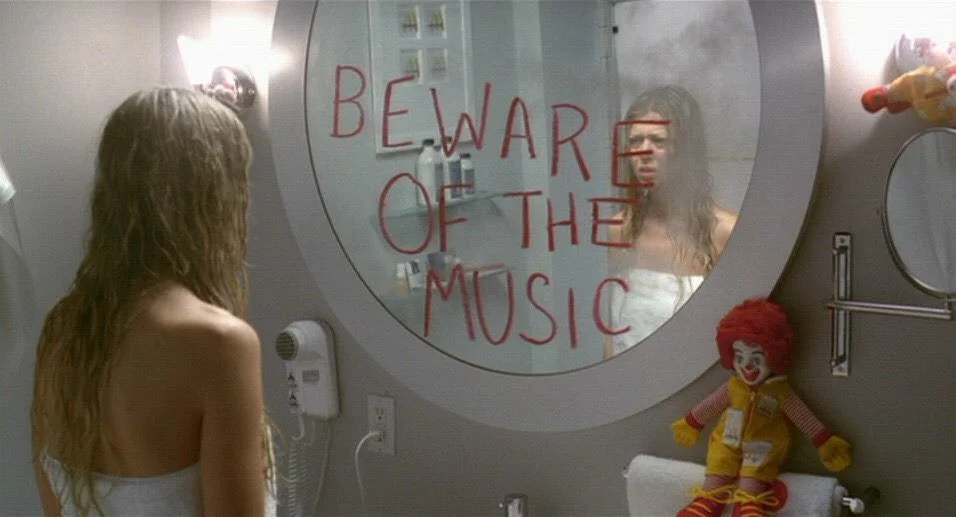
Josie and the Pussycats certainly wasn't the first satire about consumerism to involve subliminal messaging. In fact, it's often jokingly described as John Carpenter’s They Live (1988) for teenage girls. What made it prescient, however, was the way it filtered its critique of consumerism through the lens of teen pop culture with messages like “Heath Ledger is the new Matt Damon” and “You’re nobody without an Abercrombie & Fitch vintage tee.” The film understood that corporations aren't simply selling products; they are selling carefully curated trends and meticulously manufactured celebrities. In many ways, its commentary feels even more relevant today, in an era dominated by influencers and algorithm-driven advertising.
Source: Universal Pictures
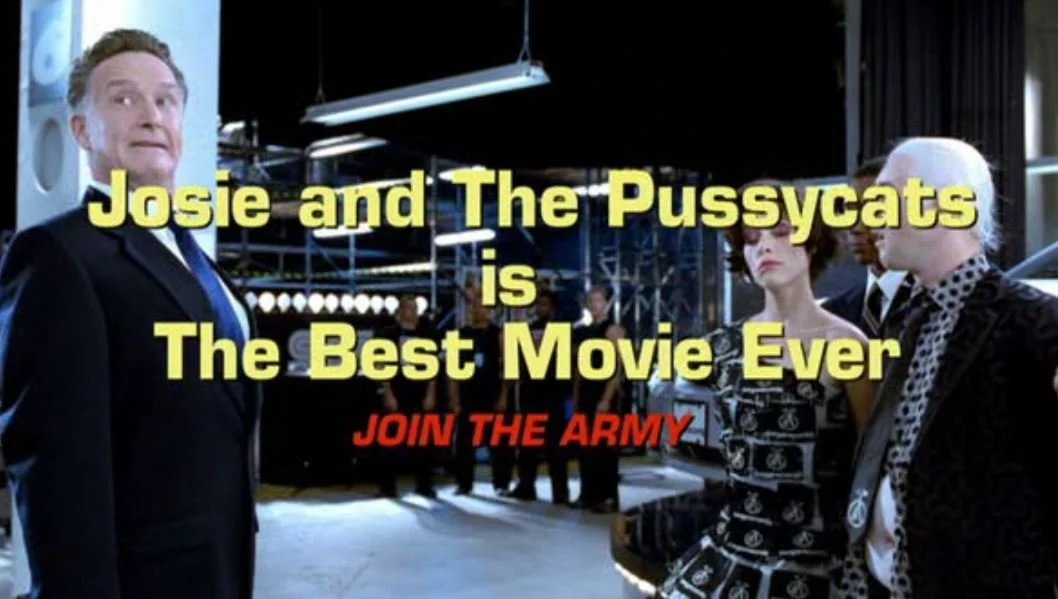
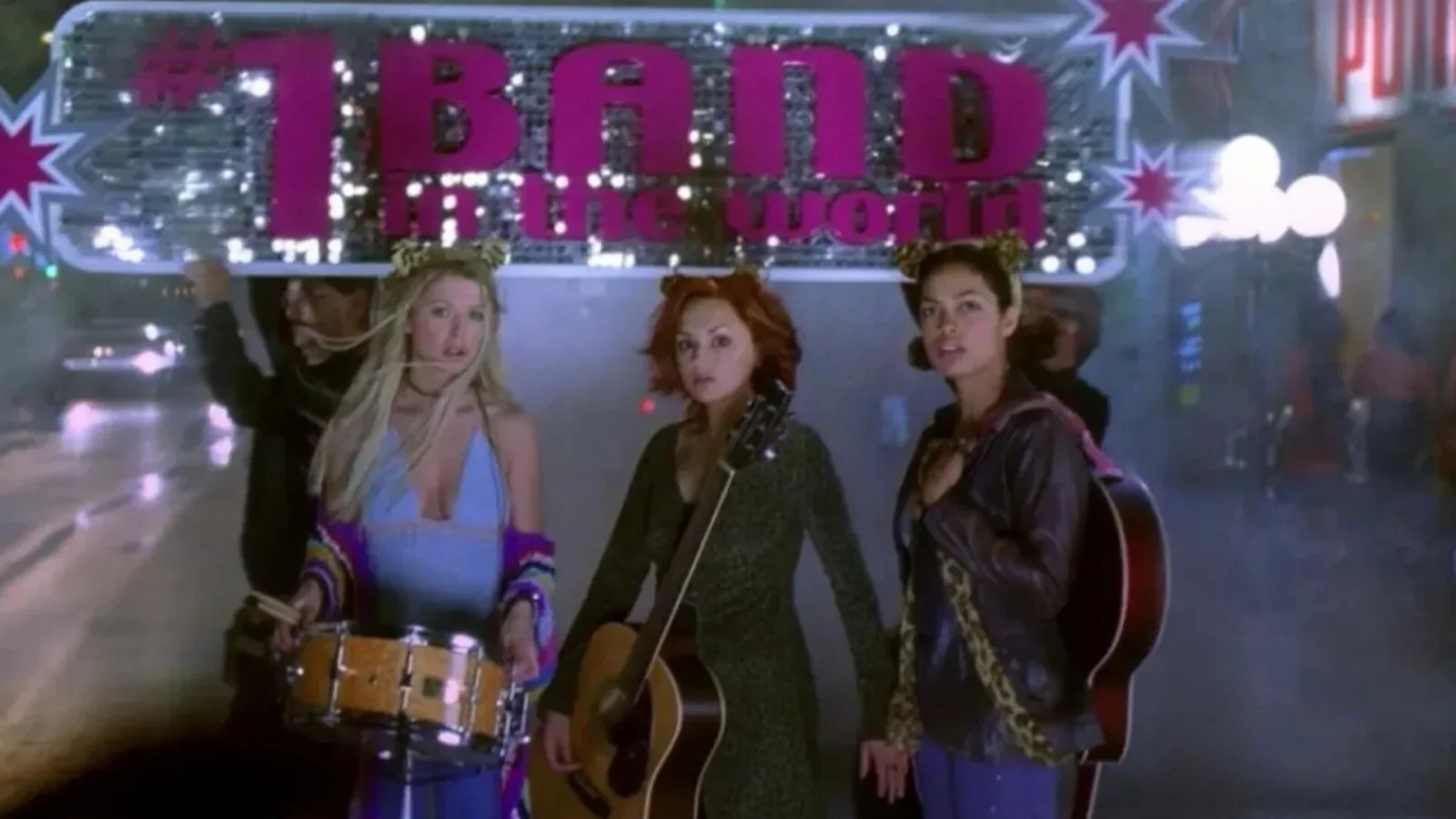
This movie was also one of my first memorable experiences with meta-humor. At one point, the phrase “Josie and the Pussycats is the best movie ever” briefly flashes across the screen as a piece of subliminal messaging. As a kid, I thought it was hilarious, but it also made me realize the film was willing to make fun of itself just as much as it made fun of pop culture. That same playful self-awareness carries over into Matthew Libatique’s vibrant cinematography and Peter Teschner’s energetic editing. One standout sequence is the makeover montage, which simultaneously charts the band's rapid rise to fame with the slick pacing and glossy aesthetics of an early-2000s music video. The sequence visually reinforces the film's commentary on the music industry, illustrating how it packages image and celebrity as products to be sold.
Source: Universal Pictures
As someone who first saw the film in elementary school, Josie and the Pussycats became my introduction to satire years before I learned the term in school. It also helped shape my taste in music. I was always listening to whatever was on the radio, and the boy bands mentioned earlier dominated the charts alongside artists like Britney Spears and Christina Aguilera, whose lyrics and image often catered to the male gaze. I was familiar with pop-punk thanks to bands like Blink-182, but Josie and the Pussycats taught me that women could also make music within the genre and did not need to cater to male fantasies. Sure, some of their songs were about boys, but they were often songs of frustration and independence rather than longing or desperation.
To this day, “3 Small Words” remains one of my favorite songs. The chorus “It took six whole hours and five long days for all your lies to come undone. And those three small words were way too late ‘cause you can’t see that I’m the one” is empowering. The song is about recognizing your own worth and realizing that someone who failed to value you from the start is not worth chasing. It’s a fun, playful breakup anthem, but it’s also a confident declaration of self-worth and a refusal to settle for less. Moreover, it's an incredibly clever piece of songwriting. The chorus functions as a countdown through the use of homophones: six whole hours, five long days, "for" all your lies, three small words, "too" late, and the one.
Source: Universal Pictures
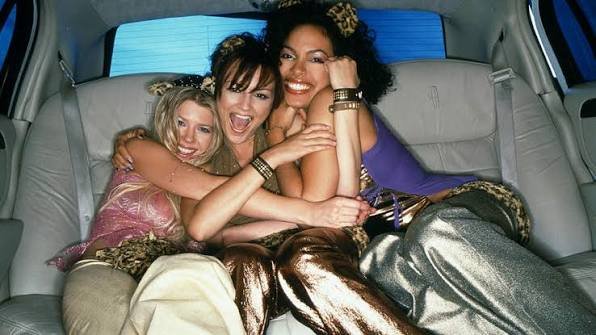
I grew up with the idea that it was “uncool” to enjoy movies that were frequently dismissed as “chick flicks” or marketed primarily toward girls. In retrospect, I realize internalized misogyny led me to absorb the notion that things associated with young women were somehow less valuable or less important. Josie and the Pussycats, however, felt different. It was witty, funny, and a fierce celebration of girlhood that refused to confine its characters to conventional stereotypes. While Melody embodies the “ditzy blonde” archetype, the film celebrates her compassion and never suggests that her quirky personality makes her any less capable as a musician. Josie could wear glittery outfits and perform on stage, but she could also get under the hood of a car and fix it herself. She had a love interest, but her entire identity did not revolve around him. The film proved that something could be fun, colorful, and unapologetically feminine while still being clever, subversive, and meaningful.
Source: Universal Pictures
The film also helped me understand the difference between authentic friendship and performative popularity. I was bullied in elementary school, and Fiona’s carefully constructed persona gave me a way to recognize people who hide their cruelty beneath their charisma. The girls I considered my friends would often pretend to be there for me, only to turn around and exclude me, mock me, or convince others not to talk to me. Watching Fiona manipulate everyone around her with a friendly facade made me realize that the people I always thought were “cool” were not necessarily worth admiring. Instead, Josie and the Pussycats showed me the value of genuine friendships, such as the one among Josie, Valerie, and Melody.
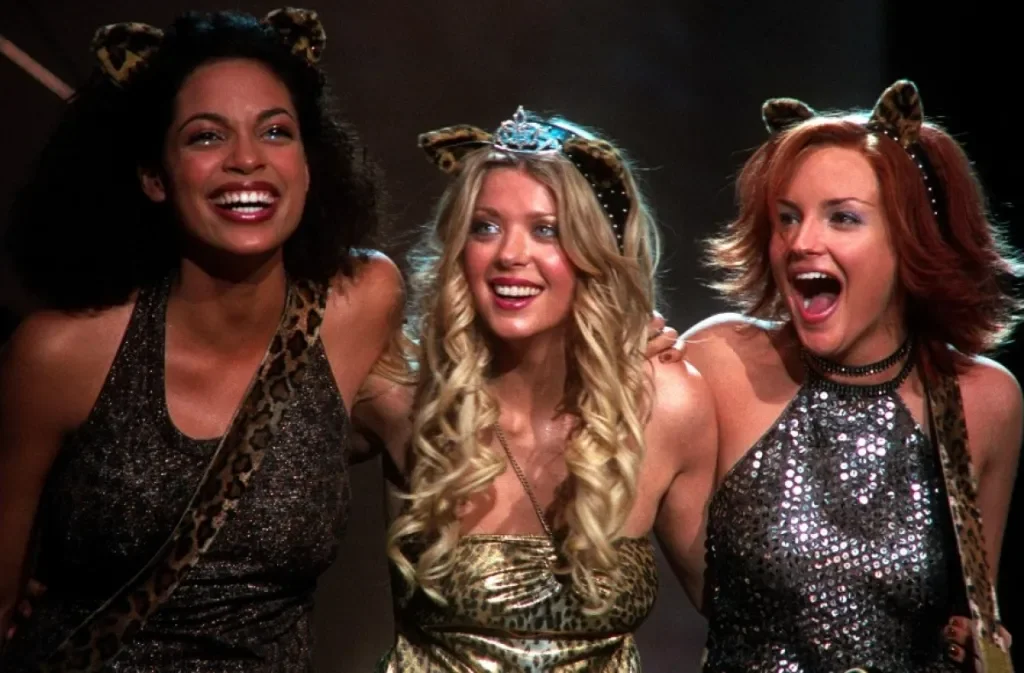
Some might argue that Fiona is too cartoonish of a villain, but her exaggerated nature reflects the film’s comic book and cartoon origins while also mirroring the kind of phony charm I had experienced from people in my own life. Ultimately, the film taught me that the people who make you feel valued are the ones who matter, not the ones who appear to be admired by everyone else.
Source: Universal Pictures
Twenty-five years after its release, Josie and the Pussycats has proven that a movie does not need to be a critical or commercial success, nor does it need to win awards to be significant. What truly matters is whether people are still talking about it decades later and finding something meaningful within it. The film was dismissed by many critics when it was first released, but its satire, humor, heart, and catchy songs have allowed it to live on. What seemed like a simple teen comedy turned out to be a clever critique of consumerism, capitalism, conformity, and celebrity culture. Ironically, a movie about corporate manipulation and subliminal marketing eventually became beloved not because of how it was marketed, but because audiences genuinely connected with it. I’m grateful that Josie and the Pussycats eventually found the audience it was always meant to reach and continues to inspire people to revisit it, discuss it, and celebrate everything that made it special. It turns out the movie wasn't just ahead of its time because critics failed to understand it or because its satire feels more relevant than ever—it was also ahead of its time because audiences simply needed time to catch up.