

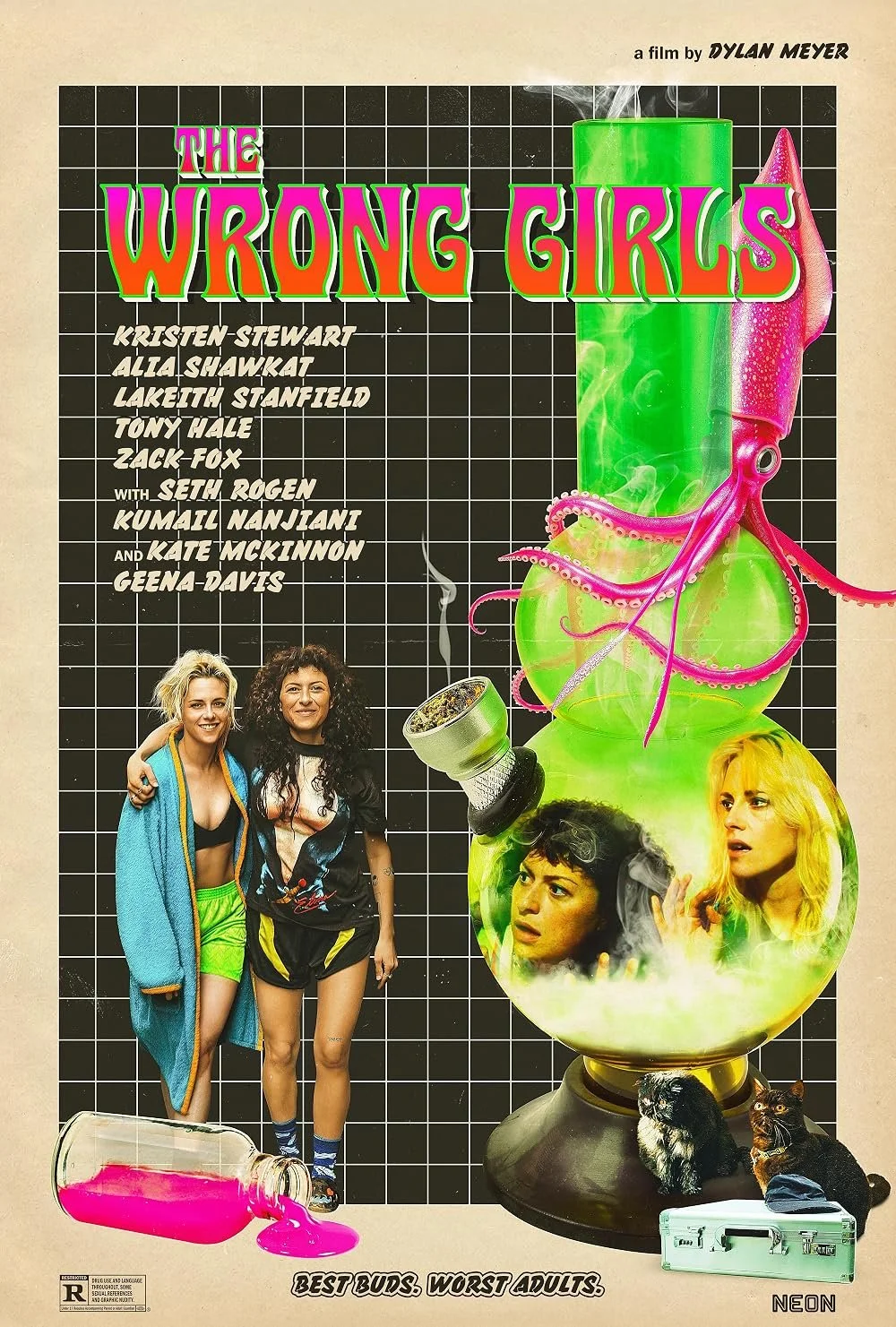
The Wrong Girls — Review
Stoner comedies might be one of the most subjective genres to evaluate. Not only is the genre’s sense of humor an acquired taste, but there are also many additional factors that can determine how someone responds to a movie. For example, viewers who smoke will find these films more relatable than those who do not, while watching a movie under the influence versus sober could completely change someone’s perspective on it. These films also tend to rely on a deliberately silly or stupid sense of humor, meaning that a person’s mood can greatly affect how funny they find them. As a result, someone’s opinion of a stoner comedy can vary drastically depending on the time, place, and circumstances in which they watch it. Dylan Meyer’s The Wrong Girls demonstrates both the appeal and limitations of the stoner comedy genre, featuring moments of genuine comedic potential alongside humor that may not consistently land with every viewer. However, it is rare that we see female-fronted stoner comedies, and that is what makes this movie special.

The Chronology of Water — NewFest Review
There is a quote often attributed to the Greek philosopher Heraclitus that reads, “No man ever steps in the same river twice, for it is not the same river and he is not the same man.” With her directorial debut, Kristen Stewart channels that concept into cinema in more ways than one. The protagonist in The Chronology of Water, Lidia (Imogen Poots), is a swimmer who constantly finds herself submerged under water in both the literal and metaphorical sense. The water serves as both her refuge and a mirror, reflecting her memories, trauma, and continual transformation with every dive and stroke. At one moment, she observes, “I was a different person then,” a quiet acknowledgment that, like the river Heraclitus described, she is never the same woman from one moment to the next. The film itself mirrors this fluidity: every viewer will take away something different, and each viewing will reveal new currents and depths, subtle textures that may have gone unnoticed the first time, making the experience as mutable and alive as Lidia herself.