Source: Independent Film Company
This has been an incredible year for animated films, from Andrew Stanton’s Toy Story 5 to Travis Knight’s Wildwood and everything in between. It would take a truly special film to stand out from such an impressive crowd. Fortunately, Leah Nelson's directorial debut, Tangles, is more than up to the task. Based on Sarah Leavitt's graphic memoir Tangles: A Story About Alzheimer's, My Mother and Me, the screenplay was written by Leavitt, Nelson, and Trev Renney. The book is a deeply moving account of Leavitt’s experiences as her mother, Midge, battles Alzheimer’s. Although Nelson takes a slightly different visual approach from the source material, she brings Leavitt’s story to life with remarkable sensitivity. The result is an extraordinary film that feels immensely personal, one that’s as beautiful as it is heart-shattering.
I could tell within the first five minutes that Tangles was destined to become my favorite animated film of the year. My prediction turned out to be correct. The only mistake I made was not wearing waterproof mascara or having a box of tissues ready before watching. It’s easily the hardest I’ve cried during a film in all of 2026. Some viewers may find the film somewhat emotionally manipulative, especially when it comes to the music. It’s difficult to disagree with that argument when a Sarah McLachlan song plays during one of the most heartbreaking scenes. However, Nelson approaches these themes with such sincerity that I believe every emotional beat feels earned. Moreover, there’s an underlying honesty to the characters and their situations that shines through, ensuring the more dramatic moments still feel grounded in reality.
Source: Independent Film Company
The film also functions as a queer love story, exploring Sarah’s (Abbi Jacobson) budding relationship with Donimo (Samira Wiley). The excitement of a new romance provides a counterbalance to the devastating progression of Midge’s (Julia Louis-Dreyfus) illness. It’s refreshing that the film gives this romance just as much room to develop as it does the more upsetting aspects of Sarah’s life. Dan Romer’s melancholic, wistful score beautifully complements the film’s tone, while needle drops ranging from Veruca Salt’s “Seether” to Freakbeam’s “Super Girl” infuse the film with some energy and personality.
One of the film’s greatest strengths is how fully realized its characters feel. Everyone has their own interests, personality quirks, and narrative arcs, from Sarah’s father, Rob (Bryan Cranston), to her sister, Hannah (Beanie Feldstein), and Hannah’s boyfriend, Zach (Seth Rogen). Even the supporting characters, such as Sarah's co-worker, Dale (Bowen Yang), and their boss, Paula (Wanda Sykes), feel like genuine people with lives of their own rather than one-dimensional stereotypes. They aren’t there to simply move the plot forward or provide comic relief. Even their smaller moments help flesh out Sarah’s life beyond her immediate family, making her world feel more expansive.
Source: Independent Film Company
The vocal performances bring even greater depth to these characters, conveying a vast range of feelings and experiences. Abbi Jacobson and Julia Louis-Dreyfus are particularly outstanding, delivering vulnerable, tear-jerking performances. There’s a tenderness to their interactions that makes the mother-daughter bond feel genuine. Sarah is a complex character who experiences an overwhelming variety of emotions throughout the story, all of which Jacobson captures with astounding nuance. One moment, Sarah is filled with joy over a positive development at work or in her new relationship, only to find herself worrying about her mother’s well-being the next. Jacobson effortlessly navigates these emotional shifts, ensuring Sarah’s conflicting feelings come across naturally. She depicts the frustration, guilt, sadness, and fleeting moments of happiness that come with trying to maintain some semblance of normalcy while watching someone she loves slowly slip away.
Source: Independent Film Company
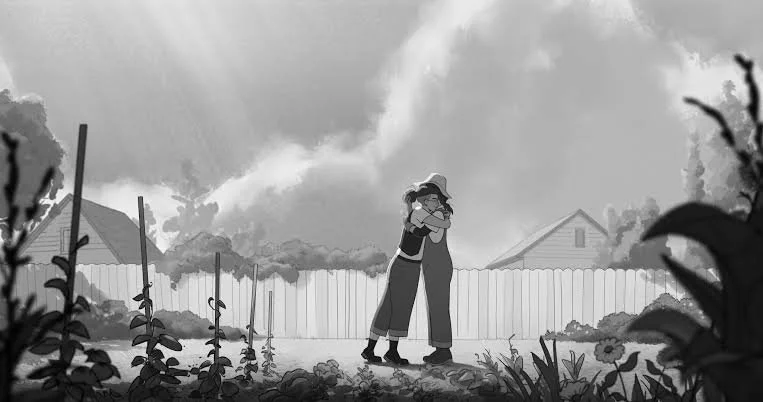
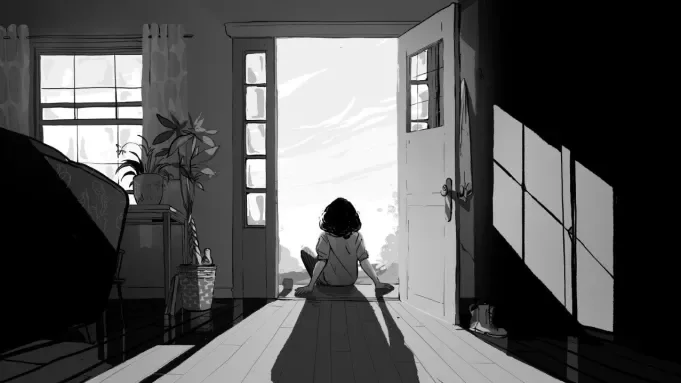
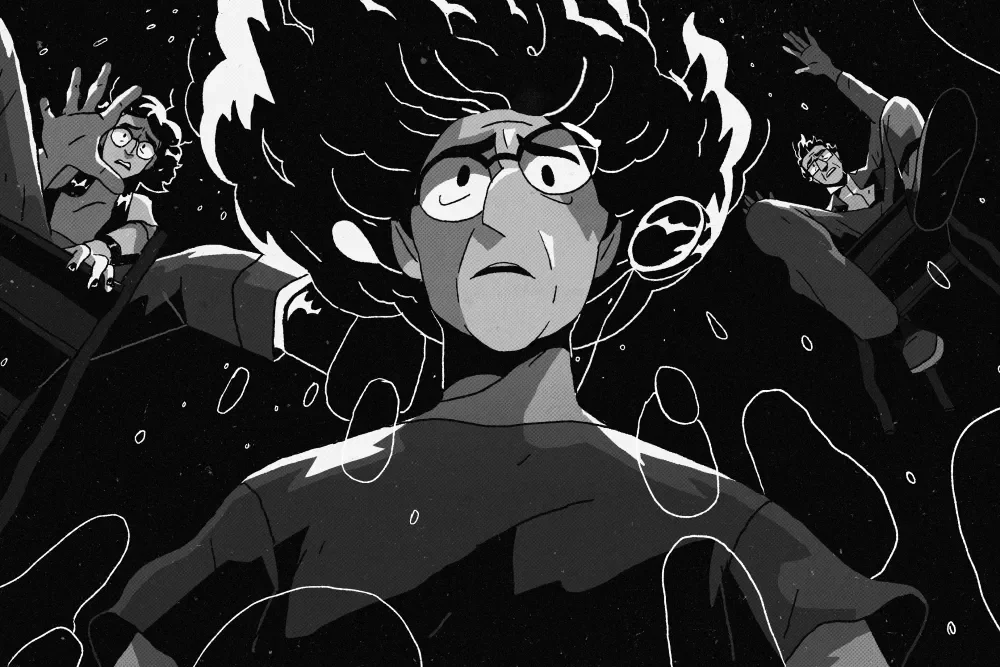
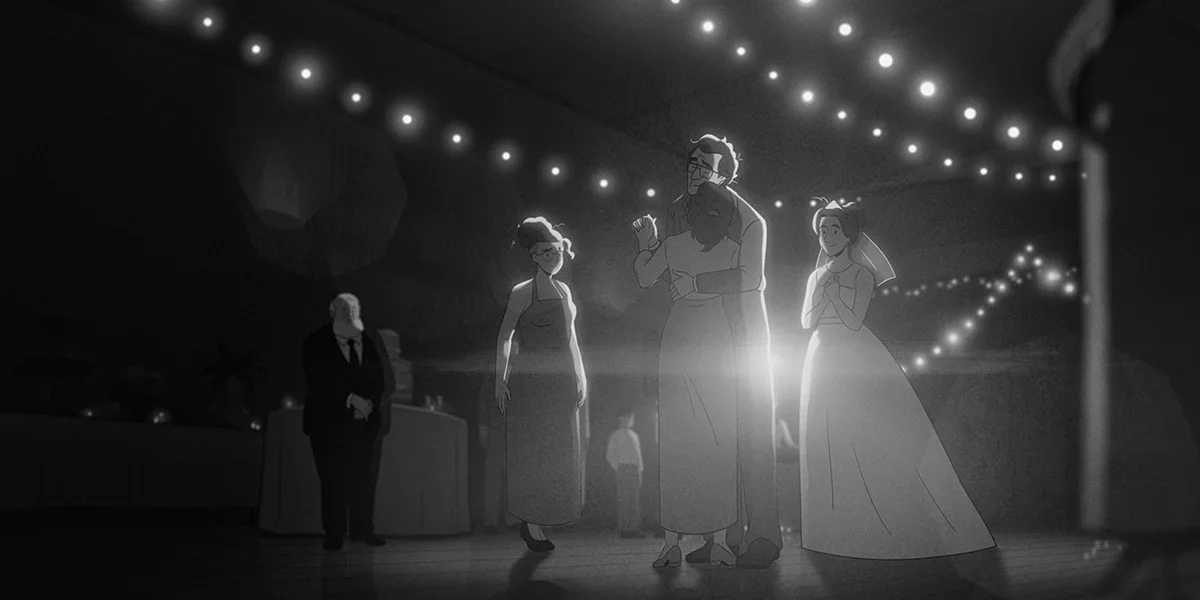
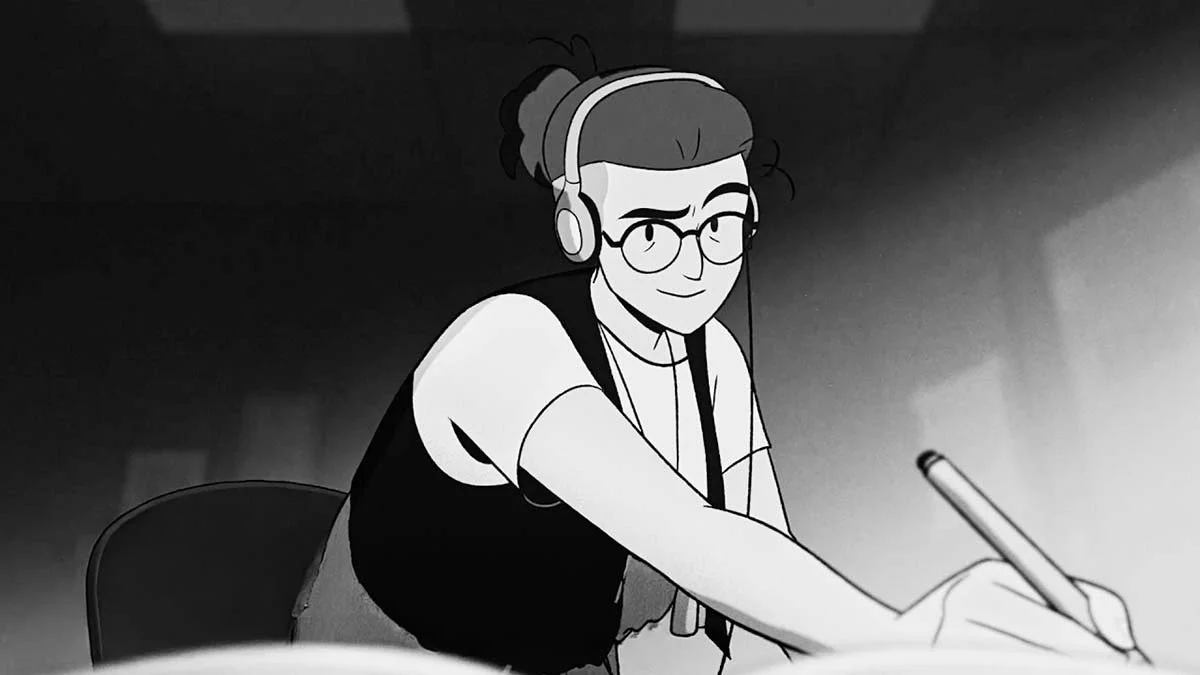
The animation is striking. The visuals are mostly black-and-white, with a few brief pops of color and some inspired abstract sequences. The black-and-white animation and female-fronted story call to mind Marjane Satrapi and Vincent Paronnaud’s Persepolis (2007), while the adult themes, minimalist style, and exploration of memory loss are evocative of Don Hertzfeldt’s It’s Such a Beautiful Day (2012). Likewise, the heartbreaking narrative centered around someone who’s passionate about drawing is reminiscent of Kiyotaka Oshiyama’s Look Back (2024). Animation is the perfect medium for telling this story, as it gives Nelson the freedom to experiment with the visual language in ways that might not work as well in live-action. The flashbacks and dream sequences, for example, allow her to explore Sarah’s memories and emotional state without relying too heavily on exposition. Some of the more abstract sequences are especially effective, finding creative ways to communicate feelings that would otherwise be difficult to put into words. The minimalist, monochrome aesthetic also lends the film a sense of simplicity, which offsets the weight of its heavier themes. The occasional bursts of color also stand out because of how sparingly they’re used.
Source: Independent Film Company
The stunning visuals, superb vocal performances, and emotionally resonant storytelling make Tangles captivating from start to finish. It’s a deeply personal, profound, and poignant retelling of Sarah Leavitt’s story. While it’s certainly not an easy watch, its heavier moments are balanced by plenty of humor and warmth. There are many films that tackle the topic of Alzheimer’s, but few make their characters feel as fully realized as this one. Rather than allowing Midge’s illness to define the entire narrative, Nelson gives equal attention to the lives and relationships of the people around her. Sarah’s blossoming romance, her relationship with her family, and her own personal and creative aspirations are all given sufficient room to develop. Ultimately, Tangles is about so much more than Alzheimer’s; it’s also a story about love, queer identity, family, art, growing up, and coming home. It’s a tremendous tear-jerker that will leave you wanting to call your mom.
Tangles will have an Oscar-qualifying run on November 27, 2026 in New York and Los Angeles. It will receive a limited release on January 15th before expanding nationwide on January 22nd.