Teenage Sex and Death at Camp Miasma — NewFest Pride Review
Source: Mubi
There is a strong narrative and thematic throughline in director Jane Schoenbrun’s work. Their films explore how the media we consume also consumes us, while simultaneously telling stories about identity and sexuality that resonate with audiences—especially members of the LGBTQIA+ community—in unexpected ways. Their latest film, Teenage Sex and Death at Camp Miasma, is no exception. However, it marks a step in a new and exciting direction for Schoenbrun. Despite the buckets of blood in Camp Miasma, the film is not nearly as dark as their previous works. There is a surprising amount of levity and laughter coursing through its veins. In fact, the idea for Camp Miasma first arose when Schoenbrun’s partner suggested that their next film be something “gay and fun.” On that front, they certainly succeeded.

Source: Mubi
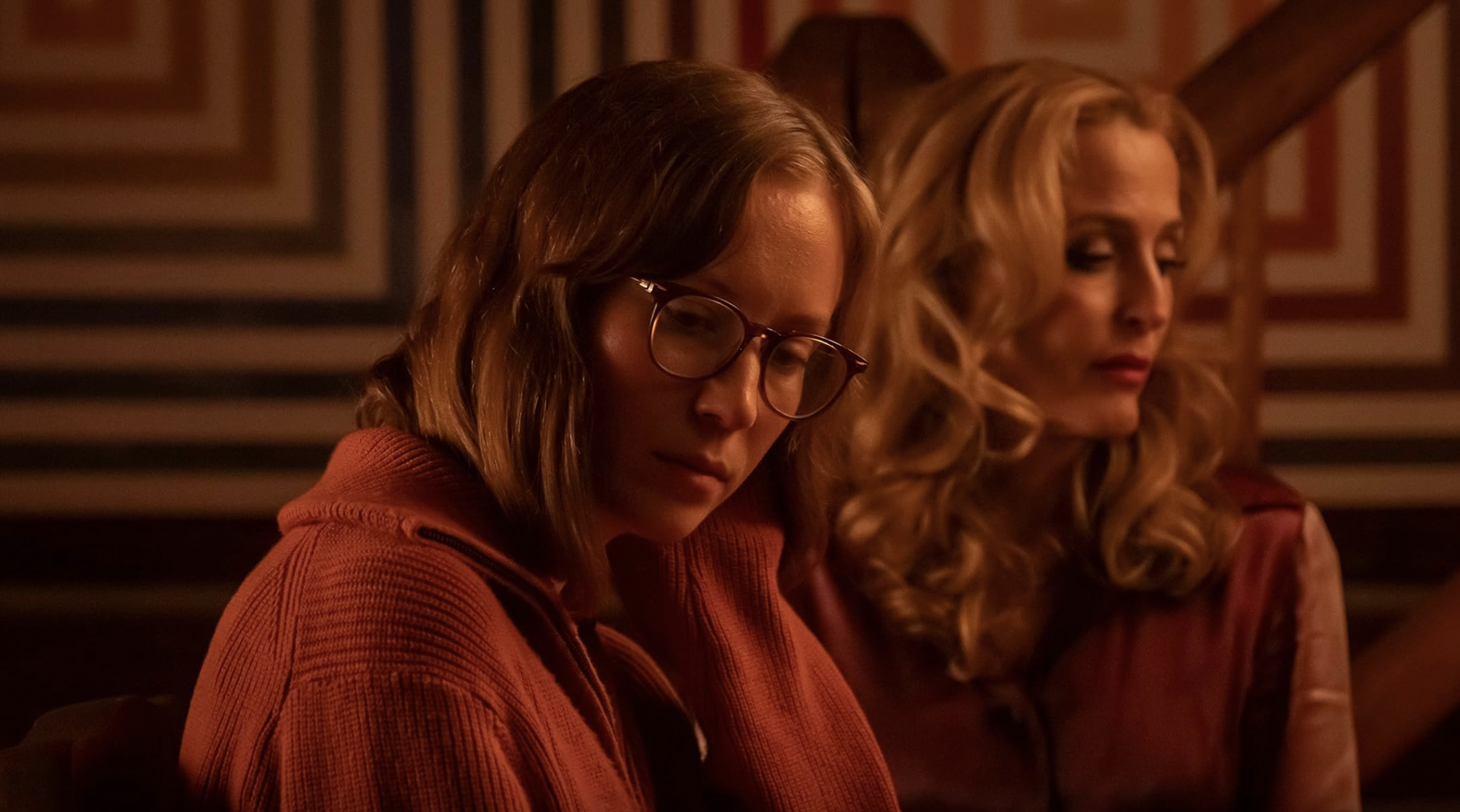
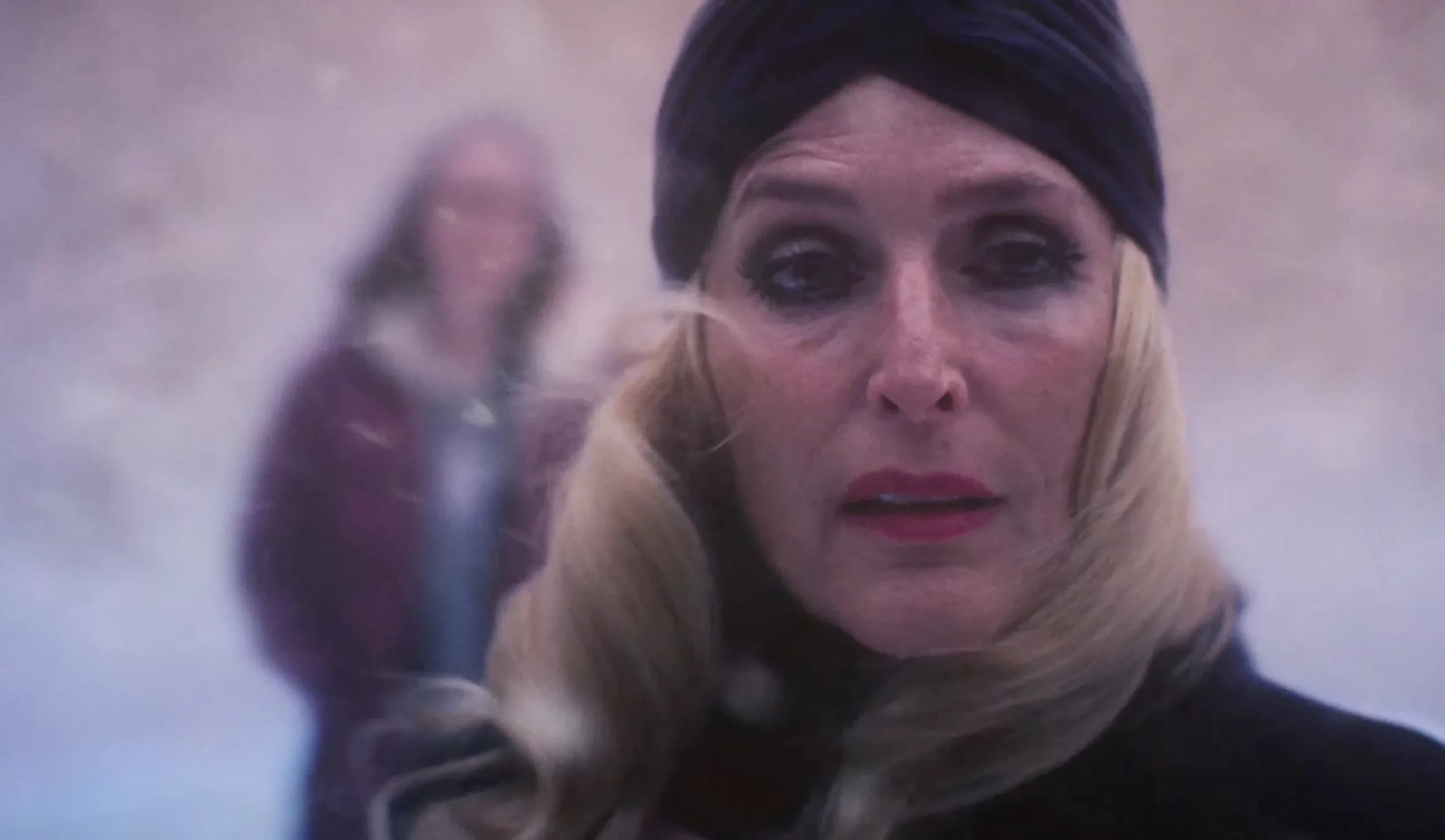
Teenage Sex and Death at Camp Miasma follows Kris (Hannah Einbinder), a young queer filmmaker tasked with rebooting the fictional Camp Miasma slasher franchise. As part of her creative process, she meets the reclusive actress Billy Preston (Gillian Anderson), who played the final girl in the first Camp Miasma film and is now living at the closed-down Camp Tivoli, where Camp Miasma was originally filmed. The enigmatic Billy is evocative of Norma Desmond in Billy Wilder’s Sunset Boulevard (1950), a comparison that is even explicitly referenced in the dialogue. What follows is a psychosexual meta-slasher that serves as both a deconstruction and a celebration of the genre.
Source: Mubi
Camp Miasma thrives at the intersection of sex and horror. In addition to its exploration of sexual awakening, the film simultaneously serves as a satire of the current state of horror cinema—from the incessant stream of sequels to the remaking of previously problematic films under a “woke” lens. At the same time, it skewers ‘80s slashers while also paying homage to them. Sex has always been a central element of the slasher genre, especially in the 1980s, when depictions of young people having sex at sleepaway camps while a masked killer picks them off one by one, or scantily clad women running for their lives, were commonplace.
While We’re All Going to the World’s Fair (2021) and I Saw the TV Glow (2024) were made shortly after Schoenbrun came out, reflecting their struggles with gender, identity, and transition, Teenage Sex and Death at Camp Miasma is their first film inspired by their life post-transition. Like their previous two films, it remains a meaningful exploration of gender and identity, but here the focus shifts more toward sexuality and pleasure. It captures the apprehension and dissociative feelings that arise when someone is uncomfortable in their own body, as well as how that discomfort can make it difficult to fully let go during sex and experience pleasure. It is an exploration of both sexual trauma and sexual awakening.

Source: Mubi
That sexual uncertainty and discomfort can often stem from feelings of gender dysphoria and insecurity. When someone does not feel like their authentic self, or feels as though they are stuck in the wrong body, it can be difficult to be fully present during sex or to allow themselves to relax and enjoy the experience. This is also what makes the horror genre especially well-suited for examining gender and sexuality. Many iconic horror characters can be read as gender-ambiguous or open to interpretation, including Norman Bates, Buffalo Bill, and Angela Baker.
The villain in the Camp Miasma franchise seems inspired by both Robert Hiltzik’s Sleepaway Camp (1983) and the Friday the 13th films. Kris points out to Billy, as they rewatch the original Camp Miasma together, that the origin story is transphobic. Similarly, some viewers interpret Sleepaway Camp as transphobic, while others refer to it as their trans awakening. Teenage Sex and Death at Camp Miasma suggests that both readings can be true at the same time. One person’s sexual trauma can be another’s awakening.
Source: Mubi
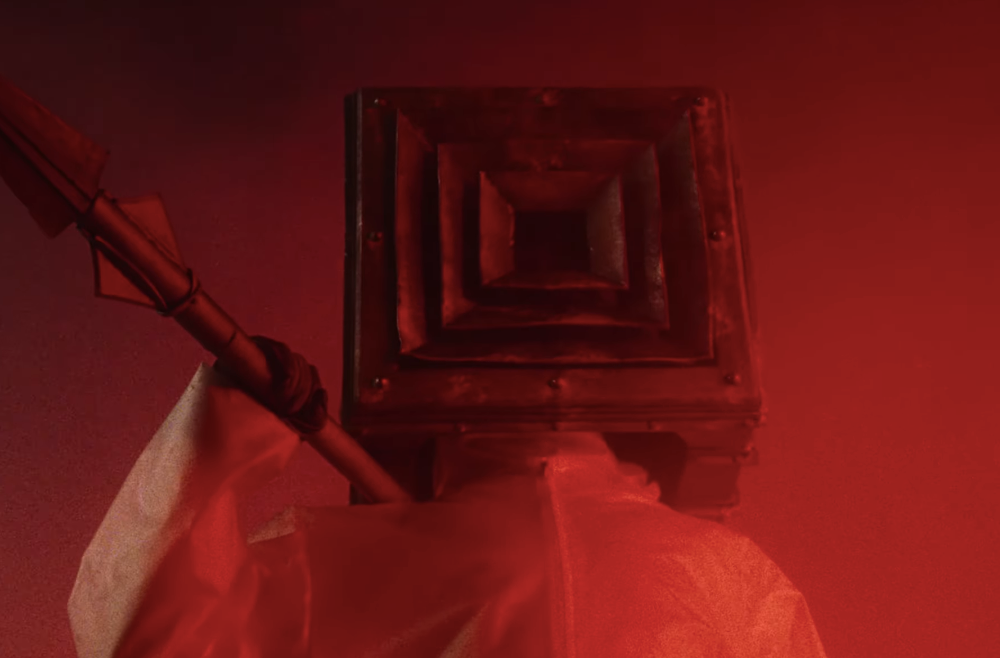
A slasher is only as strong as its villain, and it’s clear that a great deal of thought and care went into crafting Camp Miasma’s. For starters, the “monster” at the bottom of the lake is named Little Death, a French euphemism for the euphoric experience of orgasm. Additionally, Little Death is given a trans origin story that makes for a more layered character, along with a distinctive and highly memorable costume design consisting of an air conditioning unit for a head and a plastic bodysuit. On top of all that, Jack Haven delivers a captivating performance as the soon-to-be-iconic character.
Hannah Einbinder is magnetic as the film’s protagonist, and Gillian Anderson is enchanting as the eccentric hermit, Billy Preston. Both actresses bring immense emotional depth to their roles while also delivering plenty of laughs. Their chemistry is steamy, with a steady buildup of sexual tension simmering beneath even their most subtle interactions. The film’s visuals amplify the intensity, including the most sexually charged depiction of two people sharing KFC ever put to screen, which is hilarious and erotic in equal measure.
Source: Mubi
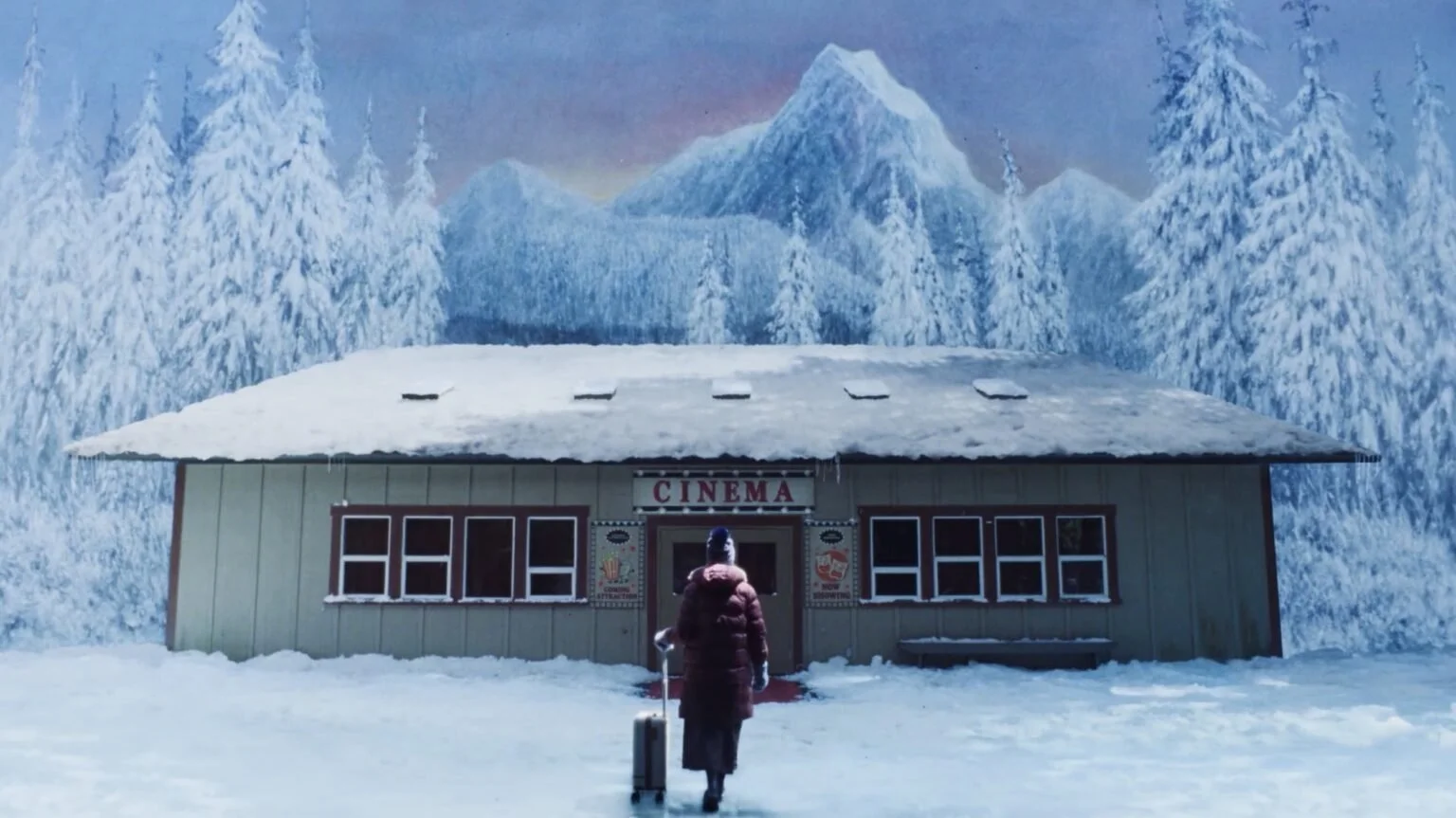
The production design and cinematography make the film feel like a fever dream. The film-within-a-film Camp Miasma has the grainy aesthetic of an authentic ‘80s slasher, while present-day Camp Tivoli carries an isolated, cozy atmosphere, like sitting by a fire on a snowy winter evening or curling up with a bucket of popcorn, candy, and your favorite comfort film. Eric Yue’s cinematography and Graham Mason’s editing further enhance this dreamlike quality through deliberate slow motion and cross-dissolves. Alex G’s score beautifully complements the tone, heightening suspense in the slasher sequences while adding a romantic, almost whimsical quality to its more playful and seductive moments. The soundtrack also features a range of nostalgic needle drops, including what may be one of the most creative uses of Counting Crows in recent cinema.
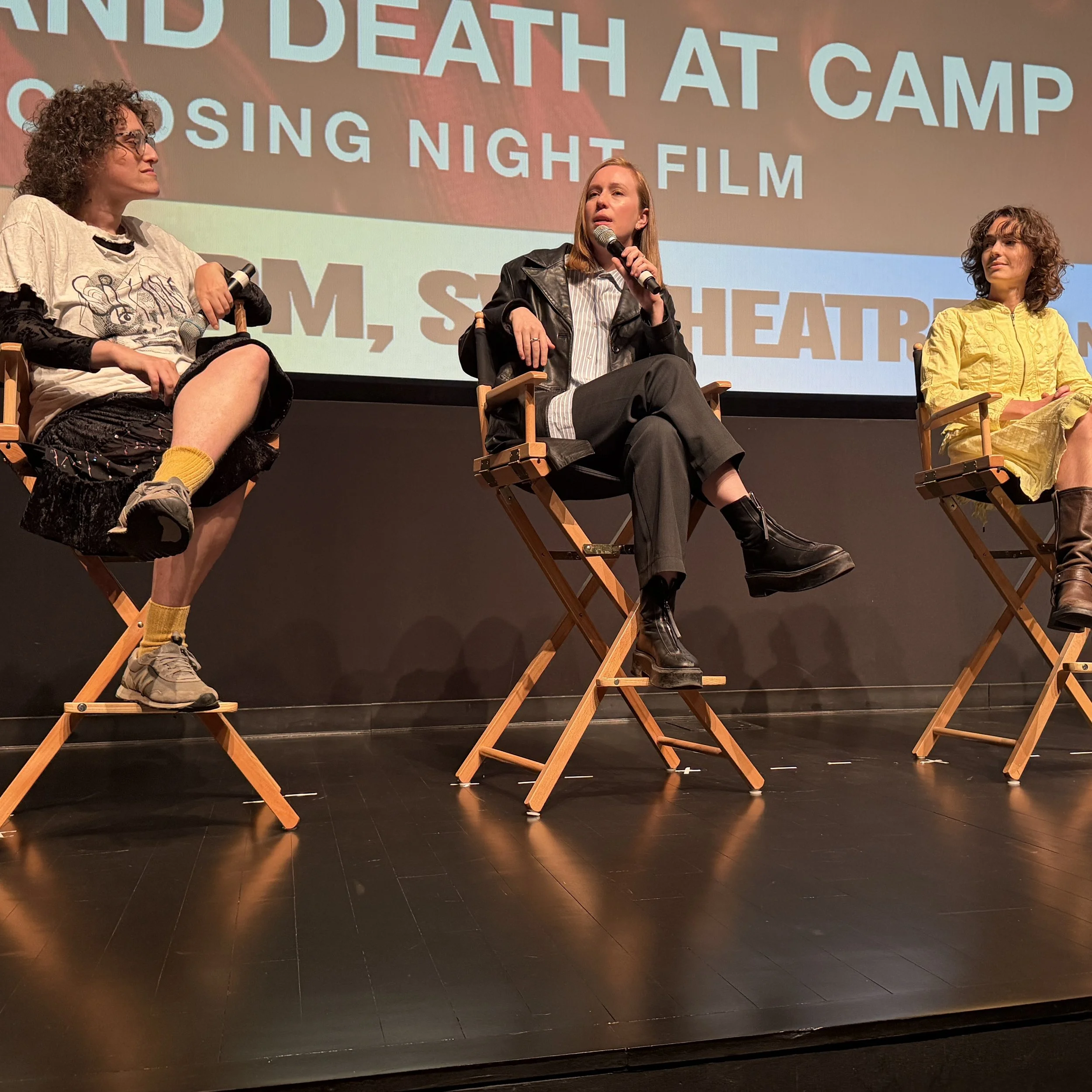
Jane Schoenbrun, Hannah Einbinder, and Jack Haven at NewFest Pride
Teenage Sex and Death at Camp Miasma features more fun, humor, and romance than Jane Schoenbrun’s previous films, but it still fits seamlessly into their oeuvre through its fascination with the ways media shapes identity, sexuality, and our sense of self. It is a meta sapphic slasher that is surreal, campy, and blurs the boundaries between art and reality, anchored by fierce performances and an inventive screenplay. It reinvigorates the genre while turning filmmaking itself into a tool for dissecting desire, all while remaining a bloody good time.
Teenage Sex and Death at Camp Miasma had its North American premiere at NewFest Pride on June 1, 2026. Mubi will be releasing the film in theaters on August 7th.
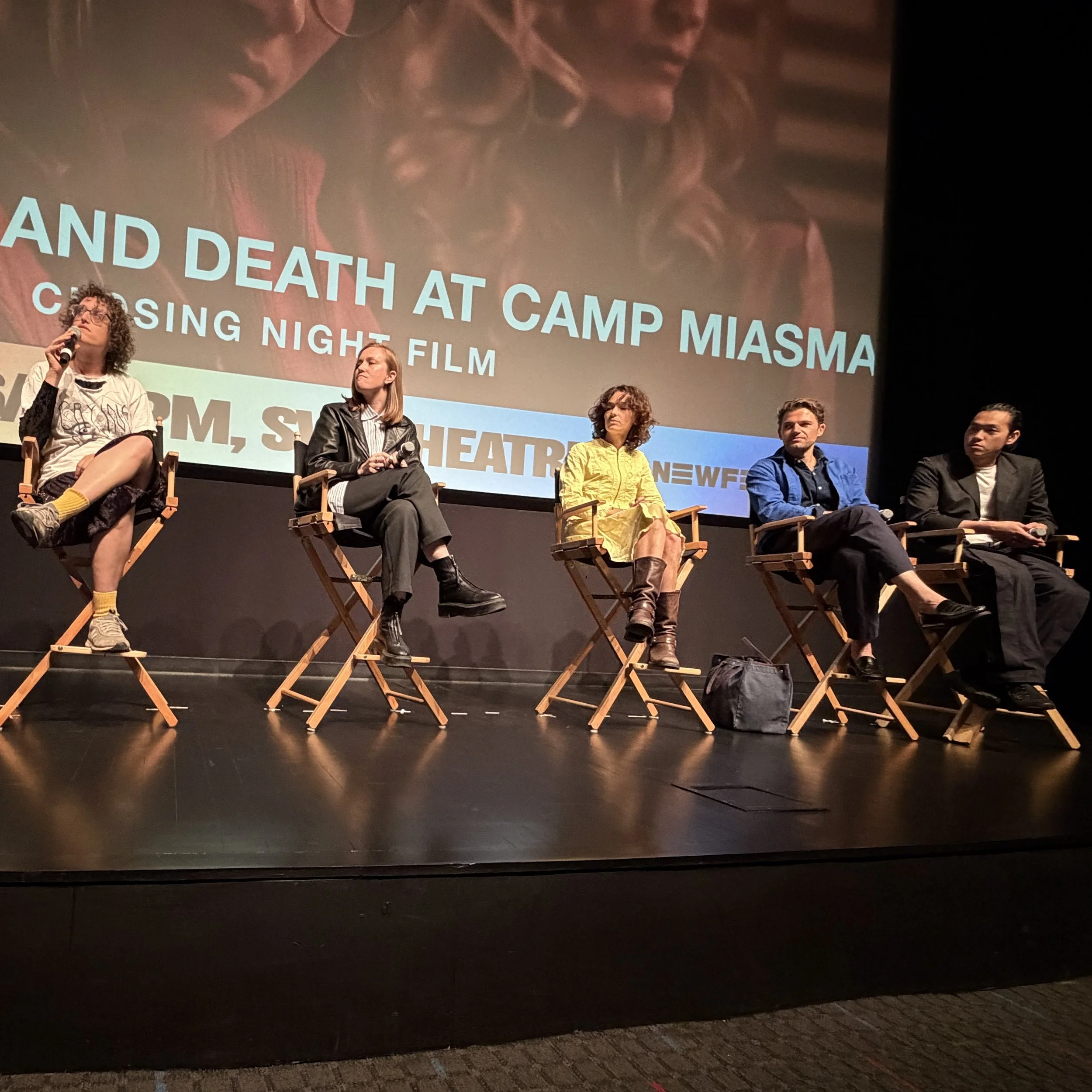
The cast and crew of Teenage Sex and Death at Camp Miasma during a Q&A at NewFest Pride