The Plague — Review
Source: Independent Film Company
As anyone who’s ever been the victim of adolescent bullying will tell you, kids can be ruthless and relentless. For decades, the male “bully” in film and television was a stereotype: the burly jock who’d toss the scrawny nerd into a locker, give them a wedgie, or inflict some other form of physical abuse. But as most of us who’ve been bullied know, real bullies often wield a different kind of power. They don’t need to harm you physically when they can turn everyone against you, destroying you mentally and emotionally instead. Their cruelty knows no bounds. And if your friends are bullying someone, it feels as though you have to join in. Otherwise, they’ll kick you out of the group and target you as well. It’s malicious, sickening, and Charlie Polinger’s film The Plague captures it all too well.
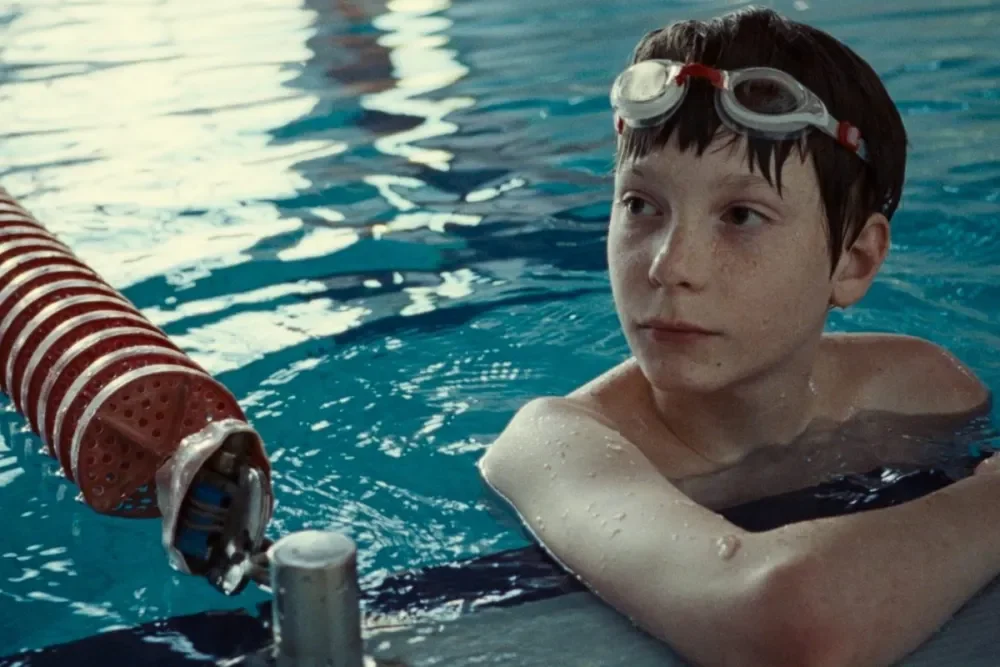
Polinger’s directorial debut is a psychological horror film that understands there’s something far more terrifying than ghosts or monsters: adolescence. It’s a simple story executed with exceptional skill. Ben (Everett Blunck) is a socially awkward teenager trying to fit in at water polo camp. But at that age, there’s usually some form of social hierarchy, and Jake (Kayo Martin) sits at the top of the pyramid. Naturally, Ben wants to get on his good side. As he makes friends, he discovers the boys have a tradition of ganging up on Eli (Kenny Rasmussen) and accusing him of having “the plague.” If anyone comes in contact with Eli, they have to scrub themselves clean, or else they’ll contract “the plague” as well. They act as though it’s a harmless game, but it’s clearly designed to enforce social exclusion. While some might call the metaphor heavy-handed, it’s undeniably effective.
The Plague is a film that will resonate with anyone who’s experienced bullying firsthand. But the decision to set the story in the year 2003 made it hit even closer to home for me, as I was also bullied that same year, despite being younger than the characters in the film at the time. Polinger’s film is the most accurate representation of bullying in the early aughts I’ve ever seen put to screen, to the extent that I could immediately sense it had to be inspired by a true story. It felt too painfully realistic and immensely personal to be pure fabrication.
Sure enough, the screenplay was inspired by Polinger rediscovering his journals from when he was 12, when he spent a summer at an all-boys sports camp. He recalled how his peers would claim someone was infected with "the plague.” As he illuminates, “It was a cruel social game—one that enforced conformity by singling out the misfit. The unspoken lesson: those who didn't conform were not simply different—they were threats, weak, deserving of punishment. This wasn't just a childhood game—it was a blueprint for manhood, teaching us that power came from exclusion and cruelty." The realism is what makes The Plague so terrifying; it’s exactly how twelve-year-old boys behaved at the time.
Source: Independent Film Company
The sound design and cinematography are so immersive that watching The Plague feels like being transported back to middle school, when acceptance was the ultimate goal and social stakes felt like life or death. Polinger successfully makes us feel that social anxiety so viscerally that it’s almost unbearable. This film is the closest I’ve ever come to reliving my own adolescence. As a result, it gave me an unexpected and newfound appreciation for aging. I walked out of this movie feeling unbelievably grateful that I’ll never have to experience those years of my life ever again. The Plague may not feel like a horror film in the traditional sense, but I found it more terrifying, unsettling, and uncomfortable than any conventional horror film I saw this year.
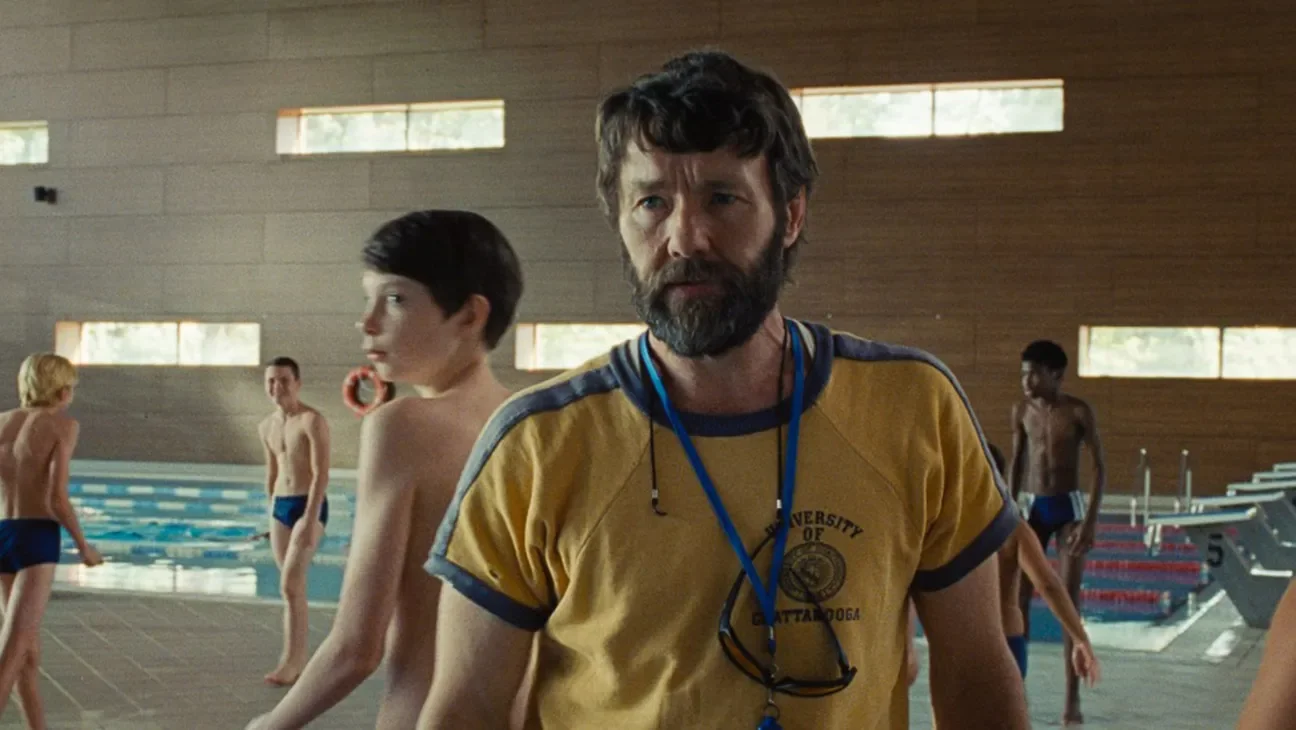
The performances are phenomenal. Joel Edgerton, one of the film’s producers, also plays “Daddy Wags,” the boys’ coach, bringing a strong sense of warmth and authority. The decision to cast actual 12 and 13-year-old boys for the roles adds to the film’s realism and immersion. Everett Blunck is fantastic as Ben, giving the character a sense of relatability and innocence, so the audience can feel his desperation for approval and his hesitation to join in the bullying. There’s an authenticity to Kayo Martin’s portrayal of Jake; he truly feels like the charismatic leader of the pack, the “cool” boy all the others aspire to emulate, so they’ll fall in line and do what he says and turn against whomever he chooses to target next.

Source: Independent Film Company
The Plague offers a harrowing look at masculinity and adolescence, exposing the power dynamics and social hierarchies at play. For a film set a little over twenty years ago, its message remains as relevant and urgent as ever. It’s an honest and daring debut that depicts cruelty and complicity with an unflinching eye. As we grow older, it’s easy to forget just how overwhelming adolescence truly felt. Time seems to speed up after graduation, but when you’re a kid—whether in school or at summer camp—everything moves slower, and it feels as though the entire world exists inside that one small social ecosystem. When popularity carries that much weight, being singled out or excluded feels catastrophic, because you haven’t lived long enough yet to realize life won’t always be this bleak. As adults, we can recognize how inconsequential those middle-school popularity contests really were, but when you’re living inside them, it’s almost impossible to see the light at the end of the tunnel. Polinger ensures that audiences remember exactly what that felt like. He immerses us in Ben’s world, letting us feel that claustrophobic intensity, as well as every subtle shift in social status, the desire to be accepted, and the fear of being shunned. Setting the film at a water polo camp is particularly fitting because navigating adolescent social hierarchies can feel an awful lot like struggling to keep your head above water. The Plague doesn’t merely portray adolescence; it plunges you headfirst into it and leaves you gasping for air.
The Plague hits theaters on December 24, 2025.