Tony — Review

Source: A24
At a time when so many biopics feel like formulaic compilations of a person’s greatest hits or cinematic renderings of their Wikipedia summary, Matt Johnson’s Tony feels like a breath of fresh air. The film deviates from the generic biopic structure, refusing to reduce Anthony Bourdain’s life to a glossed-over highlight reel or a rushed recap. Instead, it zeroes in on the summer of 1975, when Bourdain was 19 years old. By focusing on that one formative summer, the film gives us a deeper, richer glimpse into his early restlessness and recklessness as well as a more intimate portrait of his developing worldview and identity. The decision to make Tony a coming-of-age story allows Johnson to explore the humanity that countless conventional biopics often overlook.
Based on Bourdain’s bestselling memoir, Kitchen Confidential: Adventures in the Culinary Underbelly (2000), the film begins with a quote that is also featured on the poster: “I was—to be frank—a spoiled, miserable, narcissistic, self-destructive, and thoughtless young lout, and badly in need of a good ass-kicking.” This quote serves as the film’s thesis. Tony chronicles the very summer in which Bourdain receives that ass-kicking, forcing him to confront himself, the world around him, and the person he ultimately wishes to become.
Source: A24
The screenplay penned by Johnson, Matthew Miller, Todd Bartels, and Lou Howe is central to Tony’s effectiveness. It is not a straightforward retelling of Kitchen Confidential. Instead, it draws from stories in the memoir while taking some creative liberties, making it feel more like a reimagining than a direct adaptation. This approach lends the film a feeling of intimacy and realism. Similarly, Dominic Sessa’s performance does not feel like a mere impression of Bourdain. It feels like an interpretation. He expertly embodies Bourdain’s persona while still retaining the complexities of a real person rather than a caricature.
Sessa stars as the young Bourdain, or “Tony,” as he insists on being called in the film’s opening scene, where he interviews for a writing fellowship. In one moment, he confidently tells the interviewers that his writing falls somewhere between Salinger and Kerouac. In the next, he admits to a friend at a bar that he exaggerated and lied during the interview, laughing about it. Despite acknowledging his own embellishments, Tony remains convinced that he will land the fellowship.
Source: A24
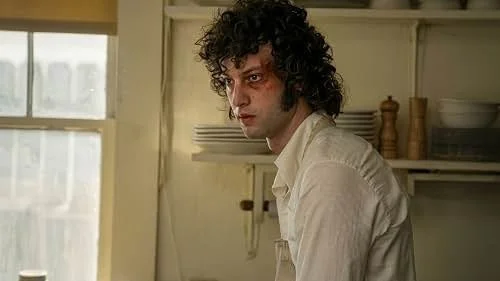
This introduction immediately establishes the contradictions that define him. He is ambitious and genuinely passionate about writing, but he is also willing to bend the truth and construct a version of himself that aligns with how he wants people to perceive him. His confidence is admirable, but it also borders on arrogance. In fact, he might be a little too arrogant for his own good, which is why he is in need of an ass-kicking. Even after he receives the call that the fellowship went to someone else, he continues to pretend as though he got it. Sessa’s ability to convey Tony’s false sense of bravado while allowing us to sense the insecurities lurking beneath the facade is astounding.
Tony’s tendency to romanticize his own life is also evident in his relationship with Nancy (Emilia Jones), a former high school crush. After she tells him she is spending the summer in Massachusetts, Tony’s rejection from the fellowship pushes him toward an impulsive decision. He drops everything, leaves New Jersey behind, and follows Nancy to Provincetown. Not only does Provincetown provide him with the chance to pursue the girl, but it also represents an opportunity to reinvent himself.

Source: A24
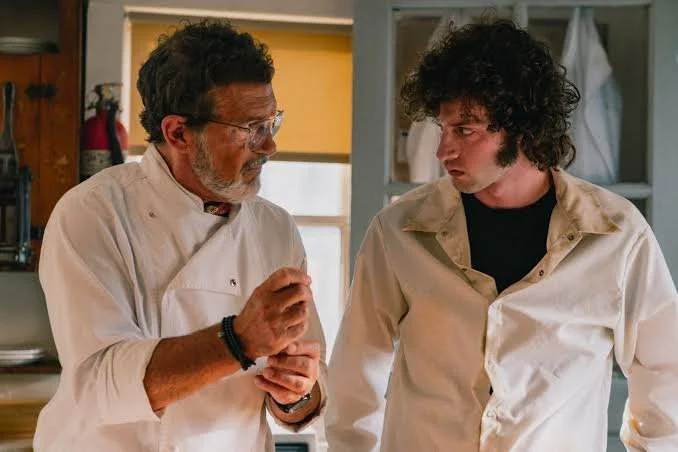
In Provincetown, Tony eventually finds himself working at a restaurant for the summer. Antonio Banderas delivers a commanding performance as the chef who runs the establishment and serves as a mentor figure for Tony. Their relationship is one of the film's most compelling elements, resembling a more humorous take on the intense mentor-mentee dynamic in Damien Chazelle's Whiplash (2014). Chef is generous enough to let Tony sleep in the hammock in his backyard every night, but also stern enough to wake him up by dumping a bucket of water on his head every morning.
One of Tony’s coworkers, Sal (Leo Woodall), functions almost as a foil to Banderas’ character. In many ways, the two represent the different paths Tony’s life could take. While Chef has earned a respectable reputation through discipline and experience, Sal embraces a more rebellious lifestyle. Yet both characters are written and portrayed with nuance, preventing either from being reduced to a stereotype. Woodall plays Sal with such magnetic charisma that he becomes a major scene-stealer. The restaurant staff shares the brotherly camaraderie and playful prankster dynamic of workplace comedies like Waiting... (2005), but they also take their work seriously, and the kitchen carries the pressure-cooker intensity of The Bear. Still, the film's heart lies closer to coming-of-age stories like Adventureland (2009) and The Way, Way Back (2013), depicting the wandering energy of a young person searching for direction while discovering a sense of community over the course of one unforgettable summer.

Source: A24
Sessa delivers the best performance of his career so far. He is delightfully snarky, frustratingly foolish, and simultaneously fiercely confident and riddled with insecurities. He perfectly represents the contradictions of youth: the desire to prove yourself, the fear of failure, and the uncertainty of figuring out who you are and where you belong. Banderas's performance is equally excellent and worthy of awards consideration. He portrays a tough but compassionate mentor, extending Tony a level of grace and understanding that he does not always deserve.
Cinematographer Michael Bauman may have received an Academy Award nomination for Paul Thomas Anderson’s One Battle After Another (2025), but it is his work on Licorice Pizza (2021) that makes him such a fitting collaborator for Tony. Like Licorice Pizza, Tony embodies the laid-back, sun-drenched energy of a 1970s coming-of-age story, embracing the loose, drifting spirit of a hangout movie. Bauman’s naturalistic, observational camerawork beautifully conveys the aimlessness, excitement, and possibility of early adulthood. Despite being deeply rooted in a specific time and place, the imagery in Tony possesses an almost timeless quality. The film’s nostalgia does not stem from romanticizing or idealizing the past, but from evoking the fleeting freedom and seemingly endless possibilities of youth. It makes me long for simpler summer days, when the future still felt wide open. Curt Lobb and Robert Upchurch’s editing also ensures that the film maintains its effortless rhythm and pacing.
Matt Johnson once again teams up with his frequent collaborator Jay McCarrol, whose score is absolutely enchanting. His music carries a wistful, vibrant energy that perfectly meshes with the film’s tone. At times, it feels dreamy and optimistic, capturing Tony’s excitement as he embarks on this new adventure. At other times, it reflects the adrenaline rush of working in a busy kitchen and the challenges that coincide with trying to find his place in the world. The score magnificently mirrors Tony’s unpredictable and spontaneous spirit.
Source: A24
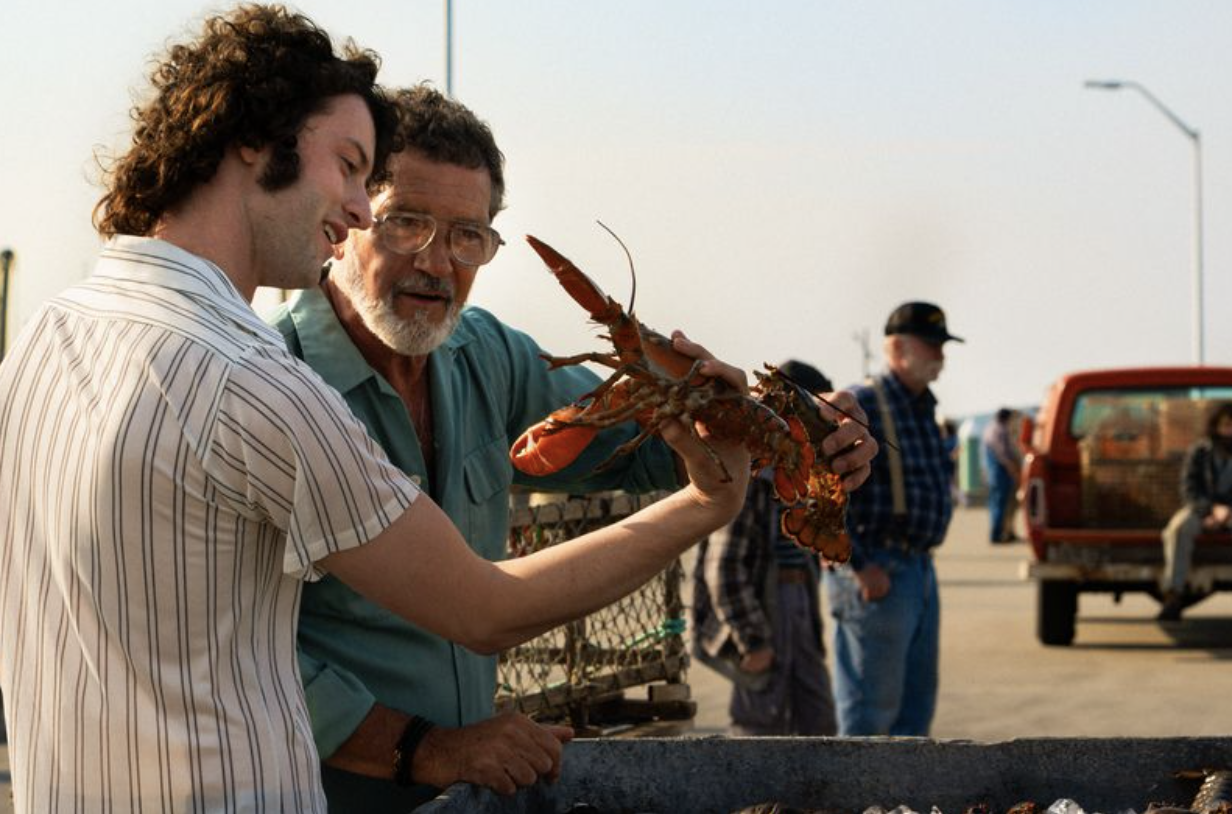
Part of what makes Tony so captivating is the distance between the Tony we see on screen and the person the world would eventually come to know as Anthony Bourdain. Johnson could have opted for a traditional biopic chronicling Bourdain’s rise to fame, but instead chooses to hone in on this pivotal period of his life, giving the film a distinctive identity. All too often, biopics about famous figures focus on their larger-than-life personas and the moments that made them legendary. Here, Bourdain is very much the self-described spoiled, miserable, narcissistic, self-destructive, and thoughtless young lout in need of an ass-kicking. The film revels in the ordinary moments before he became extraordinary, which is why it feels raw and real. By depicting Bourdain before he truly found his calling, Tony presents a version of him that is far easier to relate to and connect with.
The romance is the film’s weakest element. Nancy may be the impetus for Tony’s decision to head to Provincetown, but her character gradually takes a backseat as the story progresses. This is not necessarily a flaw, as the narrative is far more interested in Tony’s journey toward self-discovery and his dynamic with Chef, and audiences are likely to be more invested in those storylines as well. Even so, the romance ultimately feels underdeveloped, serving as little more than a plot device to drive the story forward. The one complaint I could see audiences walking away with is that they wanted to see Tony spend more time cooking. But much like a skilled chef, a good director understands the value of restraint, serving just enough to leave the audience satisfied while still wanting more.
Source: A24
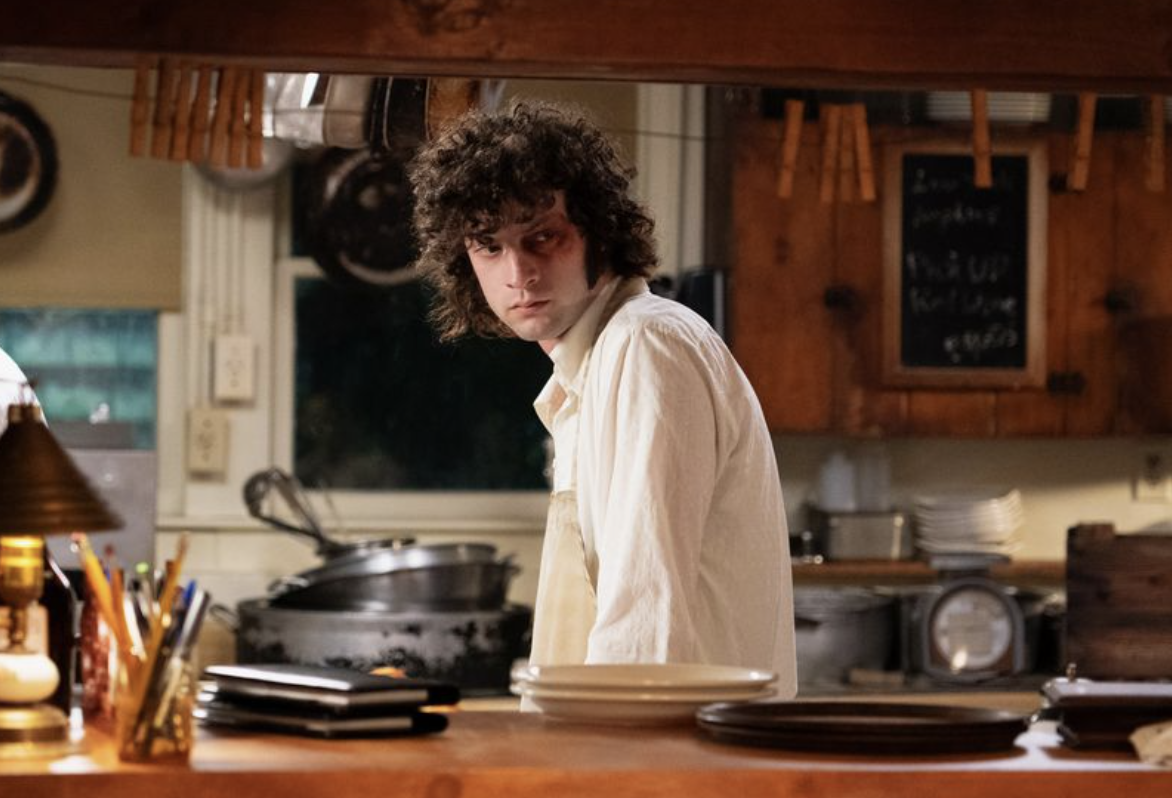
Tony succeeds because Matt Johnson recognizes that the journey toward becoming Anthony Bourdain is equally as compelling as the cultural icon he would eventually become. He does not treat Bourdain as a legend waiting to be discovered, but as a flawed young man shaped by uncertainty, mistakes, and reckless decisions. By slowing down and focusing on this brief but transformative period of his life, the film avoids the traditional biopic formula of rushing through a person’s greatest achievements while simultaneously reminding us that even the people who inspire us were once young, lost, and struggling to figure things out. This is what ultimately makes Tony such a moving portrait of growth and self-discovery. It serves as both an “ass-kicking” for its titular character and for the audience, affectionately letting us know that sometimes we need to embrace failure and recognize that not everything will go as planned. It is often through our missteps and unexpected left turns that we discover who we are and where we are meant to be.
Tony will receive a limited release on August 7, 2026, before expanding to more theaters on August 21st.