Josephine — Sundance Review
Source: Sundance
What if your child witnessed a horrible act of violence at a young age? How would you answer their questions, help them process it, help them cope? Those questions lie at the heart of Beth de Araújo’s Josephine, one of the most celebrated films out of this year’s Sundance Film Festival. It’s a difficult watch, which is fitting because it’s also difficult for the parents to have those conversations with their child.
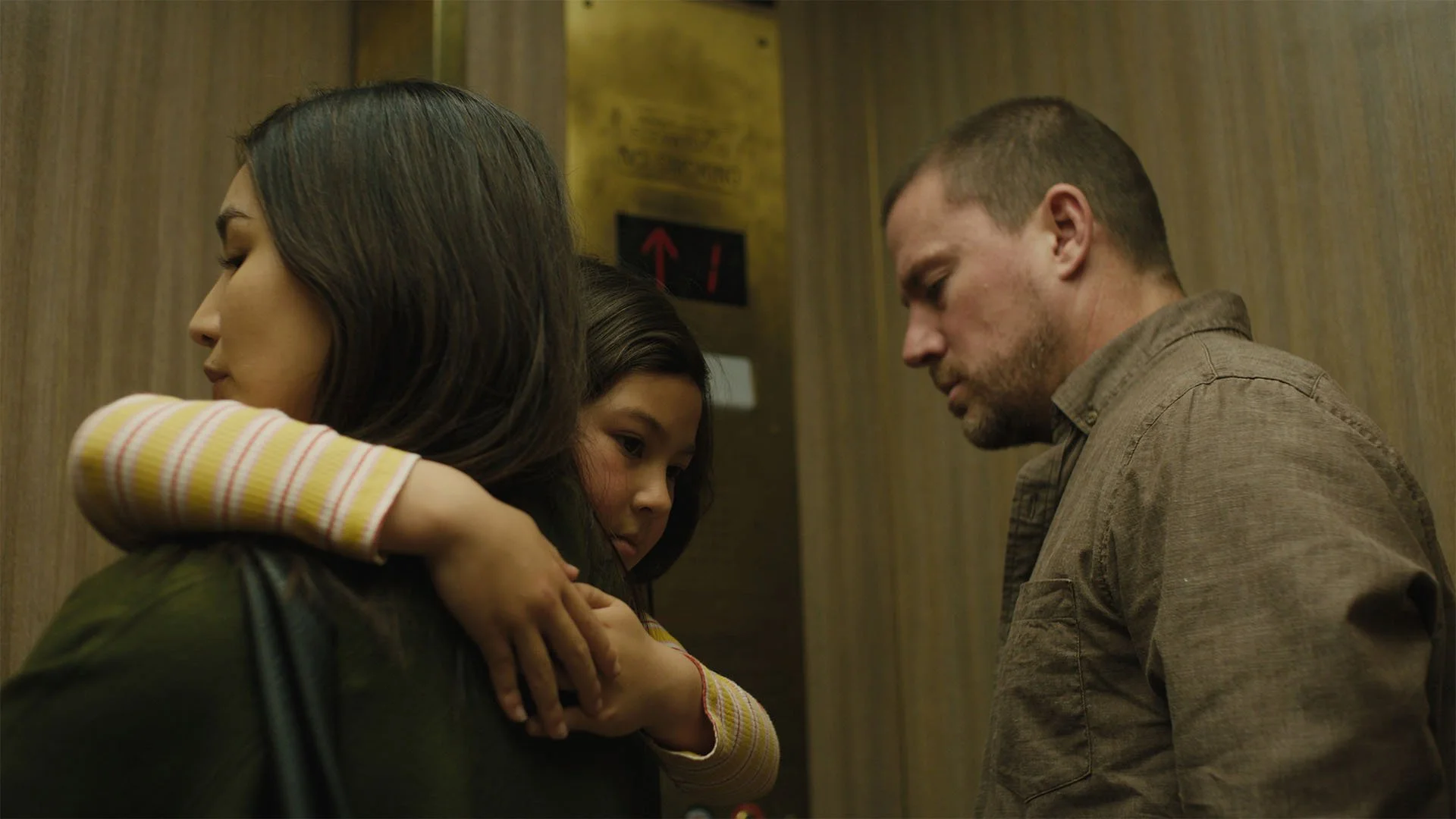
The film follows the titular Josephine (Mason Reeves), an 8-year-old girl, who goes for a run in Golden Gate Park with her father, Damien (Channing Tatum). After running ahead and getting separated from her father, she witnesses a graphic assault. This unlocks a new fear in her, and she begins to act out in unexpected ways as her father and mother, Claire (Gemma Chan), struggle to help.
The score from Miles Ross alternates between melancholic and droning melodies that amplify the sense of anxiety. Greta Zozula’s remarkable cinematography adds to the escalating tension and feeling of unease. The frequent point-of-view, eye-level, and low-angle handheld shots, as well as slow motion, emphasize the childhood perspective and allow us to see the world through Josephine’s eyes, to feel her curiosity, fear, dread, and rage.
There are a number of fascinating shot compositions, but one of the most interesting visual motifs is the decision to have Josephine see the perpetrator (Philip Ettinger) nearly everywhere she goes. The first time she observed him sitting on the floor of her bedroom sent chills down my spine. It’s a clever way to capture how the crime she witnessed continues to haunt her, and it’s done in a way that feels true to a child’s imagination. At one point, she even divulges, “I see him everywhere. All the time.” Beth de Araújo excels at depicting the lingering sense of paranoia, how Josephine is full of apprehension, unsure of whom to trust.
Mason Reeves delivers an impressive debut turn, one that carries an abundance of emotional weight as she experiences something no child should have to endure, especially at such a young age. Her performance is vulnerable yet volatile as she grapples with a myriad of emotions. Channing Tatum’s portrayal of her father feels authentic, as he’s fiercely protective yet unable to hide his frustrations as his daughter continues to disobey him. Gemma Chan is tender and sensitive in her depiction as a mother unprepared to handle such a complex situation.
Beth de Araújo’s screenplay is simultaneously thoughtful and thought-provoking. It will motivate parents to reflect on how they would navigate such harrowing circumstances. It’s full of perceptive ruminations on parenting, the justice system, gender, and more. One common theme the film explores is the notion that we cannot control what happens to us; we can only control how we respond. As Claire explicates, “There will be so many people and situations that will hurt you. And that’s not your fault. But it is your responsibility to fix your own pan.” Josephine serves as a devastating and all-too-real reminder that, no matter how hard we desperately try to shield children from the painful realities of the world, unfortunately, we can’t protect them from everything.
Beth de Araújo’s Josephine is an emotional gut punch and a powerful, haunting portrait of the corruption of childhood innocence. Through Mason Reeves’ extraordinary performance, Beth de Araújo’s thoughtful screenplay and direction, and Greta Zozula’s immersive cinematography, the film plunges us headfirst into the perspective of an 8-year-old girl wrestling with the trauma of witnessing a violent crime and having her illusion of safety shattered. It’s an unflinching look at the fragility of innocence and how, tragically, children are often forced to confront a world far crueler than they should ever have to face.
Josephine premiered at the Sundance Film Festival on January 23, 2026.