Memorizu — Tribeca Review
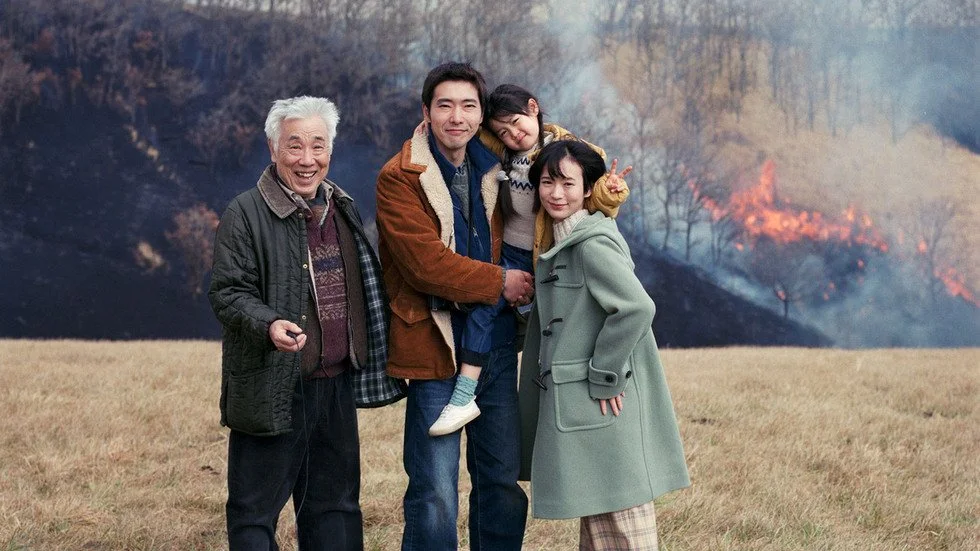
Source: Alpha Violet
Many stories, movies, and even the way we casually talk about our lives condition us to believe that life is defined by its peaks and valleys: graduations, weddings, breakups, career changes, and other milestones that punctuate our personal narratives. Everything else is often treated as connective tissue between the moments that supposedly matter. I often think of a line from Don Hertzfeldt’s 2012 film It’s Such a Beautiful Day, where the main character drops his keys on the counter and thinks about all the times he’s done that before “and how many days of his life were wasted repeating the same tasks and rituals in his apartment over and over again. But then he wondered if, realistically, this was his life, and the unusual part was his time spent doing other things.” The milestone moments we use to measure our lives are rare. Most of our existence occurs in the mundanity, in the quiet repetition of daily habits and routines. Yet when we look back, it is often those seemingly insignificant moments that carry the greatest emotional weight. This understanding—that a life is ultimately shaped less by its defining events than by the accumulation of small memories—sits at the heart of Memorizu.
Miiku Sakanishi’s debut feature follows Yuta (Tasuku Emoto), a man living in Tokyo with his family. After his father-in-law, Makoto (Issei Ogata), the owner of a small photo studio, fractures his leg, Yuta travels to Kyushu to help manage the business. In the process, he must spend sixty days apart from his wife, Yuki (Moeka Hoshi), and their daughter, Hana. Though they cannot be together physically, Yuta and Yuki stay connected through a steady exchange of photos and video messages. In doing so, Memorizu creates an intriguing dialogue between the analog and the digital, juxtaposing the traditional film photography practiced at Makoto’s studio with the immediacy of digital images and videos. The film doesn’t argue that one method of capturing memories is superior to the other. Instead, it suggests that both serve the same purpose: preserving the fleeting, ephemeral moments that ultimately make up our lives.
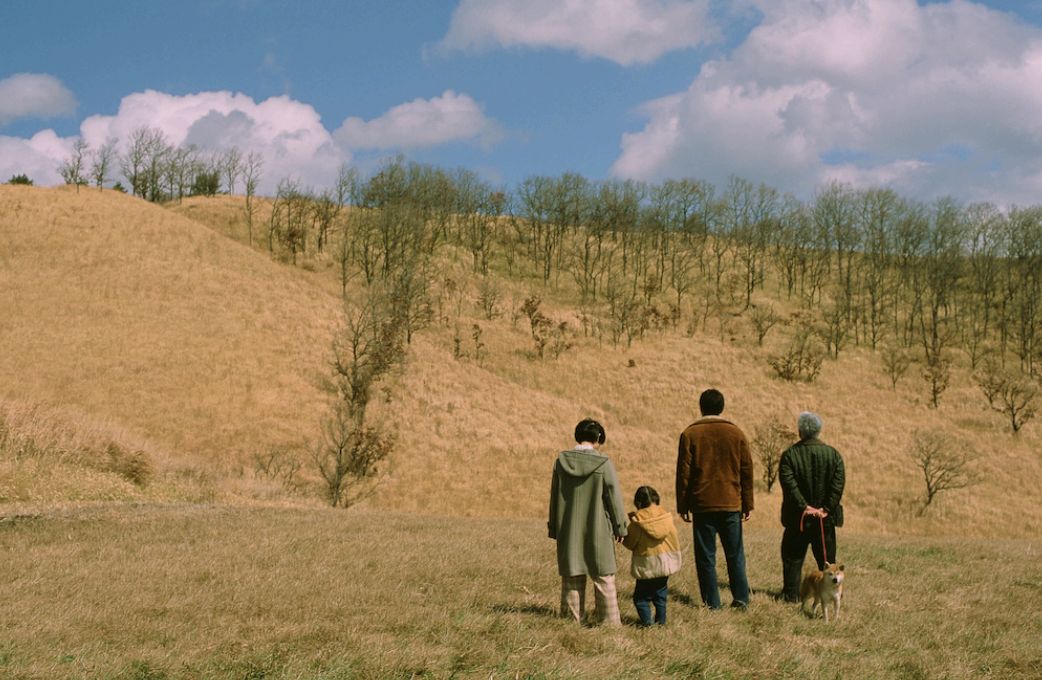
Source: Alpha Violet
When discussing his short film For a While, filmmaker Miiku Sakanishi declared, “It has barely any story. How could I show an everyday, ordinary stretch of time, visually? I think that’s how it started for me. Whether I’m shooting video or taking photos, I’m mindful of making a record of something. At the same time, our everyday lives are accumulations of minor moments in time, but people tend to forget such minor things, and that’s what interests me.” That statement feels equally applicable to Memorizu. Like his previous work, the film thrives on visuals, mood, and atmosphere rather than plot, prioritizing emotional texture over narrative momentum. It finds meaning in the gradual accumulation of everyday moments and memories rather than dramatic narrative turns.
However, that approach may prove challenging for some viewers. Those expecting a more conventional narrative may struggle to immerse themselves in the film, growing impatient with its deliberate pacing and the sense that “not much really happens.” Conversely, the film’s focus on life's smaller moments allows viewers to bring their own experiences and memories to the work. Much like Train Dreams (2025) and Perfect Days (2023), Memorizu derives much of its emotional power from the audience's ability to recognize fragments of their own lives within its delicate observations. Instead of dictating how viewers should feel, the film provides space for introspection and reflection.
The performances are restrained and grounded in naturalism, aligning with the film’s observational, meditative style. The actors deliver subtle, understated work, enabling emotions to emerge through small gestures. This minimalist approach allows their characters to feel lived-in rather than performed, as if we are simply observing fragments of real lives unfolding on screen. The effect is an authenticity that feels unforced and unembellished.
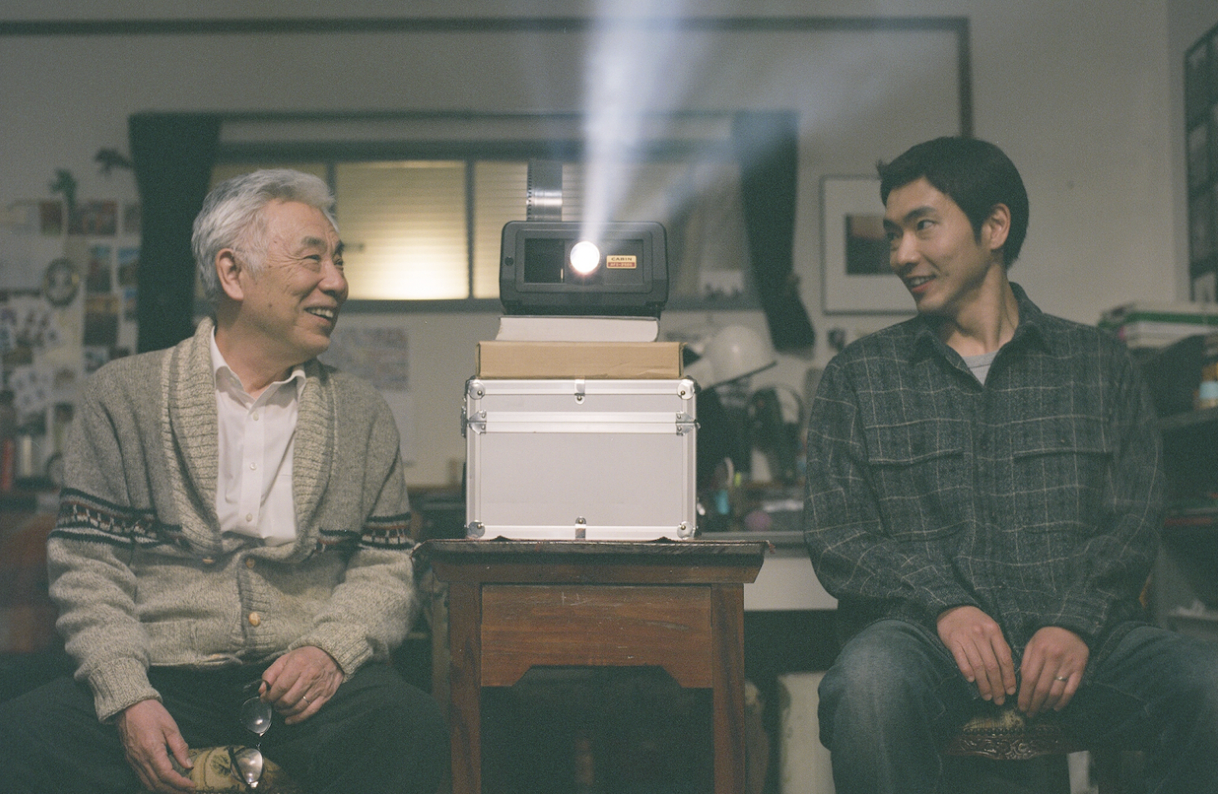
Source: Alpha Violet
Comparable to Aftersun (2022) and this year’s Blue Heron, Memorizu is a moving meditation on memory and the passage of time. As a film about photography, Yoichi Kamakari’s cinematography is given the spotlight. Every frame feels meticulously composed and artfully constructed. The film lingers on each frame, inviting us to absorb its details and find meaning within it, like observing a painting in a museum. Whether capturing vast fields or looming trees, Japan's landscapes heighten the film’s visual artistry. Even the most ordinary tasks—such as eating a meal or taking a picture—are rendered subtly significant, as Memorizu finds beauty in the rhythms and routines of everyday life.
Memorizu is a patient and poetic directorial debut from Miiku Sakanishi. The story is sparse, but the imagery does most of the talking. The film deviates from conventional storytelling and doesn’t rely on dramatic beats. Instead, it lingers in moments that might otherwise go unnoticed. In doing so, it invites the viewer to slow down and consider how much of our lives has been quietly spent in these in-between spaces—moments that rarely feel significant as they happen, but accumulate into something meaningful over time. There’s a slowness and stillness to the film that serves as a quiet, gentle reminder to cherish the little things.
Memorizu premiered at Tribeca on June 6, 2026.