One Night Only — Review

Source: Universal Pictures
I love a good high-concept romantic comedy. In fact, one of my favorite films from last year was David Freyne's Eternity (2025), which also starred Callum Turner. No matter how unrealistic the central idea is, I'm willing to buy into almost anything if the film puts in the work to establish its rules and commits to them. What loses me is when a movie introduces an intriguing concept only to abandon it halfway through. William Bridges' All of You (2024), for instance, began with a fascinating sci-fi hook before turning into a fairly conventional romance. Going into Will Gluck's One Night Only, I was worried it would make the same mistake.
To the film's credit, it puts considerable effort into its world-building and never completely abandons its central idea. In this world, premarital sex is illegal except for one night each year. Yet, much like The Purge (2013), which boasted a creative one-night-only premise before ultimately devolving into a generic home invasion thriller, One Night Only does little with its high-concept hook beyond using it as a backdrop for an otherwise conventional romantic comedy. Rather than exploring the implications of its dystopian society, the premise primarily exists to keep its two leads apart, manufacturing the sexual tension of a forbidden romance.

Source: Universal Pictures
Travis Braun's screenplay, aided by the production design, works overtime to sell the setup through news broadcasts, advertisements, and flyers explaining the controversial congressional mandate that much of New York City opposes. We learn that the law has led to declines in STIs and teen pregnancy rates, and that citizens have tattooed wrist sensors that automatically alert authorities if two people's dopamine, testosterone, and other hormone levels spike while they are in physical contact. However, there are so many mechanics to explain that the film often feels weighed down by exposition. One Night Only feels more concerned with explaining its premise than exploring its possibilities.
Nonetheless, it is probably for the best that the film never delves too deeply into the implications of the mandate, as the logical consequences would likely be far too bleak for a lighthearted romantic comedy. I probably would have preferred the film as a straightforward romcom, because its high-concept premise never quite worked for me. While I admired how much effort the screenplay devotes to explaining the law and anticipating the audience's questions, all that exposition ultimately had the opposite effect: the more the film tried to justify its world, the less convincing it became. I was still left with countless questions, and the explanation for how such a mandate could ever come to exist was too far-fetched for me to suspend my disbelief.

Source: Universal Pictures
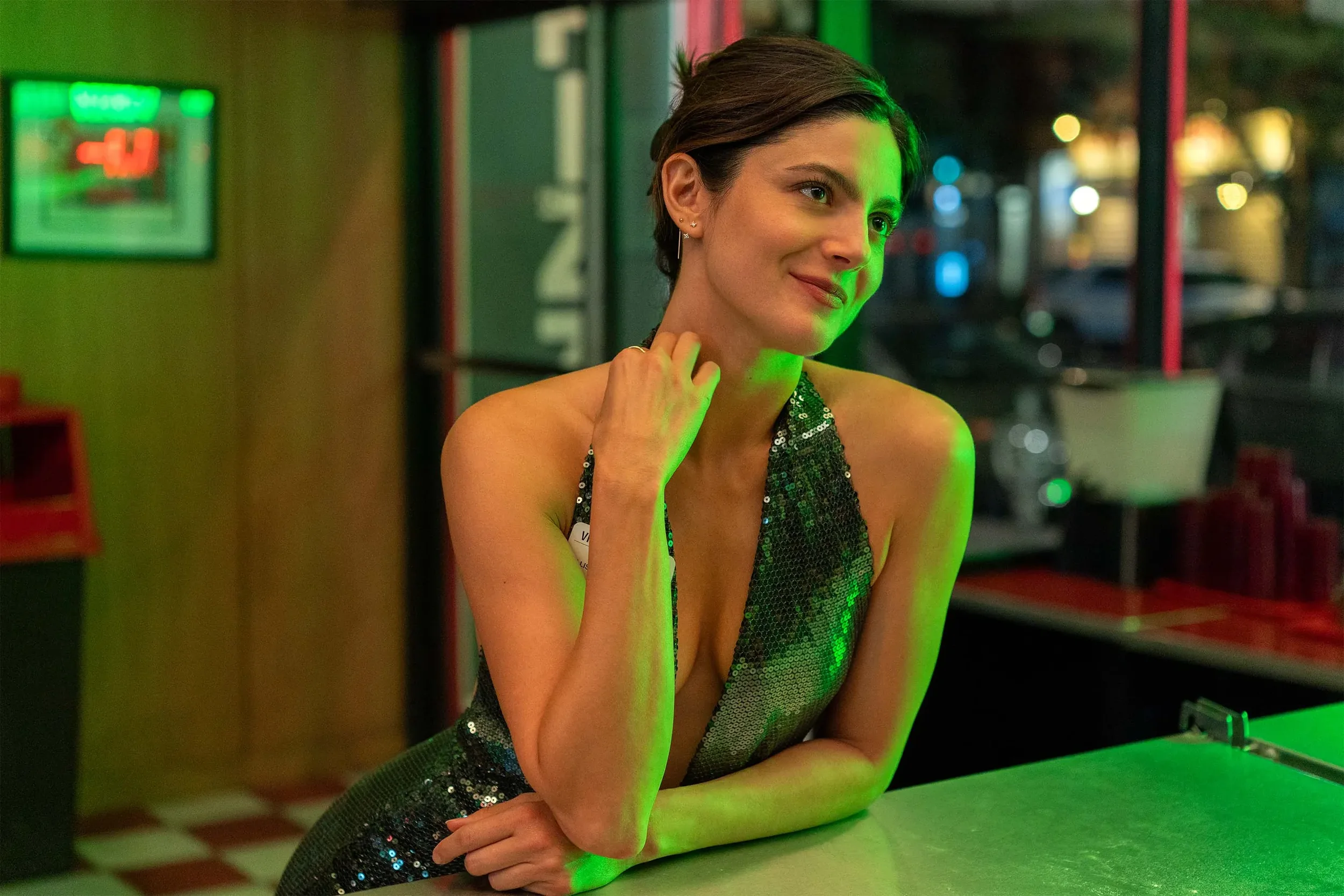
Moviegoers drawn to One Night Only because of its concept are likely to walk away frustrated or underwhelmed, as the film never fully capitalizes on its intriguing setup. Those simply looking for a cute, easygoing romantic comedy, however, should still have a good time. If you're willing to look past the premise, the film delivers a few laughs and some sweet moments, thanks in large part to the charming performances from Monica Barbaro and Callum Turner. Barbaro and Turner are charismatic on their own, and their effortless chemistry makes it easy to root for them. Barbaro stars as Allie, a young woman searching for a genuine connection rather than another meaningless encounter. Meanwhile, Turner's Owen is on the prowl because his girlfriend (Maya Hawke) decides she would rather spend the one night a year they're allowed to have sex with someone else.
Source: Universal Pictures
The story is as predictable as you’d expect. In fact, if someone asked me to write down how I thought the movie would end before I even stepped foot in the theater, my prediction would have been correct. What is impressive, however, is that despite its predictability, the film's charm, chaos, and chemistry held my attention from start to finish. At times, it made me laugh and smile; at others, it left me frustrated by the characters' decisions. Yet for all my qualms with the film, I must admit I was never bored.
One Night Only also nods to Leo McCarey's An Affair to Remember (1957), though the reference doesn't quite land, as it mostly made me wish I was rewatching that film instead. The film's humor and charm come from the ridiculous situations Allie and Owen find themselves in throughout the night and the increasingly bizarre ways they keep bumping into each other. At times, it almost feels like a romcom version of After Hours (1985), with one chaotic circumstance leading to another. The frustrating part is that there is already a film that combines the frenetic, one-night-in-New-York-City energy of After Hours with a dystopian romance premise: Steve De Jarnatt's Miracle Mile (1988). Unlike One Night Only, Miracle Mile uses its setup to heighten the emotional stakes and shape every aspect of the story. In One Night Only, however, the premise often feels more like a gimmick than an essential part of the narrative.

Source: Universal Pictures
Yaron Orbach’s cinematography is functional but fairly unremarkable, doing little to distinguish the film visually. It captures the chaos of Allie and Owen’s night effectively enough, but it never finds a style that matches the premise's more interesting possibilities. Este Haim and Christopher Stracey’s score fares better, adding a playful, romantic sense of whimsy that helps give the film some personality. The film also features some fun cameos and a star-studded supporting cast, though most of these appearances feel more like pleasant surprises than substantial additions to the story. Ironically, the most convincing world-building in One Night Only has nothing to do with its dystopian premise—it’s the way the film captures the awkward, unpredictable nature of dating in New York City: the fleeting connections, unexpected encounters, uncomfortable run-ins with people you'd rather avoid, and the cautiously optimistic belief that one night can change everything.

Source: Universal Pictures
Ultimately, One Night Only feels like a movie caught in an identity crisis. As a high-concept film, it never fully explores the fascinating questions raised by its premise. As a straightforward romantic comedy, however, it is far more successful, thanks largely to the chemistry between Barbaro and Turner. The result is a film that is frustratingly close to being something much more interesting, but still manages to deliver enough laughs, charm, and romance to make for an enjoyable night out. Despite its unique concept, One Night Only is a surprisingly familiar experience, but there is a certain comfort in watching a movie that delivers exactly what you expect. Like ending an exhausting evening with a slice of pizza, the film is undeniably cheesy—but when that is what you’re craving, it hits the spot.
One Night Only hits theaters on August 7, 2026.