The End of Oak Street — Review
Source: Warner Bros
David Robert Mitchell has one of the most eclectic filmographies of any director working today. He first emerged on the scene with 2010’s The Myth of the American Sleepover, a coming-of-age summer movie that authentically captures the awkwardness of adolescence, before following it with his breakout horror hit It Follows (2014). Then came Under the Silver Lake (2018), a neo-noir black comedy that was poorly received by critics but remains, in my opinion, the closest anyone has come to making something truly Lynchian in the last decade outside of Lynch himself. It’s fitting, then, that a moment in Mitchell’s latest film, The End of Oak Street, specifically reminded me of Twin Peaks: The Return. With only four features, Mitchell has already run the gamut of genres. His latest is a sci-fi dinosaur movie steeped in ’80s nostalgia. Whether audiences love or hate his work, one thing is certain: each of his films is unmistakably distinct.
Source: Warner Bros
The End of Oak Street likely won’t work for everyone. Much like Spielberg’s Disclosure Day, it is so nostalgic that some viewers may find that it feels a bit outdated—but that’s also part of its appeal. Where Disclosure Day reminded me of an episode of The X-Files, The End of Oak Street plays like an episode of The Twilight Zone. As a huge fan of the series, I couldn’t help but be charmed by it. Jurassic Park comparisons are inevitable, of course, but The End of Oak Street might just be the best dinosaur movie I’ve seen since Spielberg’s 1993 classic.
Source: Warner Bros
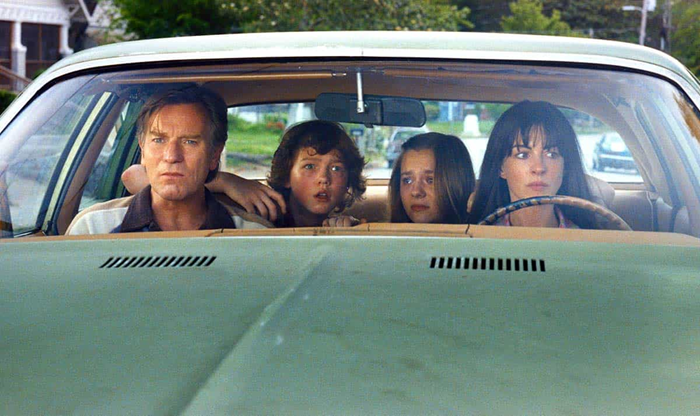
What sets The End of Oak Street apart—and keeps it from feeling like a Jurassic Park retread—is how radically different its premise is. In Jurassic Park, we understand exactly why and how the dinosaurs are there. Here, it’s an enigma. The film opens on the Platt family: Denise (Anne Hathaway), her husband Greg (Ewan McGregor), their daughter Audrey (Maisy Stella), their son Brian (Christian Convery), and their dog Starbuck. At first, they come across as fairly generic: an unhappily married couple, a wife who’s an aspiring writer, an angsty teenage daughter, and a son dealing with bullies, and so on.
On top of that, the movie takes a while to get going. After a blinding white flash of light in the middle of the night, their next-door neighbor—who had recently complained about Starbuck getting into his yard—discovers a massive pile of dinosaur shit in his backyard and assumes the Platts are pranking him. It’s the first clear sign that something is seriously amiss, and it immediately establishes the film’s off-kilter tone and sense of humor. This is obviously not a movie that takes itself too seriously.
Source: Warner Bros
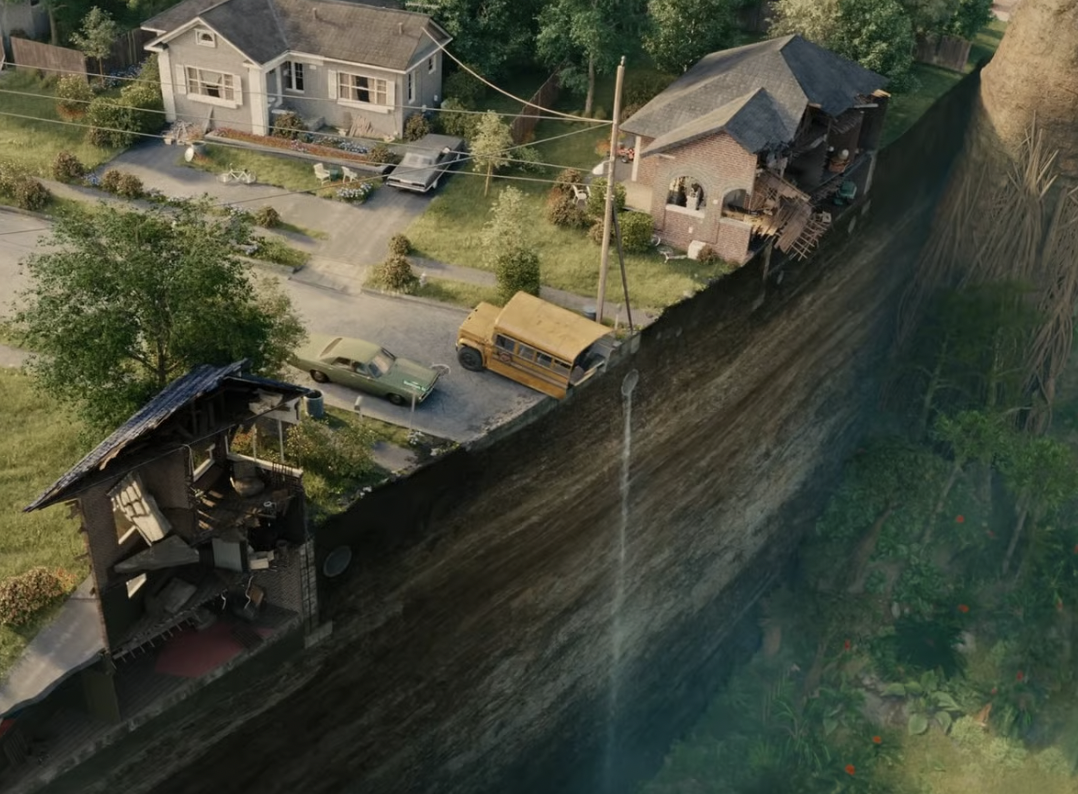
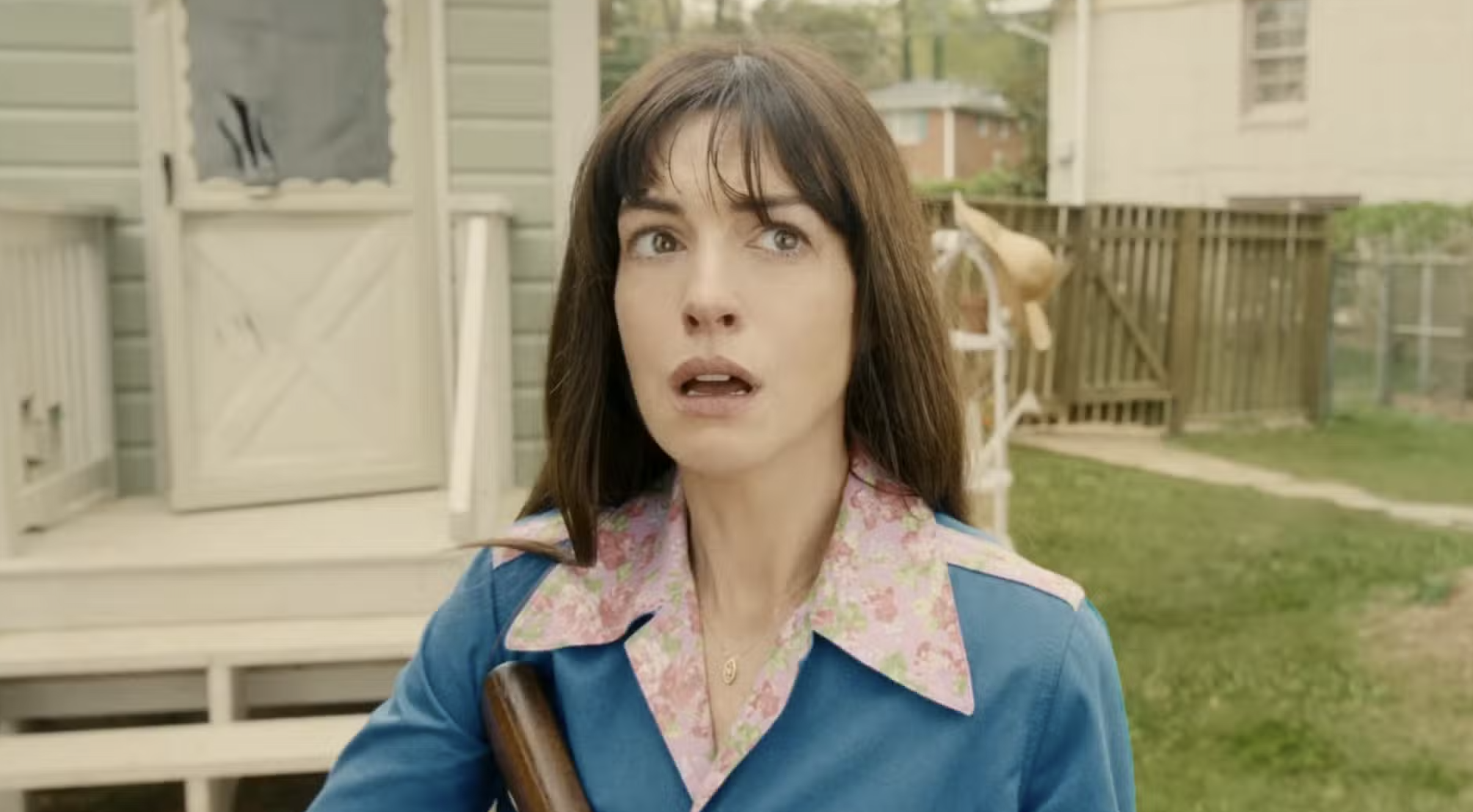
One detail in the first act did bug me: the family makes Starbuck sleep outside in a doghouse. That is not unusual for 1982, but even after severe thunderstorms and the ominous light, they still leave him out there. It made it harder to root for them, especially since Brian seems to be the only one truly invested in the dog’s well-being. Soon enough, though, the family and their neighbors discover dinosaurs roaming the street. Even the plants look like they belong to another era. When the Platts try to escape, they realize they’re trapped—the road ends at a steep cliff, with more dinosaurs milling around below. No one knows how or why, but it appears their entire neighborhood has been randomly and inexplicably transported into the past.
Source: Warner Bros
If you’re hoping for explanations or answers, you won’t find any here. However, if you’re willing to suspend disbelief and go along for the ride, The End of Oak Street is a wildly entertaining summer popcorn movie. It genuinely feels like being at an amusement park. The sound design is particularly immersive. In one sequence, the audio cuts out, and the characters complain about their ears popping the way they do on an airplane, and the film manages to make the audience feel that sensation too. In another, the entire house shakes so convincingly that it felt like the theater itself was moving—and no, this wasn’t a 4DX screening. The movie is an emotional rollercoaster, too, building genuine suspense and delivering plenty of scares while still finding room for laughs and surprisingly sincere moments.
Source: Warner Bros
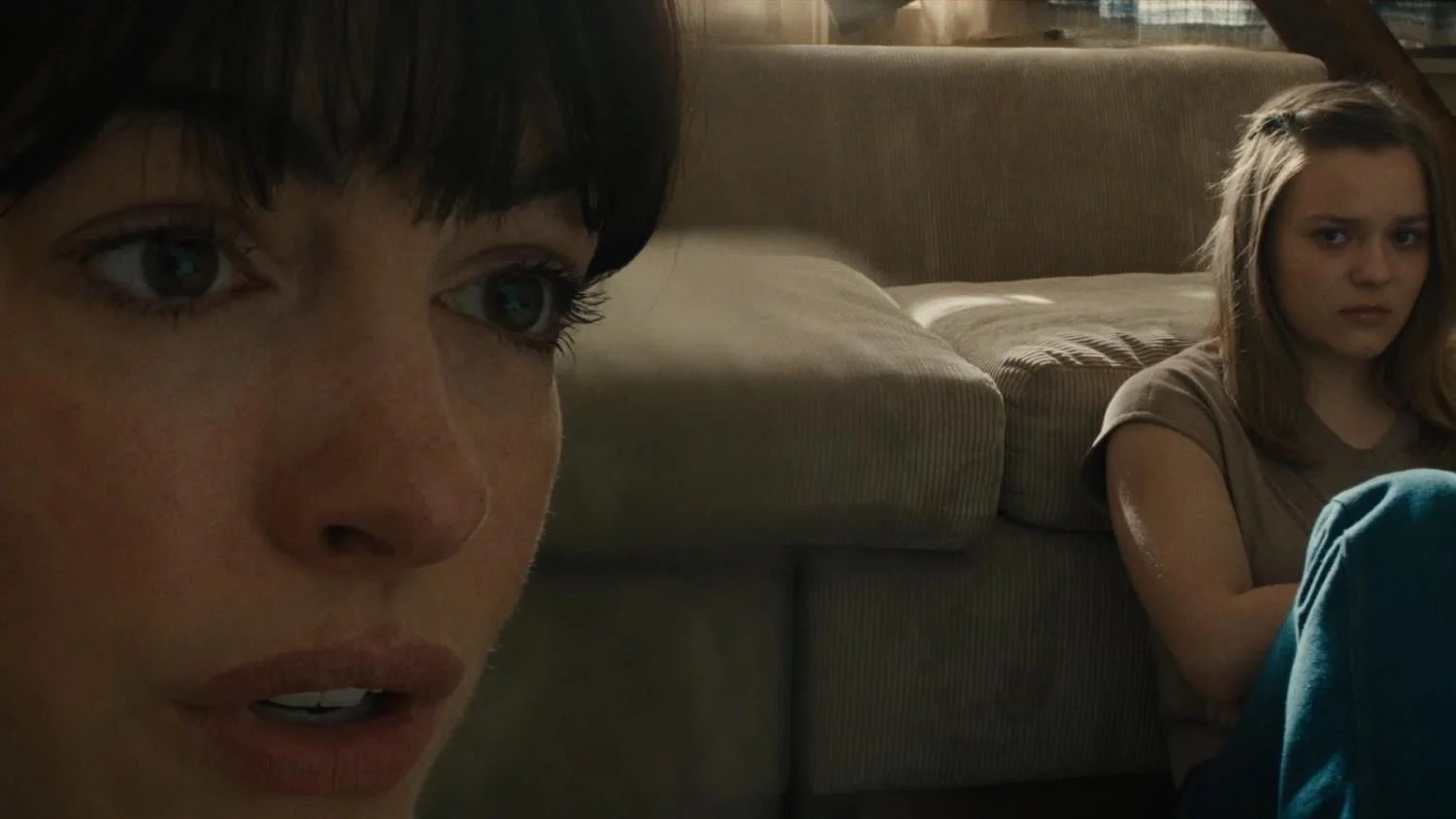
Michael Gioulakis’s cinematography is one of its highlights, ensuring that every dinosaur attack feels visually enthralling. There are an excessive number of split-diopter shots—possibly the most I’ve ever seen in a single film. If anyone was unfamiliar with what a split-diopter shot is before watching The End of Oak Street, David Robert Mitchell seems determined to fix that. Nevertheless, there are other inventive shot compositions and playful camerawork that keep things visually exciting, including a few striking overhead shots of dinosaurs ravaging the neighborhood. The production design and needle drops help to plant us firmly in the ‘80s, whether it’s an old-school box of Froot Loops, a Folgers commercial, or Steve Winwood’s song “Valerie” playing on a cassette tape. The CGI is occasionally lackluster, which can break the immersion, though the creature designs themselves are fairly impressive.
Michael Giacchino’s score feels evocative of John Williams’s work, which feels appropriate given the inevitable Spielberg comparisons. However, that nostalgia is ultimately a double-edged sword. Some viewers will embrace it and have a blast with a movie that feels like a blockbuster from a bygone era. In contrast, others will think it arrived several decades too late, complete with plot holes and antiquated sensibilities. I suspect reactions will be as divisive as they were with Disclosure Day. You’ll either overlook its shortcomings and enjoy the ride or dismiss it as goofy and stupid.

Source: Warner Bros
Thankfully, The End of Oak Street is self-aware enough to revel in its own silliness. It plays like a more comedic, more bizarre cousin to Jurassic Park. It’s almost surprising the movie earned a PG-13 given how many people get annihilated by dinosaurs, but the violence is frequently hilarious rather than disturbing.
The cast helps sell the absurdity. Anne Hathaway is the film’s greatest strength. She’s been having an extraordinary year between Mother Mary, The Devil Wears Prada 2, and The Odyssey, but her performance here is arguably her best of the year. Ewan McGregor is one of the weaker links, though the dialogue doesn’t do him many favors and his character feels underwritten. Maisy Stella, meanwhile, is fantastic, conveying Audrey’s genuine fear and apprehension about what the future looks like in this unprecedented situation.
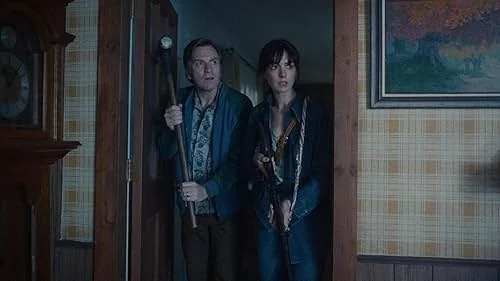
The family makes plenty of foolish decisions that would normally pull me out of a movie, but because even the most horrifying moments are often played for laughs, they bothered me less here. Truth be told, I wouldn’t know what to do either if I woke up to dinosaurs wreaking havoc on my street. Their terrible survival instincts might actually make the whole thing feel more plausible.
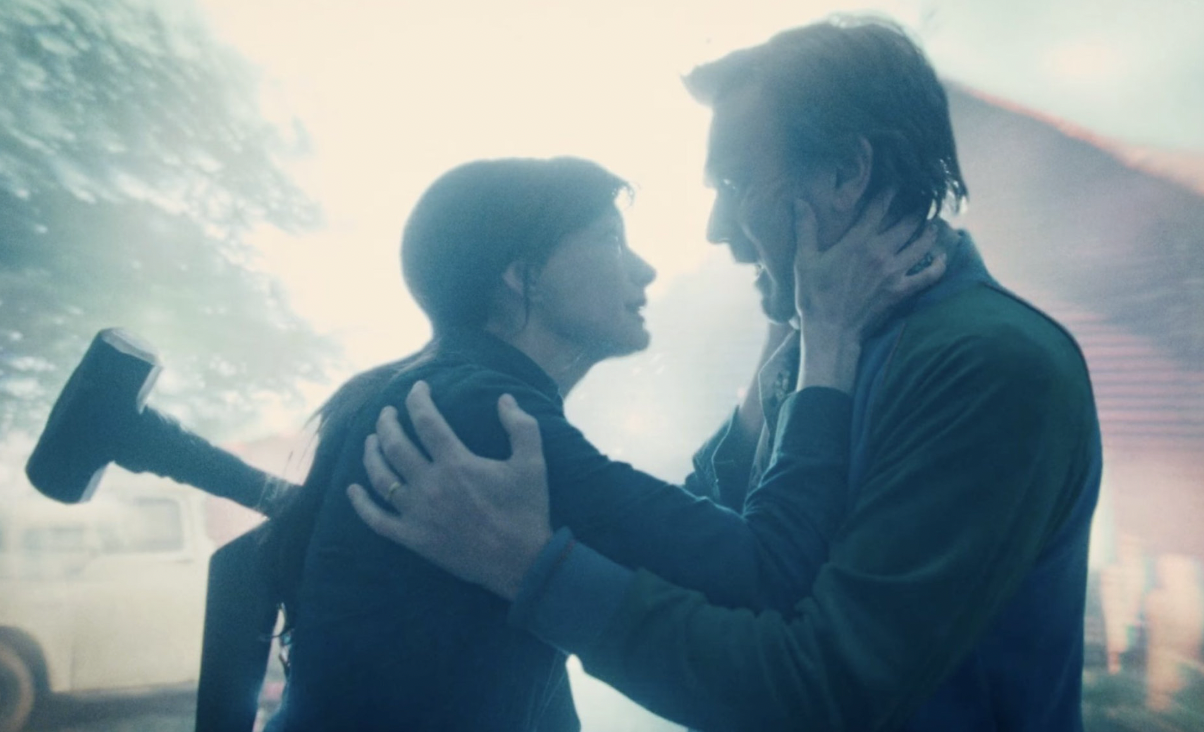
Despite how different every entry in his filmography has been, The End of Oak Street still feels like pure David Robert Mitchell: strange, playful, visually inventive, and fiercely committed to its own wavelength. He has no interest in playing it safe, and that’s evident here. The movie is messy and leaves viewers with more questions than answers. Still, it knows exactly how ridiculous it is, and that self-awareness makes it much easier to suspend disbelief and forgive its shortcomings. For those willing to sit back and enjoy the ride, The End of Oak Street is a gleefully ridiculous, thrilling, and surprisingly hilarious spectacle, with some heartfelt moments to boot. It feels like a blast from the past, and I, for one, had a blast watching it.
The End of Oak Street hits theaters on August 14, 2026.