Ray Gunn — Review
Source: Netflix
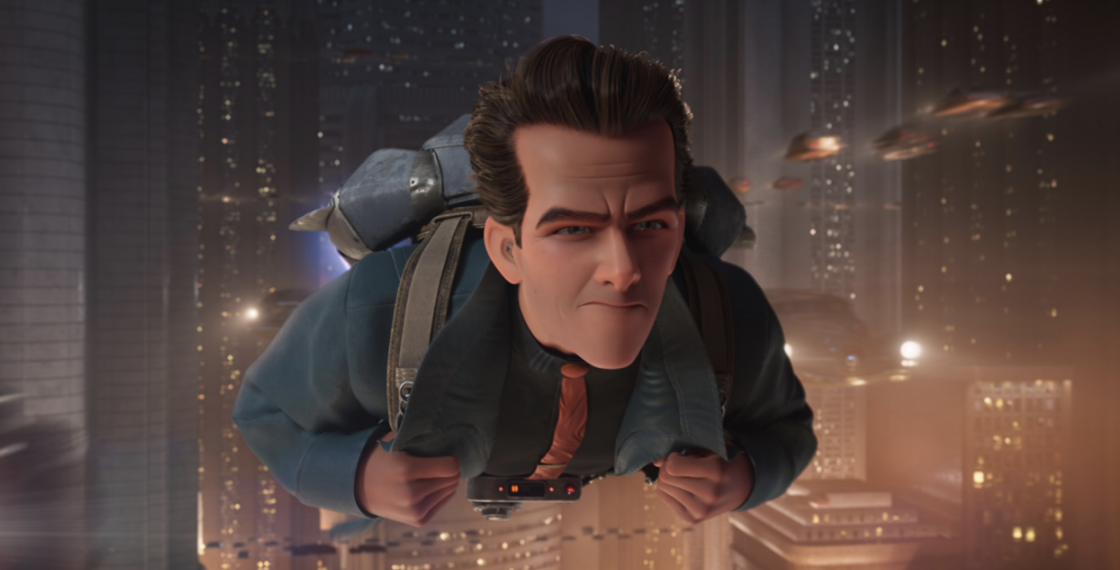
Brad Bird’s Ray Gunn has been over 30 years in the making. Knowing it’s a film he’s been yearning to direct since before 1999’s The Iron Giant means audiences are likely to walk in with lofty expectations. Clearly, Bird is very passionate about this story. However, the film itself ultimately doesn’t feel as special as that passion suggests. Ray Gunn is a solid animated adventure, but it lacks the feeling of personal investment you might expect from a project a filmmaker has spent decades trying to bring to the big screen. What makes Ray Gunn stand out from the myriad of animated films is that it’s essentially an animated film noir, which is a genre hybrid we seldom see. Nonetheless, that combination also comes with some drawbacks, because anyone who’s seen at least one classic film noir from the 1940s will be able to recognize exactly where Ray Gunn is headed.
Source: Netflix
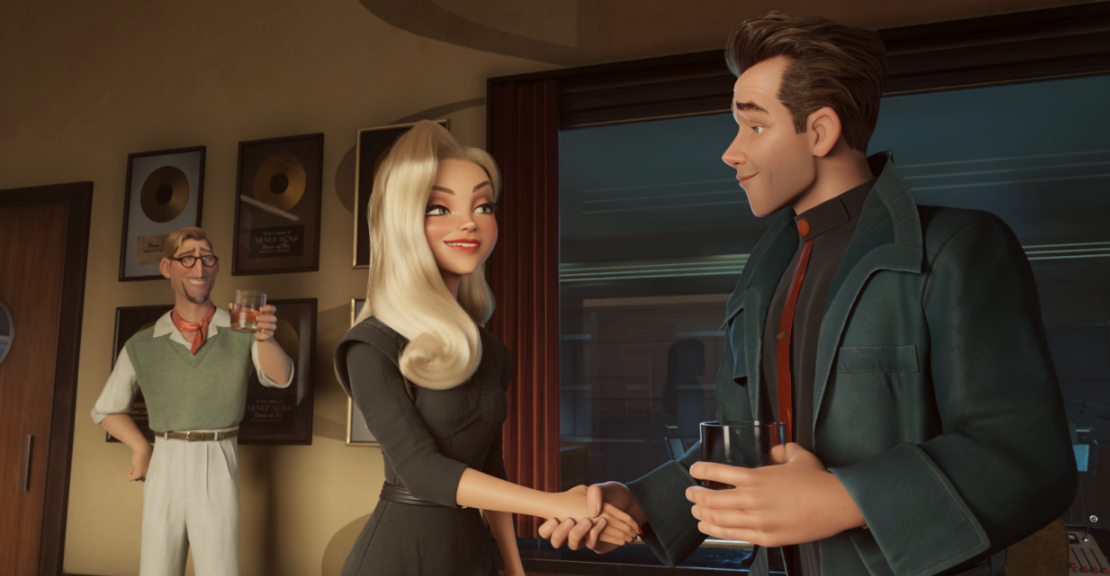
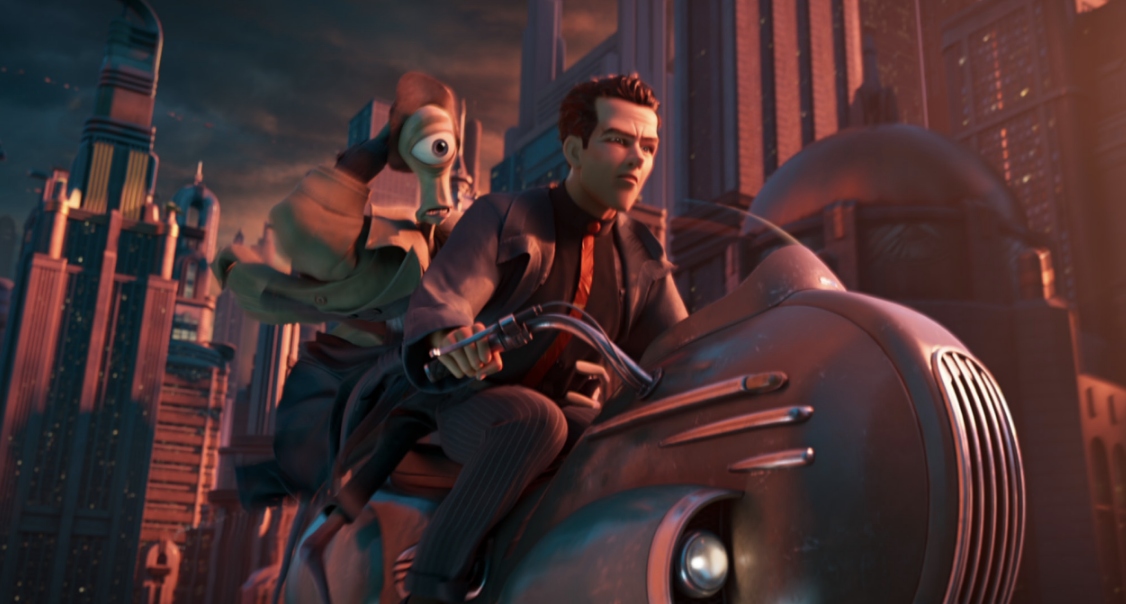
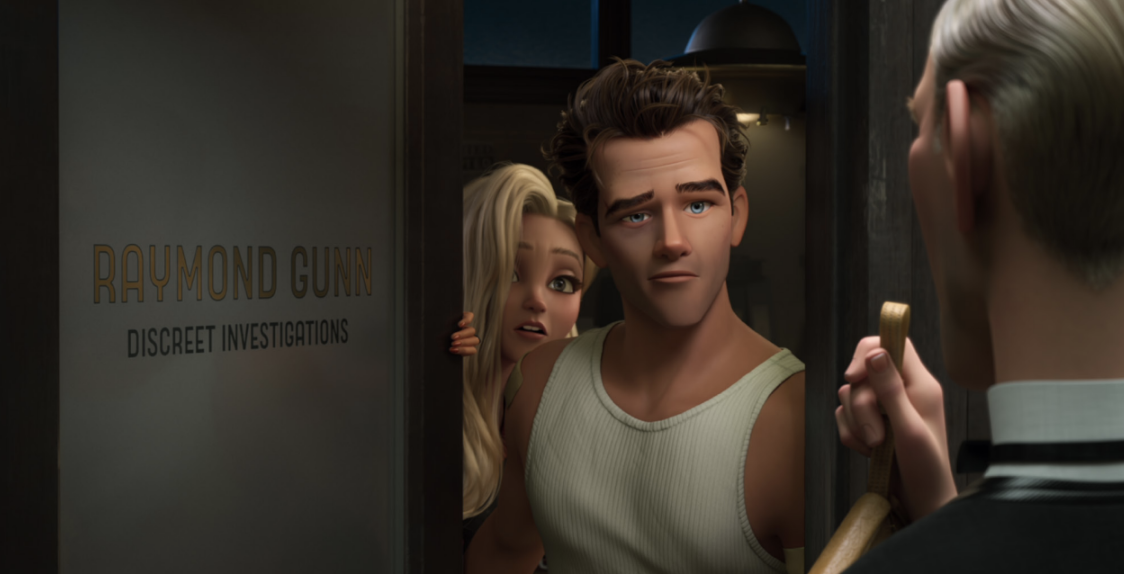
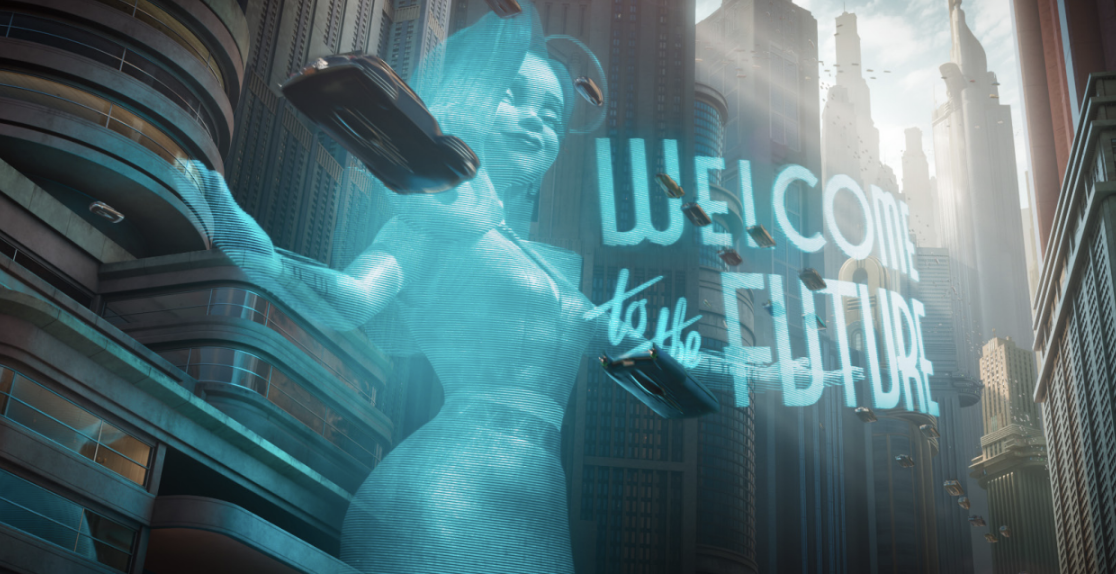
The film follows the titular Ray Gunn (Sam Rockwell), a private detective in a futuristic world populated by both humans and aliens. Ray is human, but his partner, Eye-ra (Tom Waits), is a one-eyed alien. Pop star Venus Nova (Scarlett Johansson) has a new album coming out, Welcome to the Future, which is advertised through holographic advertisements called “holo ads.” The mystery commences when Venus Nova’s husband, Arnold Dom (Bobby Cannavale), hires Ray to spy on her. I’ll refrain from revealing too much of the plot even though it follows a fairly standard film noir formula. At the same time, predictability doesn’t make it a bad movie by any means. Moviegoers who’ve grown tired of Pixar’s allegories and metaphors will likely appreciate the film’s simplicity and straightforward storytelling.
Source: Netflix
Ray Gunn is the type of film that wears its inspirations on its sleeve. Besides the obvious film noir inspirations, such as Howard Hawks’s The Big Sleep (1946) or Jacques Tourneur’s Out of the Past (1947), the city of Metropia feels heavily inspired by Ridley Scott’s Blade Runner (1982). Meanwhile, the holo ads that sometimes loom larger-than-life over the city or appear on a smaller scale in a person’s home are evocative of the holograms in Denis Villeneuve’s sequel, Blade Runner 2049 (2017). The way the city consists of human beings and aliens co-existing calls to mind Barry Sonnenfeld's Men in Black (1997), while many of the creature designs for the aliens feel reminiscent of Pete Docter’s Monsters, Inc. (2001). Taken together, all these details make Ray Gunn feel far too familiar. However, for those less versed in hardboiled detective stories, the film’s animated embrace of the noir genre and aesthetic might feel fresh. Either way, the film is still sufficiently entertaining and fun.
Source: Netflix
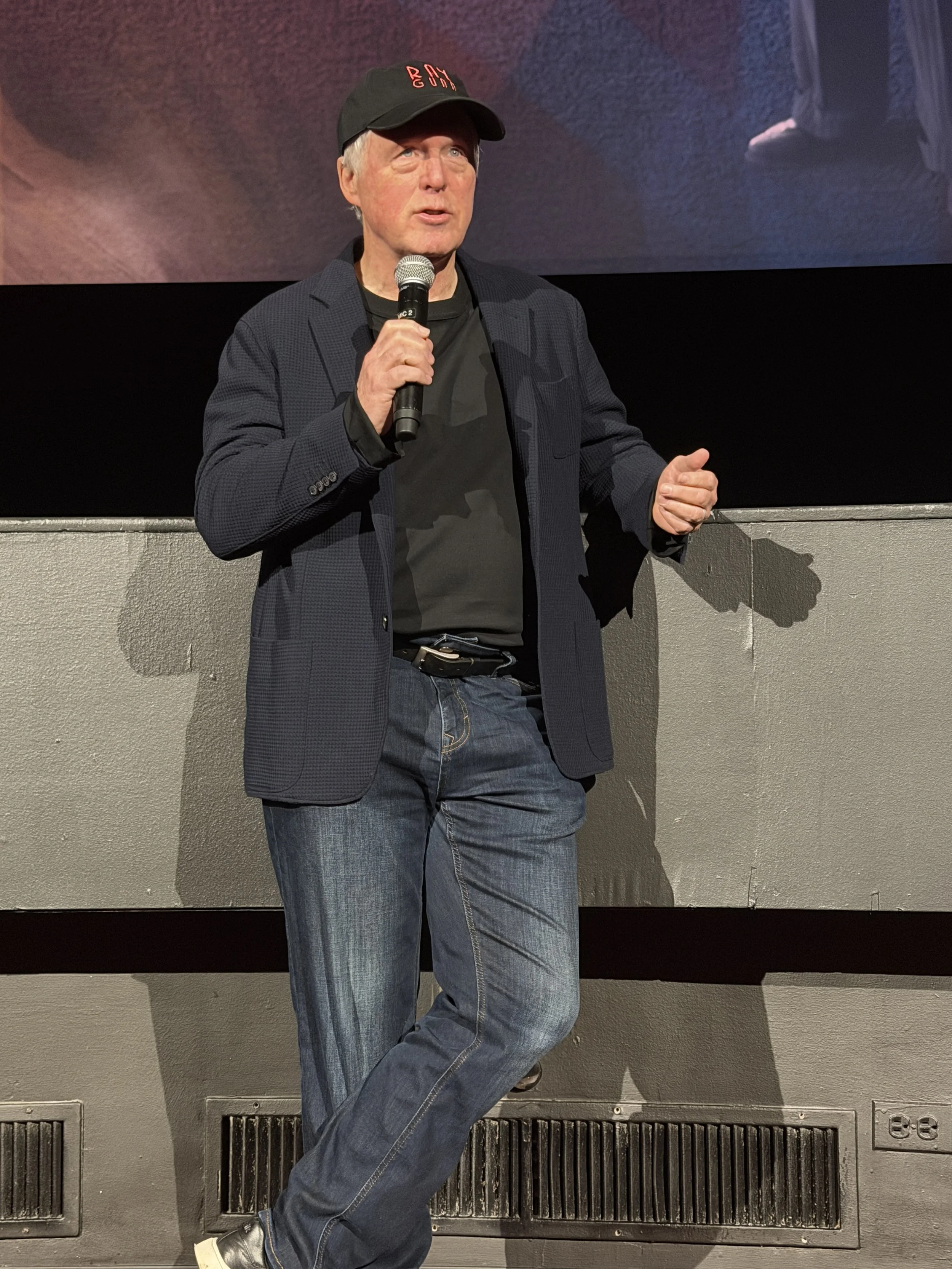
During a Q&A after an early screening of the film at the Paris Theater on September 23rd, Brad Bird stated that at one point live action was considered for the film and originally he “really saw it as a hand-drawn film.” It feels as though Bird had to compromise in order to get the project off the ground, with the film’s 3D animated style falling somewhere between the hand-drawn look he was striving for and live action. Nonetheless, I can’t help but think the film would have been better off leaning into that hand-drawn style, which would have given it a much more unique look that would make it stand out from all the other recent animated releases. The 3D visual style makes it feel more generic.
Source: Netflix
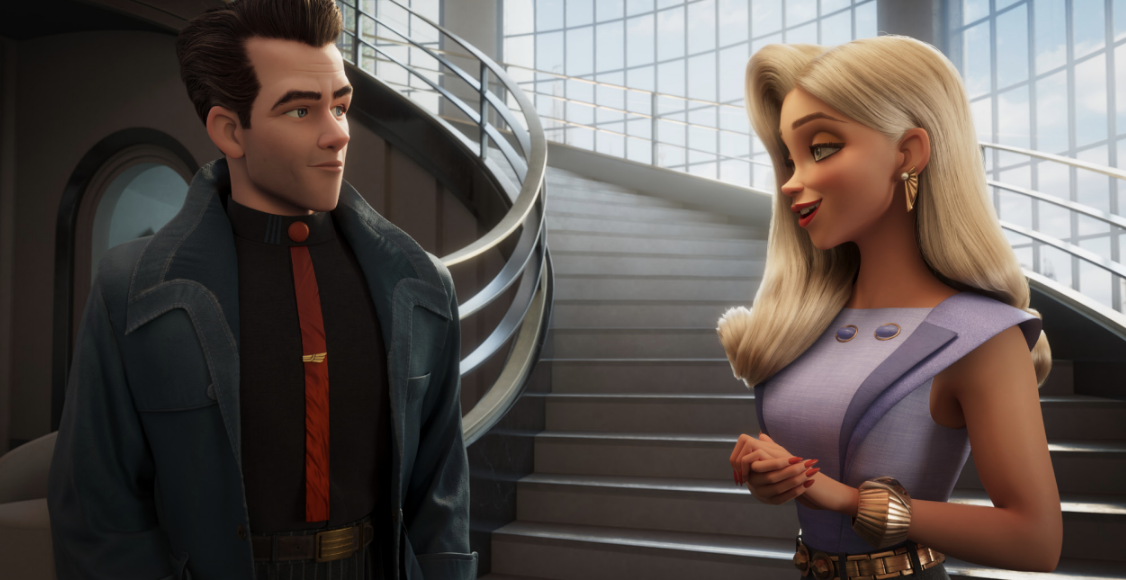
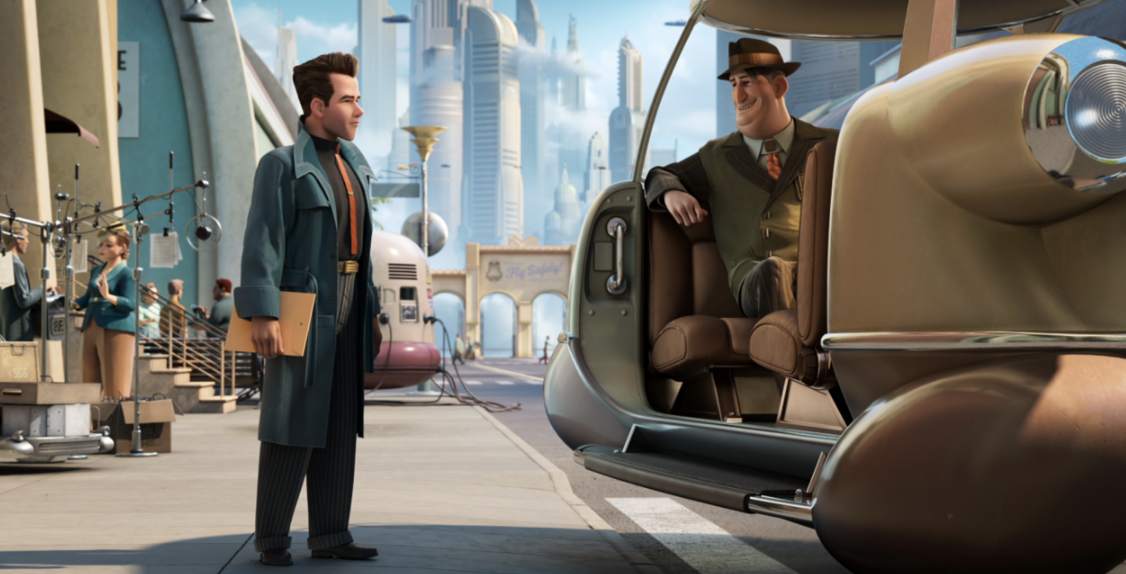
That’s not to say that the animation looks bad, but rather that a distinct hand-drawn style would have elevated it. It’s not poorly animated; it just looks like a style we’ve seen countless times before. Still, there is a lovely attention to detail. Venus Nova’s lustrous hair glistens and her bright blue eyes shine in the sunlight. A character nicknamed Slugsy (voiced by Matt Berry) aptly has a slimy appearance. The smaller details in the animation make the characters and the city of Metropia more convincing. The futuristic technology also enhances that effect, from flying cars and particle blasters to a dance floor with an optional “float mode.”
Source: Netflix
Award-winning composer Michael Giacchino proves to be one of the film’s greatest assets. His score blends a jazzy noir sensibility with a sleek, futuristic sci-fi sound. When the story shifts gears to focus on a romantic subplot, the music takes on a dreamier quality. Beyond complementing the film’s tone and setting, Giacchino’s score also gives the story an energetic personality and a stylistic flourish. Songwriter Kimbra did a wonderful job writing songs for Venus Nova, ensuring they’re the right amount of catchy and annoying you’d expect from a hit pop single. Darren T. Holmes’s editing is another highlight, keeping the story moving at an efficient pace. Numerous cuts also create a comedic effect that adds to the overall sense of humor.
Source: Netflix
Despite the fact that Ray Gunn feels more simple and straightforward in its storytelling compared to many modern animated films, there is still some discernible subtext. The way characters discriminate against aliens serves as a commentary on racism, though it’s something we’ve seen many times before. The holo ads also feel like a critique or parody of current marketing trends and tactics, as well as ethical concerns regarding modern technology. However, most of those ideas are only briefly touched upon and never explored in depth.
Brad Bird at the Paris Theater on September 23, 2026.
Overall, Ray Gunn is a solid animated adventure that succeeds more as an entertaining genre exercise than as the deeply personal passion project its 30-year journey might suggest. Brad Bird clearly has an affection for film noir, and the film’s jazzy score, futuristic setting, and hardboiled detective story make for an enjoyable combination, even if its influences make the story feel far too predictable. A more distinctive hand-drawn visual style might have helped it stand apart from other contemporary animated films and better reflected Bird’s original vision. Instead, Ray Gunn is an enjoyable but familiar take on a genre rarely explored through animation. After three decades of anticipation, there’s plenty to appreciate about Ray Gunn, but not quite enough to make it feel like the extraordinary film its long journey to the screen would lead audiences to expect.
Ray Gunn had its world premiere at the BFI London Film Festival on October 10, 2026. It will screen at the Montclair Film Festival on October 17th. It will be released in select theaters on December 4th, before streaming on Netflix on December 18th.