

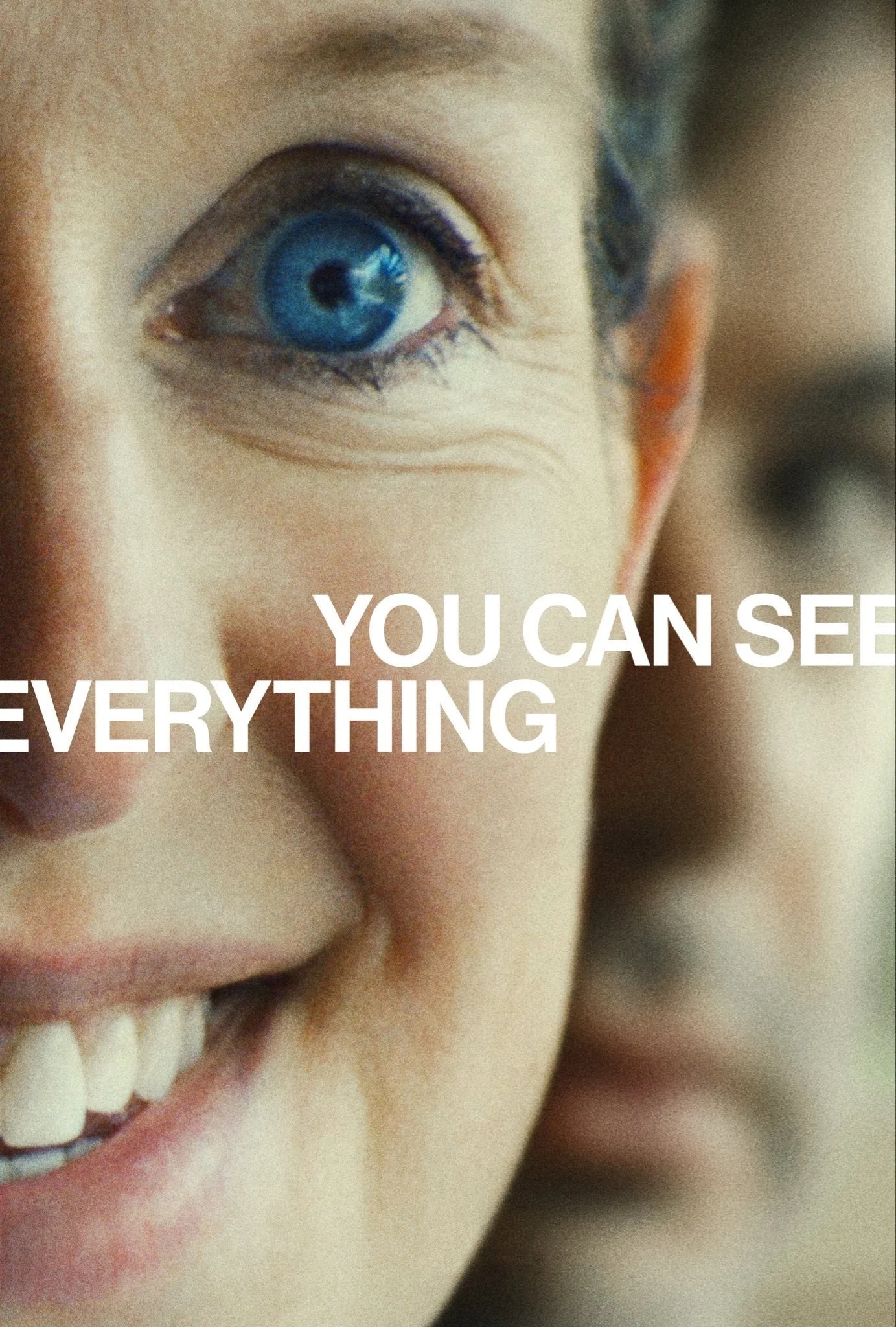
You Can See Everything — Review
As far back as the silent film era, documentaries have been playing with our perception of reality, challenging us to question the veracity of what unfolds on the screen in front of us. Watching Nathan Fielder and Lance Oppenheim’s documentary about Elizabeth Holmes, You Can See Everything, brought me back to my days at art school, when one of my film professors assigned us to argue that Robert J. Flaherty’s 1922 film Nanook of the North is a documentary rather than a work of fiction. Writing argumentative essays had always been one of my strengths, but how could I possibly argue that a film with so many staged sequences and historical inaccuracies is in fact a documentary? While Nanook of the North was filmed on location in the Arctic, Flaherty hired actors to portray an Inuk man named Nanook and his family. The actors were not related, and scenes were staged to depict how the Inuit people lived prior to Europe’s colonization of the Americas, such as using a spear instead of a gun for hunting. The film was released at a time when people hadn’t yet started differentiating between documentary and drama. It left me grappling with a question that’s just as relevant today, especially with You Can See Everything: how much can a filmmaker manipulate reality before a documentary is deemed fiction?