You Can See Everything — Review
Source: A24
As far back as the silent film era, documentaries have been playing with our perception of reality, challenging us to question the veracity of what unfolds on the screen in front of us. Watching Nathan Fielder and Lance Oppenheim’s documentary about Elizabeth Holmes, You Can See Everything, brought me back to my days at art school, when one of my film professors assigned us to argue that Robert J. Flaherty’s 1922 film Nanook of the North is a documentary rather than a work of fiction. Writing argumentative essays had always been one of my strengths, but how could I possibly argue that a film with so many staged sequences and historical inaccuracies is in fact a documentary? While Nanook of the North was filmed on location in the Arctic, Flaherty hired actors to portray an Inuk man named Nanook and his family. The actors were not related, and scenes were staged to depict how the Inuit people lived prior to Europe’s colonization of the Americas, such as using a spear instead of a gun for hunting. The film was released at a time when people hadn’t yet started differentiating between documentary and drama. It left me grappling with a question that’s just as relevant today, especially with You Can See Everything: how much can a filmmaker manipulate reality before a documentary is deemed fiction?

Source: A24
While I revised my essay about Nanook of the North, something finally clicked. I had been treating the word documentary as if it were synonymous with fact, confusing the distinction between fiction and nonfiction with the distinction between what is fabricated and what is true. Even a documentary filmed in a fly-on-the-wall, cinéma verité style cannot offer us an entirely unfiltered view of reality. The moment a camera is introduced, the conditions change. When people know they’re being filmed, their awareness of the camera inevitably influences how they behave. A documentary film crew makes countless artistic choices, such as where to place the camera, whom to interview, which shots to include, what to leave out, how to arrange the footage, when to cut, where to use music, and more. All of these decisions shape the story we see. A documentary may be rooted in reality, but it can never be reality in its purest form. What we ultimately watch is reality as the filmmaker interprets, arranges, and presents it.
Source: A24
You Can See Everything is far from the first film to use the documentary format to challenge our perception of reality and make audiences question everything. In fact, Fielder and Oppenheim’s film reminds me of a modern-day take on Orson Welles’s 1973 docudrama F for Fake. The former centers on Elizabeth Holmes, the founder of Theranos, who was subsequently convicted of fraud, while the latter focuses on Elmyr de Hory, a notorious art forger. Both films examine well-known figures whose notoriety stems from deception, using their stories to raise thought-provoking questions about authenticity and the blurred boundary between fact and fiction. Like Welles’s film, Fielder and Oppenheim are less concerned with whether Holmes is guilty than with how perception shapes our understanding of the truth, and how easily that perception can be manipulated.
Source: A24
It’s no coincidence that F for Fake begins with Welles performing a magic trick and quoting Jean Eugène Robert-Houdin: “A magician is just an actor.” Many moviegoers have been describing You Can See Everything as a cinematic magic trick. However, while F for Fake eventually reveals some facets of the truth, You Can See Everything leaves us with more questions than answers. In F for Fake, Welles also addresses Picasso’s assertion that “art is a lie,” adding, “A lie that makes us realize the truth.” That sentiment captures the paradox at the heart of documentary filmmaking. Through a series of creative choices, the director shapes the reality unfolding before our eyes. In that sense, the artifice is undeniable, even when the filmmaker intends to reveal something true. My interpretation is that Fielder and Oppenheim present us with a work of art that is very much a lie, one that ultimately reveals a different kind of truth: that, like Socrates, we must recognize that we know nothing.
Nathan Fielder and Elizabeth Holmes have both been described as “master manipulators.” However, this is not merely a matter of whom to believe: the comedian and filmmaker or the businesswoman. There are so many layers to You Can See Everything, and it operates on multiple levels that continuously challenge our assumptions and interpretations. I’ll refrain from discussing anything that happens in the second half of the film, as I believe the movie is best experienced knowing as little about it ahead of time as possible. Instead, I want to focus on a few exchanges of dialogue that occur early in the film that have stayed with me more than anything in the latter half.
Source: A24
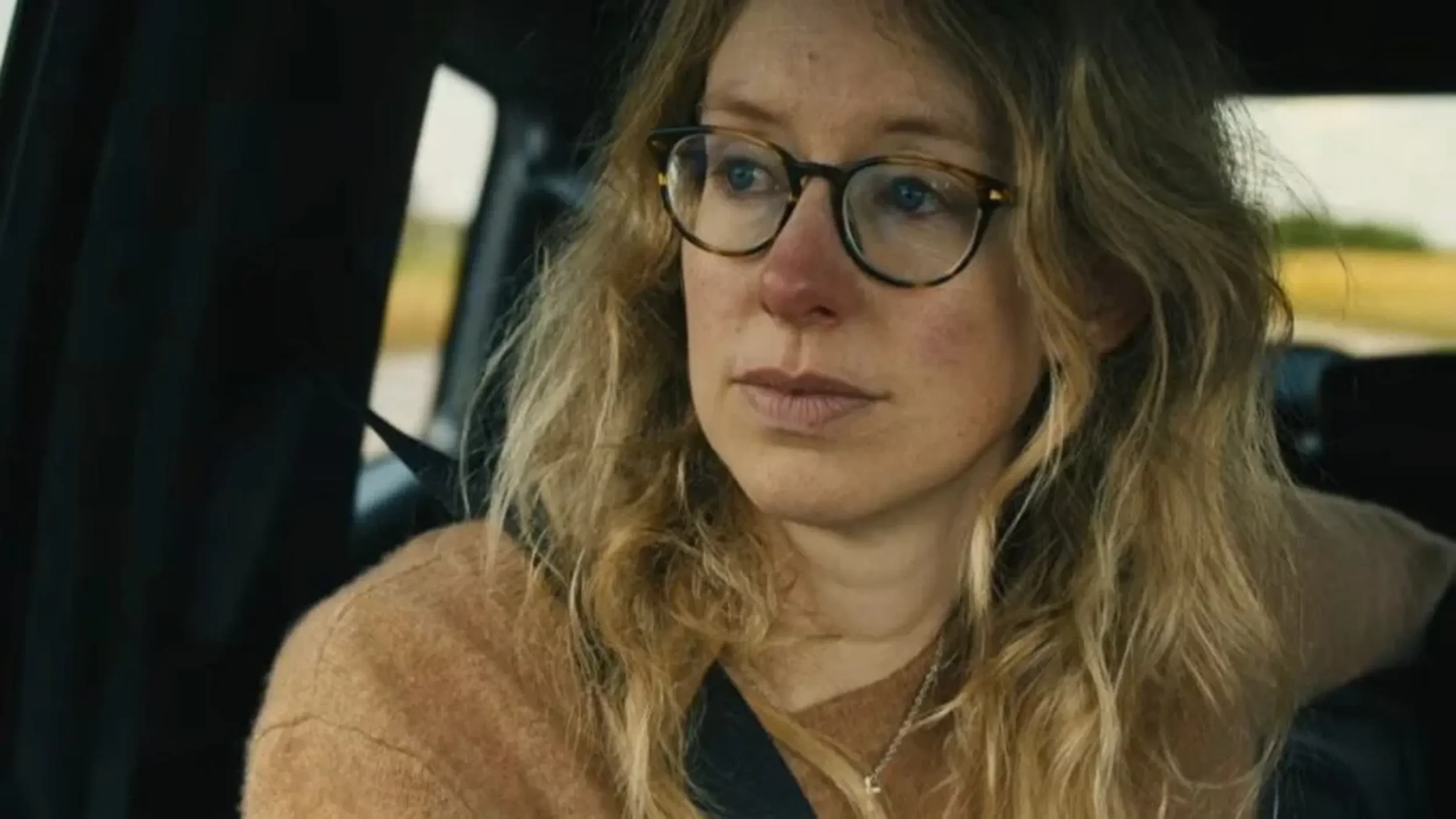
In a New York Times interview, Holmes was asked about how Jennifer Lawrence was set to play her in a movie but reconsidered after watching Amanda Seyfried’s portrayal in the Hulu series The Dropout. According to the article, Holmes responded, “They’re not playing me, they’re playing a character I created.” Holmes and her husband, Billy Evans, vehemently deny that she said those words verbatim. However, whether or not she was misquoted is beside the point. What’s intriguing is this idea of a character, and the questions that it raises. Seyfried played a character based on Holmes, but how do we know Holmes herself hasn’t been playing a character all along? For that matter, aren’t we all playing a character in some capacity? The person we are around others isn’t always the exact same person we are when we’re completely alone. We instinctively adjust how we speak and behave depending on who else is watching. This speaks to the nature of performance, not only for actors and artists, but for everyday people, too. Our daily performances influence not only how others perceive us, but also how we perceive them. This raises a fundamental question: can we ever truly know another person? All we can really do is interpret the version of themselves they choose to present to us.
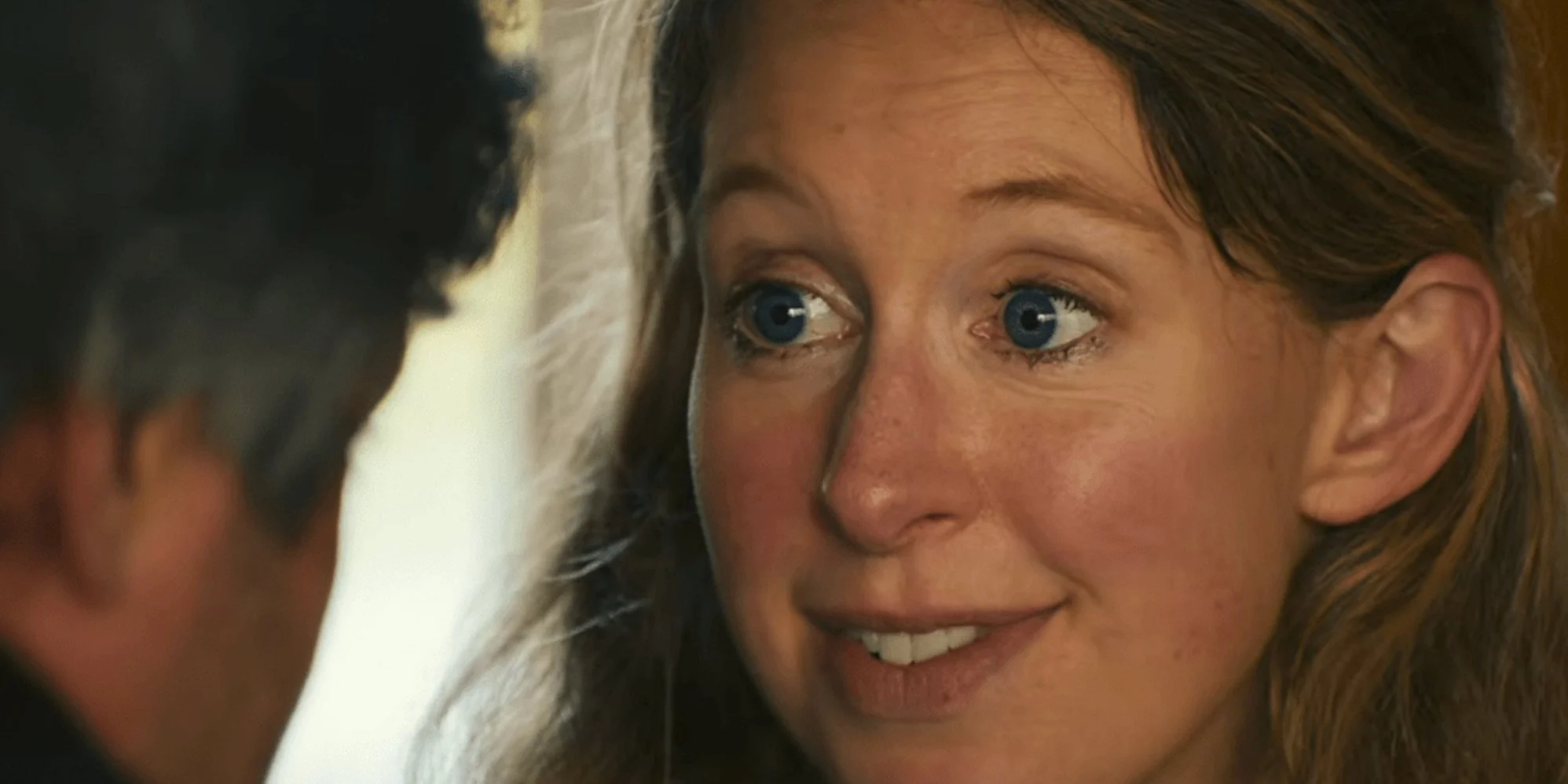
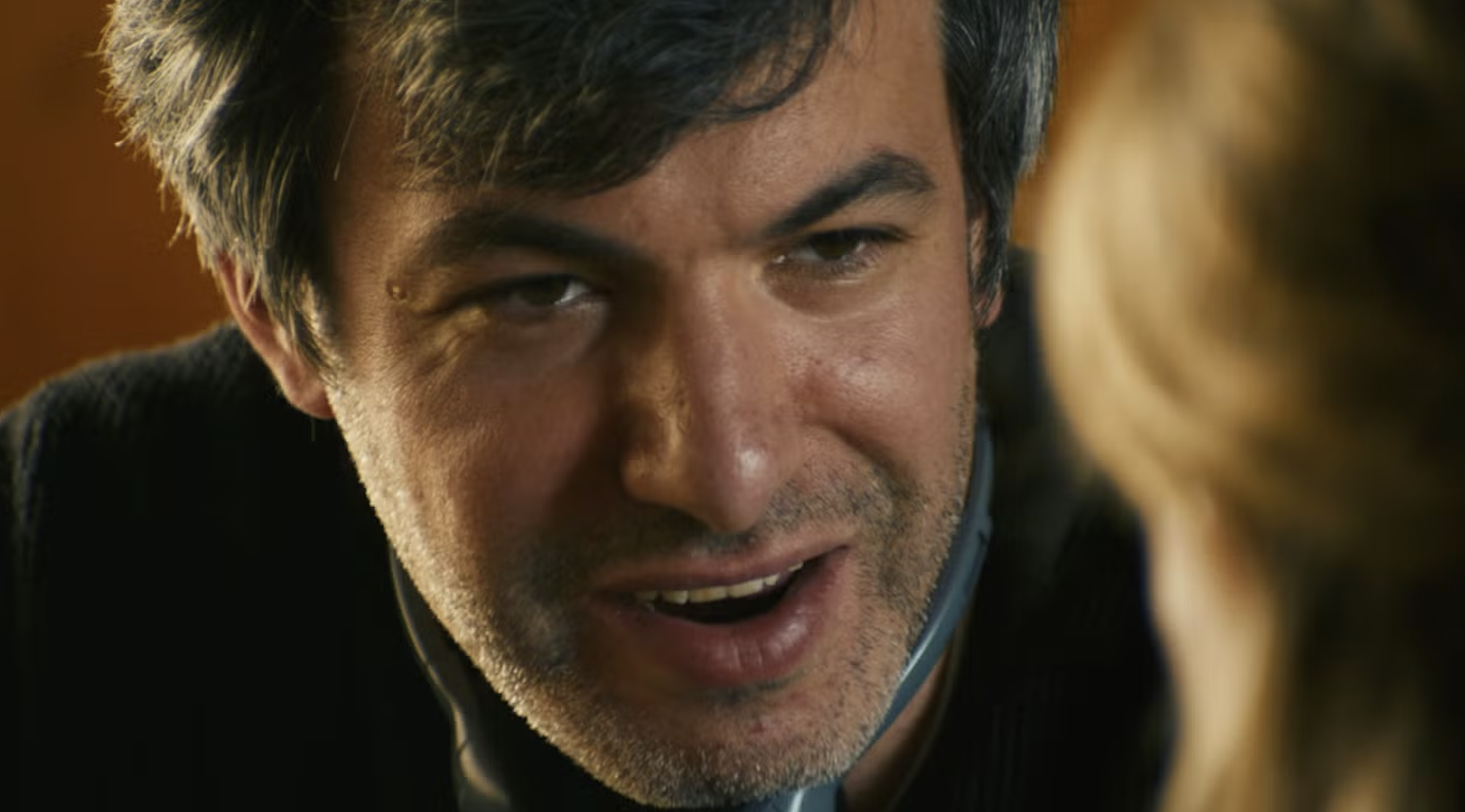
Early in the film, Holmes discusses Theranos, and a confusion arises over the distinction between saying “the device can run any test” and “the device is capable of running any test.” As Fielder clarifies, “You’re communicating this thing, and everyone got a different picture than what you meant.” The exchange raises another fascinating question: is Holmes deliberately misleading people, or does she simply think differently and struggle to effectively communicate in ways that others understand? The film, of course, offers no easy answers. The fact that a single word can drastically alter our interpretation of her statement speaks volumes about how our understanding of the truth can easily become distorted.
Source: A24
This disconnect calls to mind the work of Philip K. Dick, whose writing often explored the concept of reality and the possibility that it differs from one person to another. Using the subjective experience of a person with schizophrenia as an example, he speculated, “Maybe we cannot say that we are in touch with reality and he is not, but should instead say, His reality is so different from ours that he can’t explain his to us, and we can’t explain ours to him. The problem, then, is that if subjective worlds are experienced too differently, there occurs a breakdown in communication… and there is the real illness.” Perhaps Holmes is deceiving the public, or maybe her perception of reality differs so dramatically from ours that we misunderstood what she was trying to communicate.
What makes Holmes’s attempts at communication even more confounding is the question of who is controlling her narrative. She has expressed dissatisfaction with Seyfried’s portrayal of her in The Dropout, describing the series as a collection of lies and expressing frustration that some people mistake it for a documentary. This echoes my earlier point about the nature of documentary filmmaking and how it can never present us with an entirely unfiltered version of the truth. The Dropout is a fictionalized dramatization, but some viewers misinterpret it as a documentary and therefore believe it’s a factual portrait of Holmes. If audiences can mistake a dramatization for reality, how can we be certain that the documentary we’re currently watching offers us anything closer to the truth? That difficulty of distinguishing Seyfried’s character from Holmes herself raises questions about the nature of performance. Seyfried is, after all, playing a role, but there is also something performative about Holmes herself.
Source: Neon
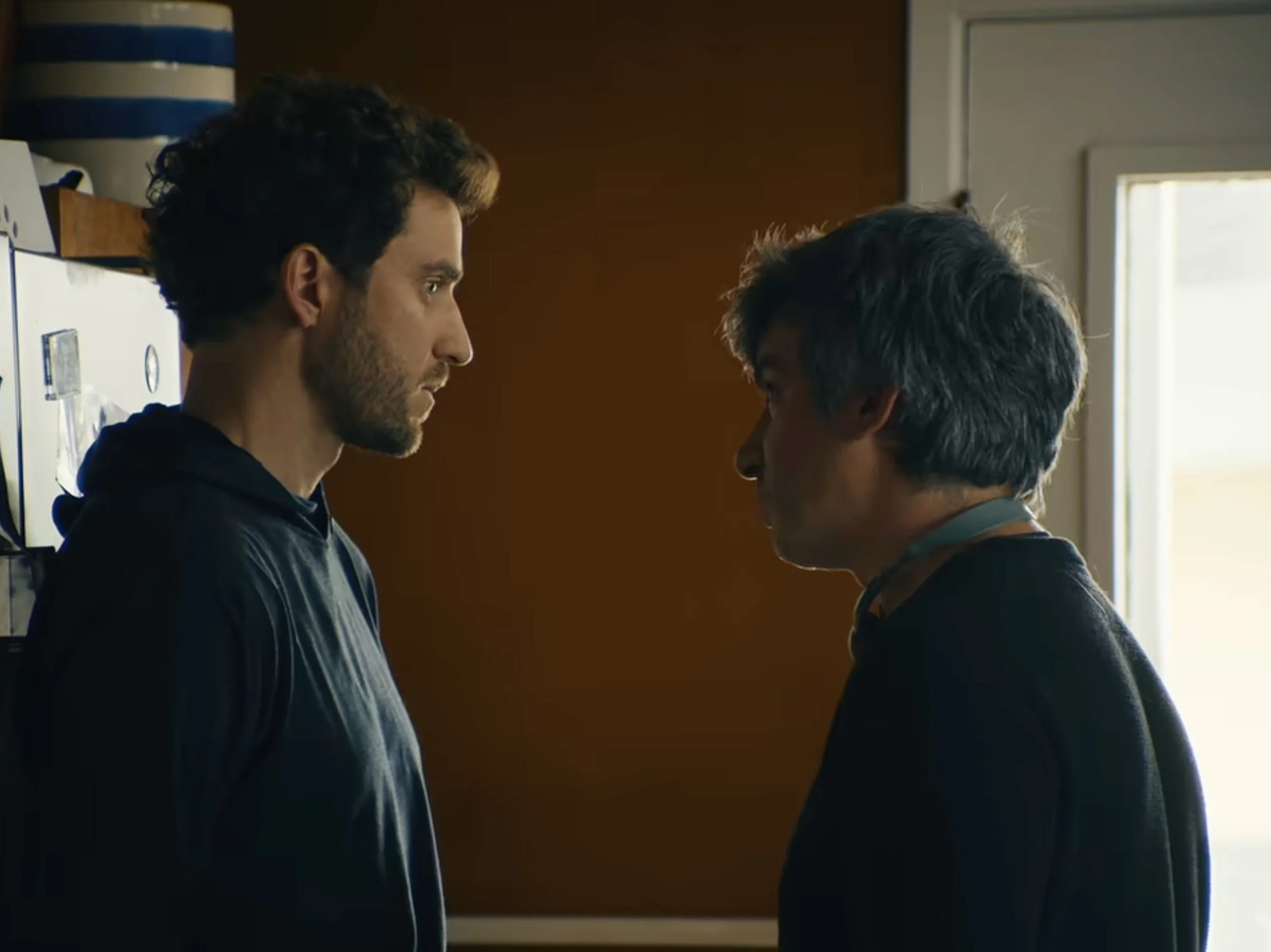
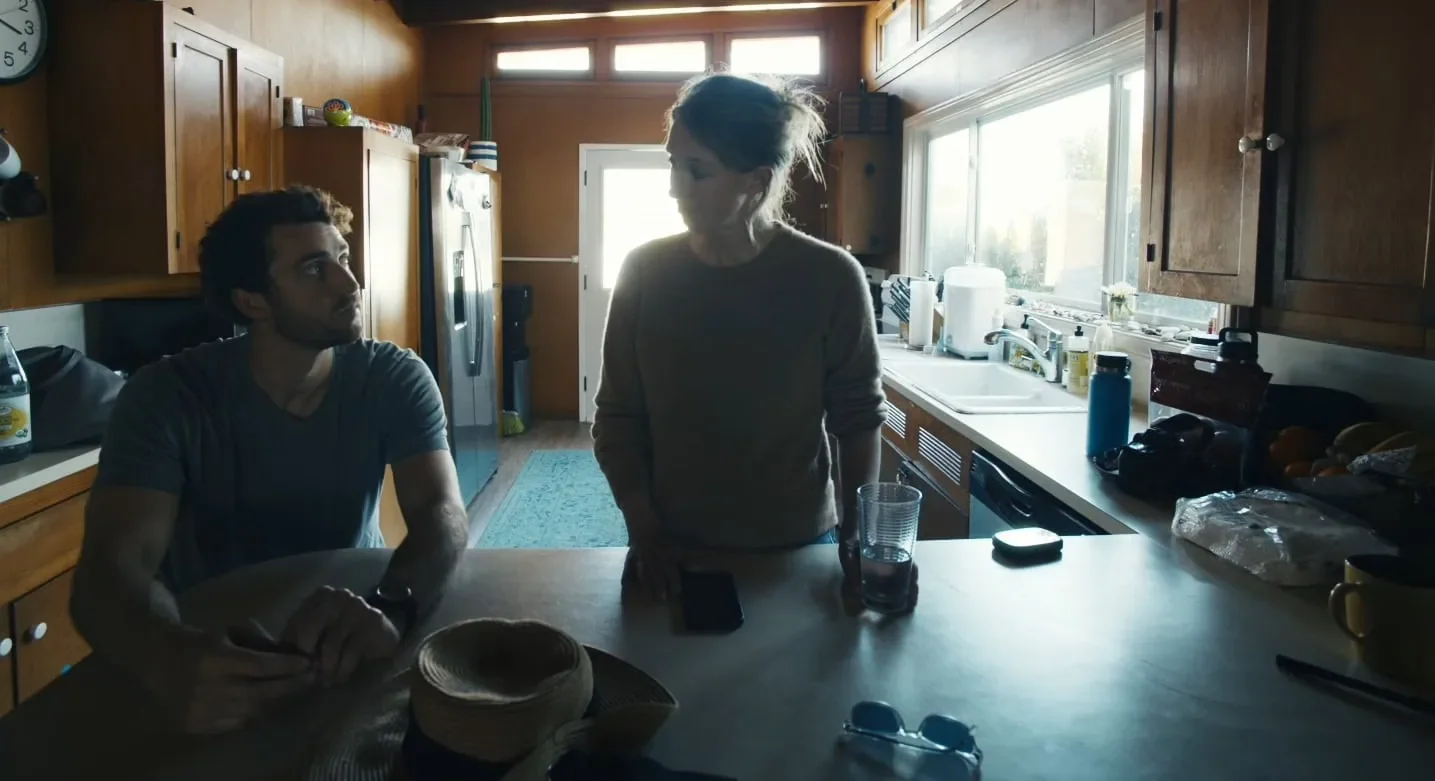
Meanwhile, the men in Holmes’s life have also played a part in shaping her public image, from her former partner and Theranos accomplice, Sunny Balwani, to her husband and the father of her children, Billy Evans. Then there are Nathan Fielder and Lance Oppenheim, who are constructing their own version of her story with You Can See Everything. With so many competing narratives, it becomes nearly impossible to separate Holmes herself from the various versions of her that have been presented to the public.
You Can See Everything is less about who Elizabeth Holmes is and more about art, reality, and public perception. It’s fitting that the film’s title card appears against the backdrop of the beach, with the horizon partially obscuring the bottom of the words You Can See Everything. It feels like a visual metaphor, hinting at the paradox at the heart of the film. While Holmes told Fielder he could see everything that goes on in her home, and the title itself promises moviegoers an unobstructed view, at the end of the day we can never truly see everything. Our understanding of reality is inevitably influenced by what others choose to reveal or conceal. Perhaps Holmes and her husband are manipulating the filmmakers, but it’s equally possible that the filmmakers are manipulating us.
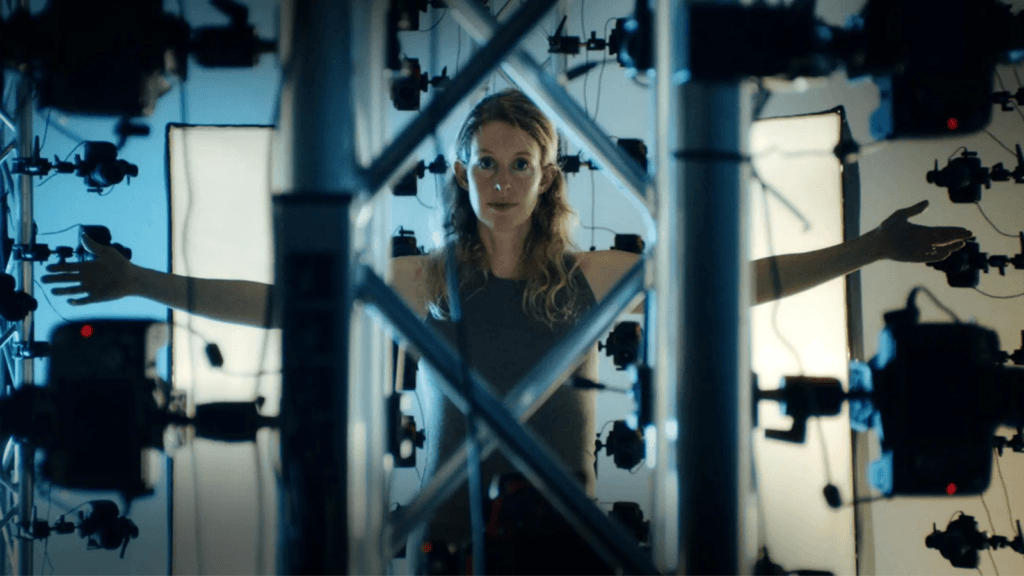
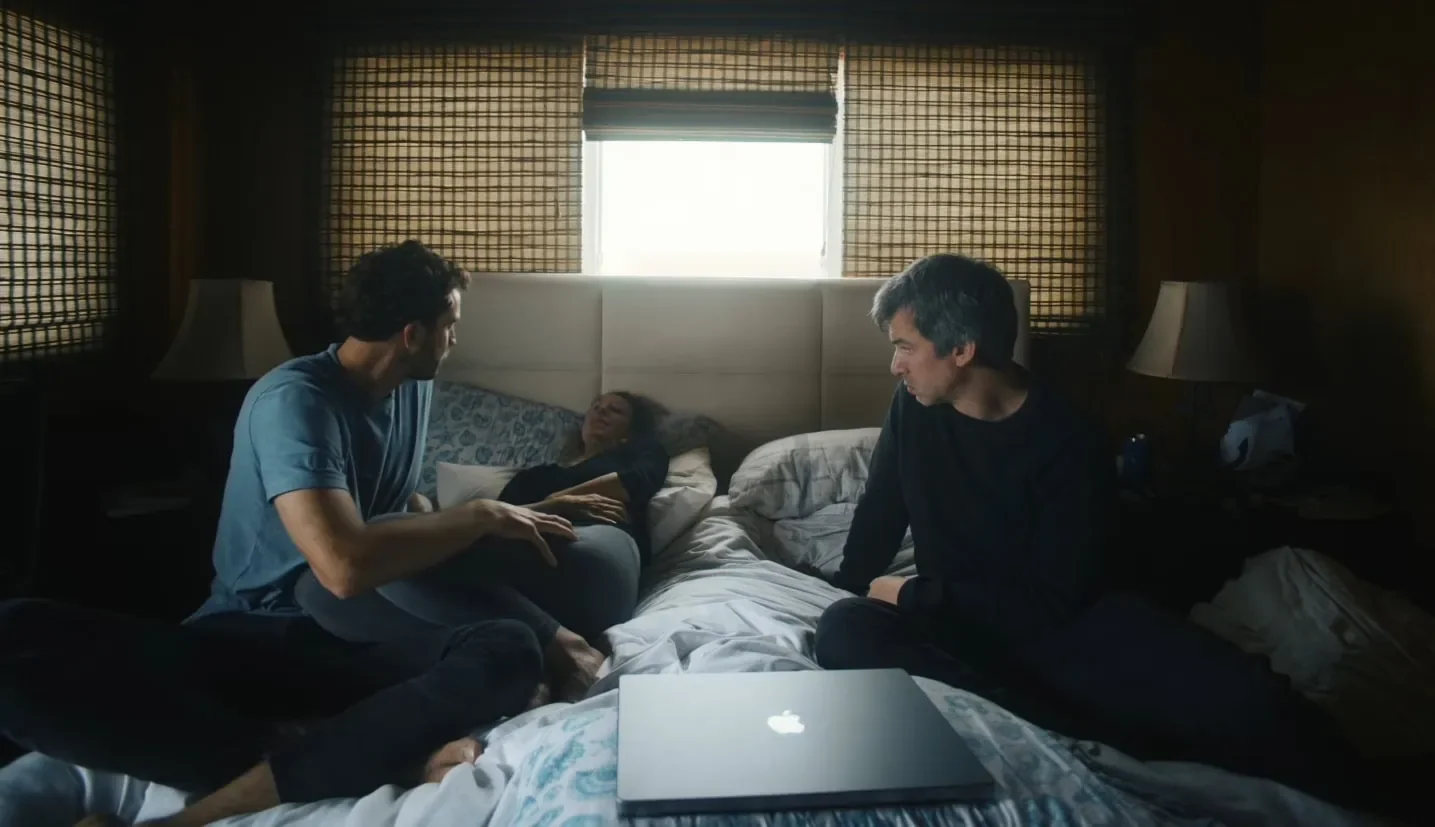
Nathan Fielder infuses the film with his signature brand of awkward humor, while cinematographer David Bolen, who previously worked with Lance Oppenheim on Primetime, captures it all through claustrophobic camerawork. Between the tight aspect ratio and intense close-ups, the film creates a sense of confinement, mirroring Holmes’s eventual imprisonment. The creative use of lighting and shadows also heightens the uneasy atmosphere, while Ari Balouzian’s ominous score lends the film an almost sinister quality. The music makes it feel as though we’re watching a horror film, one where we can never be entirely sure who the real monster is.
Source: A24
You Can See Everything is one of the year's strongest documentaries, though it doesn’t feel quite as groundbreaking as some have suggested. Its use of a notorious fraud to explore perception, and art’s inability to capture unfiltered truth, recalls Orson Welles’s F for Fake. At the same time, its examination of performance and the construction of a public persona evokes Robert Greene’s 2016 documentary Kate Plays Christine and Joshua Oppenheimer’s The Act of Killing (2012). Yet the film never feels derivative of any docudrama or documentary that blurs the boundary between fact and fiction. Despite its sprawling 174-minute runtime, You Can See Everything is riveting from start to finish. It’s a layered, psychological character study. Much like how Holmes invites Fielder and Oppenheim into her home, the film itself invites us to question what we see, how we interpret it, and whom we choose to believe and why. For a film about deception, it pulls the biggest trick of all: convincing us we’re watching a story about Elizabeth Holmes, only to leave us questioning our own perception of reality. The irony in the title is that we can never really see everything; we can only see what others choose to show us.
You Can See Everything is now playing in select theaters.