The History of Concrete — Review

Source: Magnolia Pictures
John Wilson’s film, The History of Concrete, is without a doubt the greatest documentary/Hallmark movie/rockumentary about concrete and DMX that I’ve ever seen. That’s because it’s the only documentary/Hallmark movie/rockumentary about concrete and DMX I’ve ever seen. Confused? Allow me to explain. The film’s premise is simple: Wilson attends a workshop on how to write a Hallmark movie and decides to use that formula to sell a documentary about concrete. Explaining the actual film itself, however, is a lot less simple.

Source: Magnolia Pictures
The History of Concrete plays out eerily similarly to how my ADHD brain functions. There are so many unexpected tangents that if I were to list every topic that comes up, you’d think I was playing a game of Mad Libs and just rattling off the most random nouns I could conjure up. One minute, Wilson is exploring the history and uses of concrete; the next, we’re learning about Save My Ink Forever, a company that specializes in preserving people’s tattoos after they die. At one point, Wilson learns that music documentaries are particularly lucrative for studios and that the only way to finance his film is to include a musician. That’s where the rockumentary component comes in. If you’re wondering what any of this has to do with rapper DMX, you’ll just have to watch the film to find out. However, I will say that I was surprised to discover that he’s mentioned more than once throughout the film for completely unrelated reasons.

Source: Magnolia Pictures
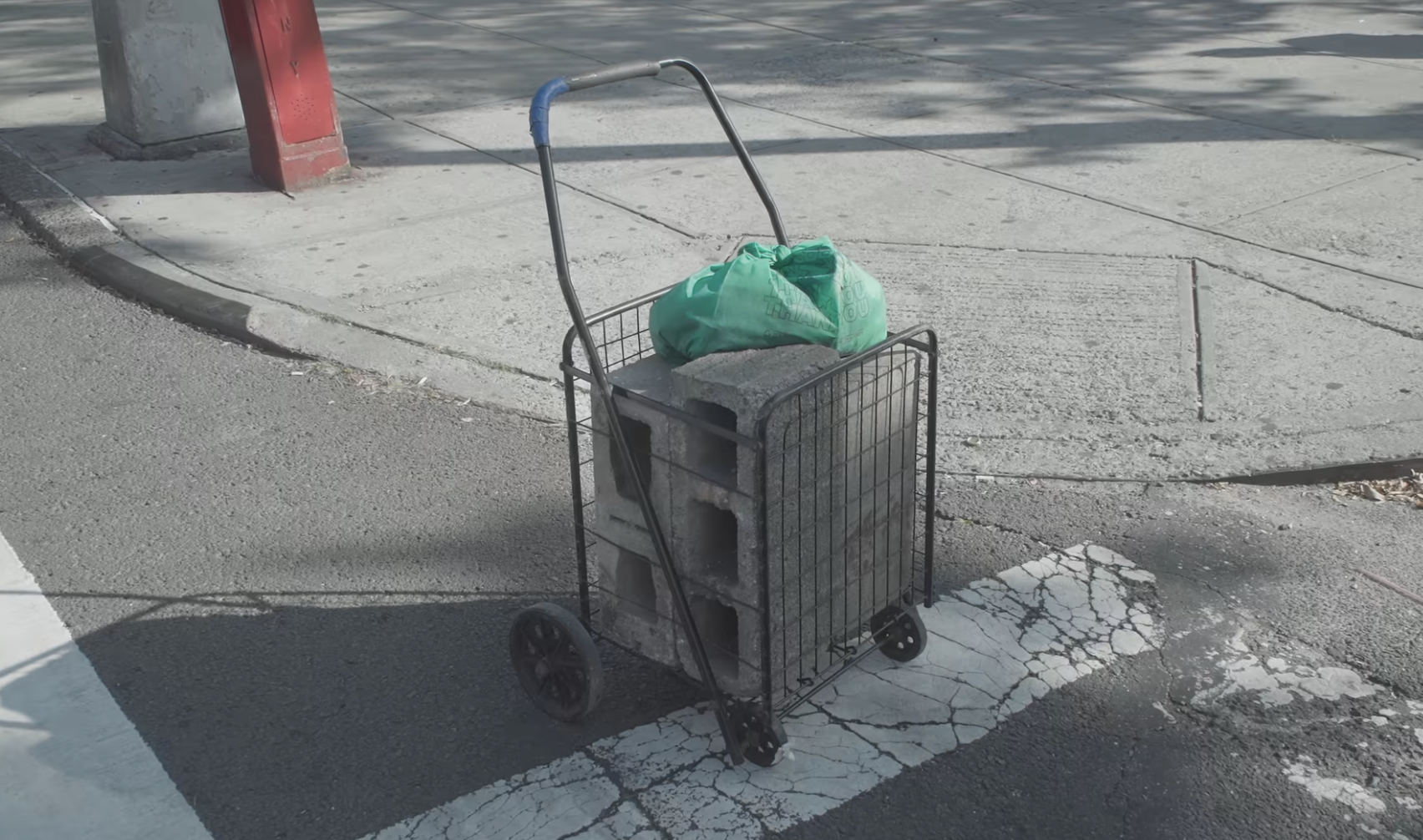
The film immediately lured me in with its clever editing and Wilson’s dry, often unusual sense of humor. Wilson ensures that the viewer is never bored by cutting to the most random footage that somehow aligns with whatever he’s talking about. For example, early in the film, he talks about taking the road less traveled, which is accompanied by footage of a street sign for Buttzville Road. When he continues, “where nobody else would ever dare to voyage,” it’s accompanied by a shot of a street sign for Titman Road. His narration also comes across as if it were delivered by someone who has absolutely no filter, and his throwaway comments often got a laugh out of me. At one point, he remarks, “You’re not allowed to put a fridge on the sidewalk without taking its doors off or securing them, so children don’t hide inside and… have… so much fun.” The absurdity of the comment, especially the way he delivers the final few words, perfectly captures the offbeat humor that makes his narration so entertaining.

Source: Magnolia Pictures
A large part of the film’s appeal comes from Wilson himself. He has a unique ability to make even the most mundane situations entertaining simply by observing them with sincerity. Through his narration, Wilson often seems just as perplexed by the film’s strange detours as the audience. That is part of what makes The History of Concrete feel less like a traditional documentary and more like tagging along with an eccentric, curious person who has no idea where his investigation will lead. Werner Herzog is one of my favorite documentarians for the way his narration infuses his films with life, personality, and humor—and the same could be said for John Wilson.
The History of Concrete is an oddly informative film about the history and uses of concrete, as well as the current state of the film industry. Wilson attended the Hallmark movie workshop during the writers’ strike because it was the only workshop available at the time. The fact that he could only get funding for his film if it featured a notable musician is another sign of how the industry currently operates. Whether intentional or not, the film offers insightful commentary on the film industry because Wilson’s attempts to make his documentary financially viable exemplify how commercial considerations can influence what filmmakers are actually able to create. It demonstrates the compromises filmmakers sometimes have to make to get their projects off the ground. There’s an irony in the fact that The History of Concrete becomes more disconnected from its original subject matter the more he tries to make the movie marketable. The story unfolds in a stream-of-consciousness fashion that often feels erratic, but that’s also part of its charm and what makes it so entertaining. When you think Wilson is going to follow one particular thread, he suddenly veers off in a completely different direction.
Source: Magnolia Pictures
What surprised me most is that the film actually manages to make the history of concrete compelling. Wilson approaches what initially sounds like one of the dullest subjects imaginable with enough curiosity and humor that I found myself genuinely invested in learning about it. I was also surprised by how many facts about concrete I retained after the film ended. It’s as though the film's haphazard structure made those details more memorable than they would have been in a more polished, streamlined documentary. This movie changed the way I view concrete. The day after watching it, I found myself walking around New York City and paying far more attention to the sidewalk. I kept thinking to myself, “Wow, look at all those gum marks and imperfections.” It’s as though every square of sidewalk tells a story.

Source: Magnolia Pictures
Visually, the film looks like a low-budget production, but the sheer amount of humor lurking in nearly every frame compensates for its lack of visual style. The film does run a bit too long, though, and could have benefited from more trimming in the editing room. Some of the tangents that initially feel amusing eventually wear thin, and tightening the film’s runtime would have made its stronger jokes and observations stand out even more.
The History of Concrete is a difficult film to describe. It’s unlike anything I’ve seen before, but whether that’s a good thing will largely depend on the viewer. Its bizarre blend of documentary, Hallmark movie, and rockumentary won’t be for everyone, but those willing to embrace its eccentricity will likely find plenty to enjoy. This might just be the weirdest review I’ve ever written, which feels fitting because The History of Concrete is one of the most peculiar films I’ve ever seen.
Check out The History of Concrete in theaters on September 18, 2026.