Wasteman — Review

Source: Lionsgate
Prison dramas tend to fall into a familiar rhythm, so much so that it can feel as if you’ve seen one, you’ve seen them all. In a confined setting, the inevitable conflicts can quickly become predictable. As a result, any director stepping into the genre faces a challenge: they need to bring something new to the table or elevate the material enough to stand out from the crowd. That is no easy feat. Yet with Wasteman, Cal McMau delivers one of the most compelling prison dramas in recent memory.
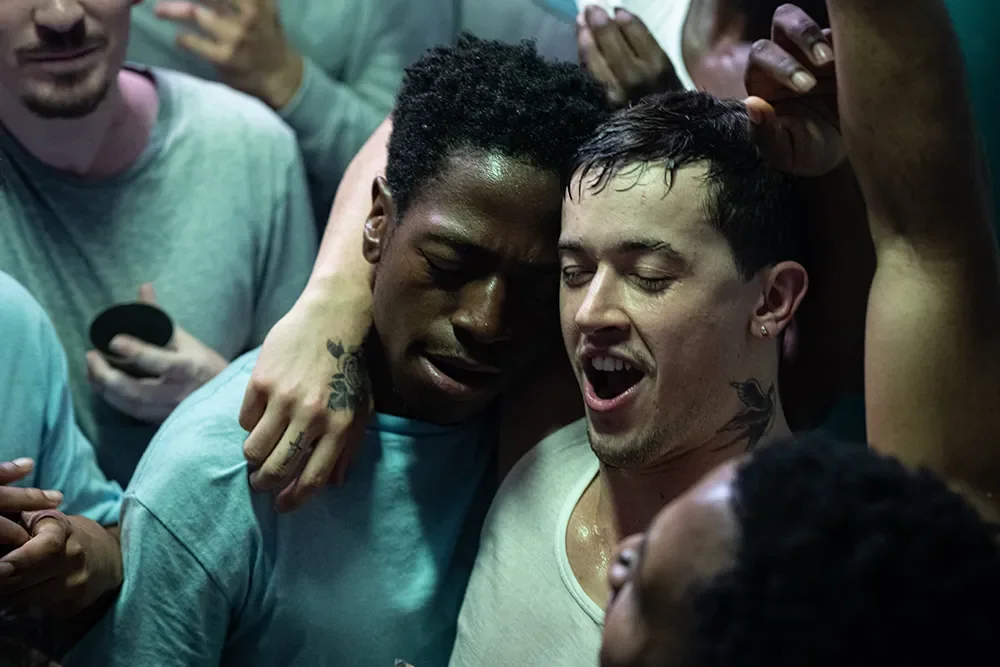
The film follows Taylor (David Jonsson), a man who has spent the past 13 years behind bars. With the possibility of early release on the horizon, all he longs for is to reconnect with his estranged 14-year-old son, Adam (Cole Martin). Having been incarcerated for over a decade, Taylor has carved out a regular routine for himself. He works as a cook, cuts hair for fellow inmates, and buys drugs to fuel his ongoing opiate addiction. Gaz (Corin Silva) and Paul (Alex Hassell) are the ones who provide him with the drugs. When Taylor is assigned a new cellmate, Dee (Tom Blyth), the routine gets shaken up. Dee quickly forms a bond with Taylor, but he also starts selling drugs shortly after he arrives, taking customers away from Gaz and Paul. Thus, a power struggle ensues, with Taylor trapped in the middle.
Source: Lionsgate
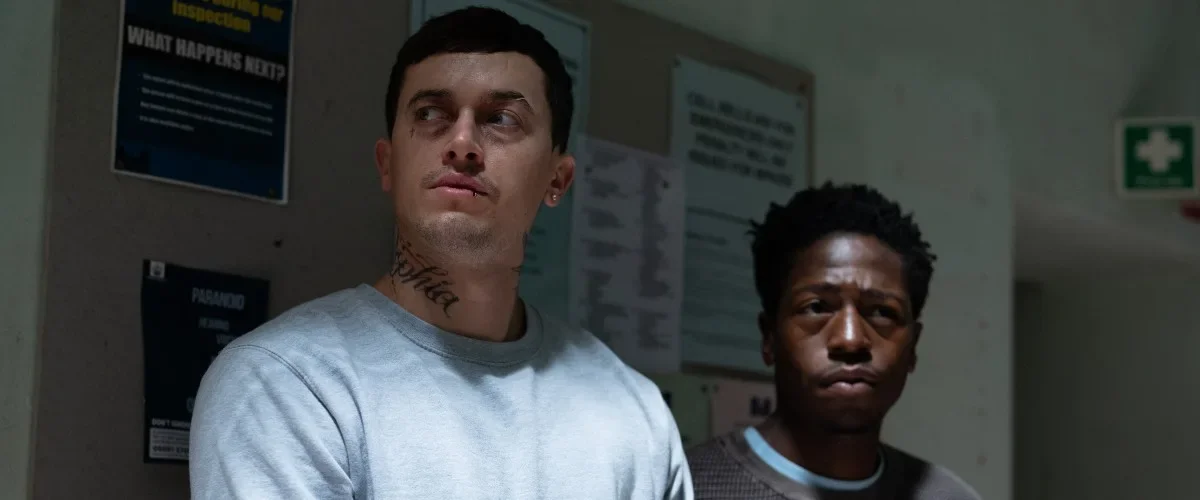
Wasteman is so thoughtfully directed that it’s almost difficult to believe this is Cal McMau’s directorial debut. McMau demonstrates a confident, clear command of tone and visual language. Between the aspect ratio and Lorenzo Levrini’s cinematography, the visuals create a sense of claustrophobia that mirrors the suffocating reality of life behind bars. The tight framing and shallow depth of field make it feel as though the walls are closing in and there’s nowhere to escape. The handheld camerawork and the way the camera slowly zooms in on characters’ faces heighten that feeling and amplify the anxiety.
The aspect ratio shifts during moments of iPhone footage, creating a stark visual contrast that briefly disrupts the film’s aesthetic. These moments can feel jarring at times. Instead of offering any relief from the film’s already stressful visuals, the clips often depict prison fights, giving them a different kind of unease. The change in perspective often reframes the same brutality through a more detached, almost voyeuristic lens.
Source: Lionsgate
Sound design also plays a crucial role. The score by Forest Swords pulses like a ticking clock. The music heightens the suspense with an intense, heart-pounding rhythm. Silence is used just as effectively, establishing a feeling of apprehension that lingers in the air when every character’s next move feels unpredictable. Combined with the film’s brief runtime and brisk pacing, this builds an atmosphere of rapidly escalating, relentless tension. While Wasteman begins with a measured, almost observational pace, that restraint feels deliberate. It allows us to get acquainted with the prison ecosystem and understand Taylor’s role within it. So by the time the third act arrives, it accelerates with startling intensity and rarely lets up. The stress and conflicts bubble up like a pressure cooker on the verge of exploding.
Hunter Andrews and Eoin Doran’s screenplay is equally effective in its restraint. The screenplay was originally set to be directed by the Safdie brothers, who ultimately dropped the project in favor of directing 2019’s Uncut Gems instead. However, the material still feels very much within their wheelhouse due to its ruthless pressure-cooker energy. Instead, it drops the audience into the environment without handholding, making us feel like new inmates in the prison, constantly trying to catch up and learn the ropes as the rules reveal themselves through action rather than explanation.
Source: Lionsgate
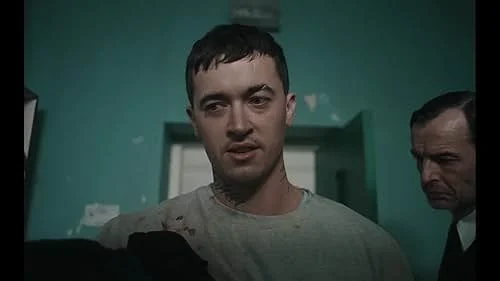
What truly makes Wasteman stand out, however, is its central performances. David Jonsson and Tom Blyth are magnificent, and their shared chemistry feels entirely believable. There is a sense of vulnerability between them, but also unease, as if neither is fully certain whether the other can be trusted. The film is not particularly dialogue-heavy, so their facial expressions and subtle mannerisms do much of the heavy lifting. The look in Jonsson’s eyes alone can speak volumes. If it wasn’t already clear after his stunning performance in last year’s The Long Walk, the man is undeniably a star on the rise. The magnetic work from Jonsson and Blyth alone is enough to make Wasteman worth watching.
Wasteman succeeds not just because of its compelling performances, but because McMau utilizes the technical aspects of filmmaking to fully immerse us in this story. Every formal choice recreates that suffocating feeling, leaving the viewer feeling like more than just an observer or innocent bystander. Wasteman reinforces that sense of confinement so effectively that it feels as though we are trapped in this world right alongside the characters, unable to escape.
Wasteman is now playing in select theaters.