Wuthering Heights — Review
Source: Warner Bros
There’s been a lot of controversy surrounding Emerald Fennell’s adaptation of Emily Brontë’s classic 1847 novel Wuthering Heights, largely centered around the decision to whitewash the character of Heathcliff by casting Jacob Elordi in the role. However, almost every adaptation of the novel thus far has cast a white actor in the role, with Andrea Arnold’s 2011 adaptation being one of the rare exceptions. Between the casting, anachronistic costume designs, and original songs by Charli xcx, it’s clear even before audiences step into the theater that this version of Wuthering Heights isn’t concerned with being faithful to the novel or the time period in which it takes place. Anyone who walks into Emerald Fennell’s Wuthering Heights expecting an accurate adaptation of Emily Brontë’s novel is setting themselves up for major disappointment.
Source: Warner Bros
With that said, I walked into Wuthering Heights with a completely open mind and didn’t expect the story to be remotely comparable to the source material. Between Fennell’s feature debut in 2020, Promising Young Woman, and Saltburn (2023), I’ve heard countless complaints that she leans too heavily into shock value. Yet the most shocking aspect of Wuthering Heights is that the film is at its strongest when it deviates from the source material entirely. Her take on Wuthering Heights feels akin to Baz Luhrmann’s Romeo + Juliet (1996) or The Great Gatsby (2013), in the sense that it's a literary adaptation that’s more concerned with theatricality and spectacle than translating a work of classic literature to the big screen as authentically as possible. It plays out like a fantasy—more of a love letter to the story Brontë created than a straightforward retelling. If viewers are willing to check their expectations at the door and avoid fixating on comparing the film to the novel, they’ll most likely be in awe of the sheer artistry on display. Fennell fully commits to her singular vision, crafting a film that’s entirely her own.
Source: Warner Bros
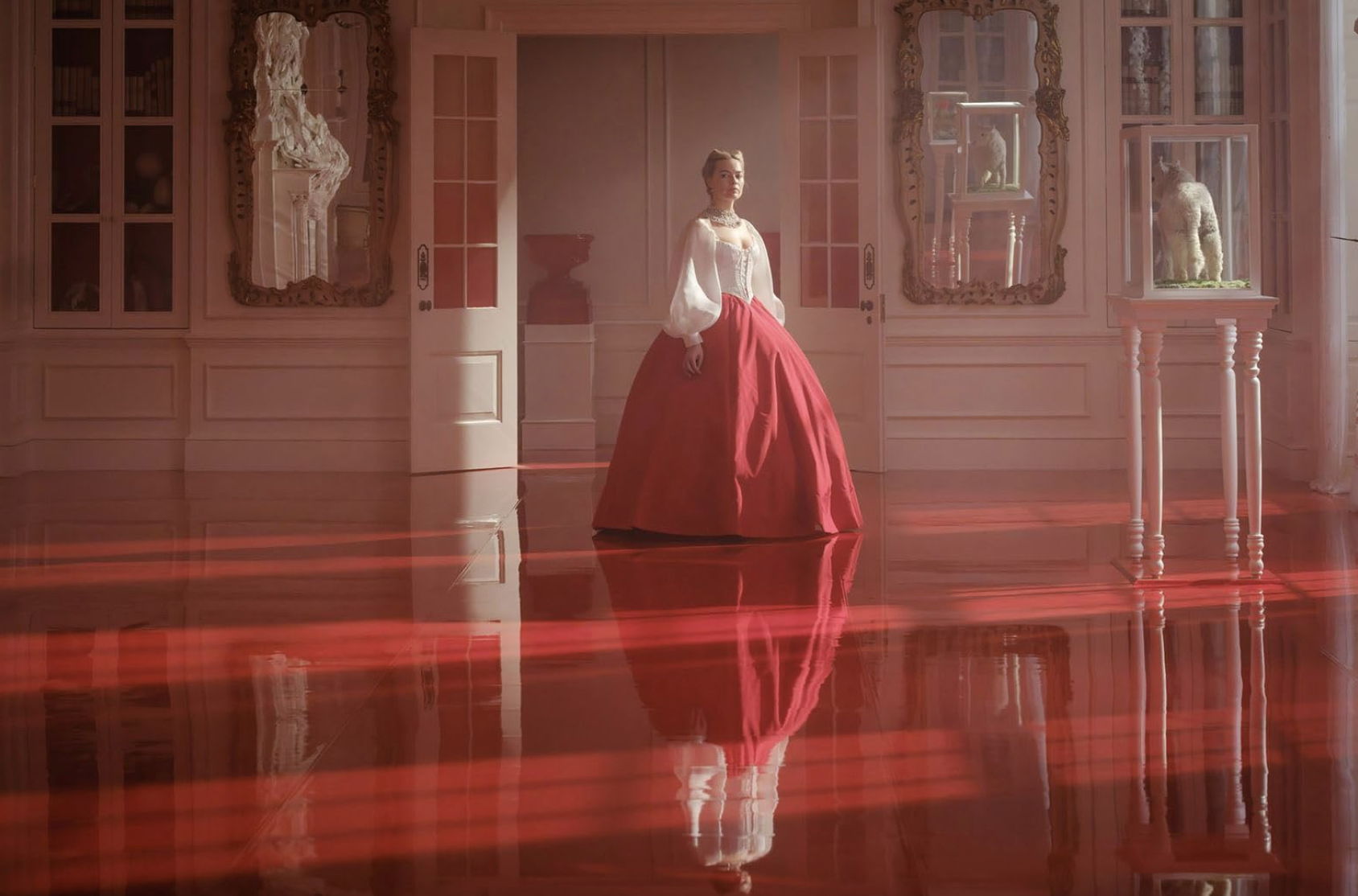
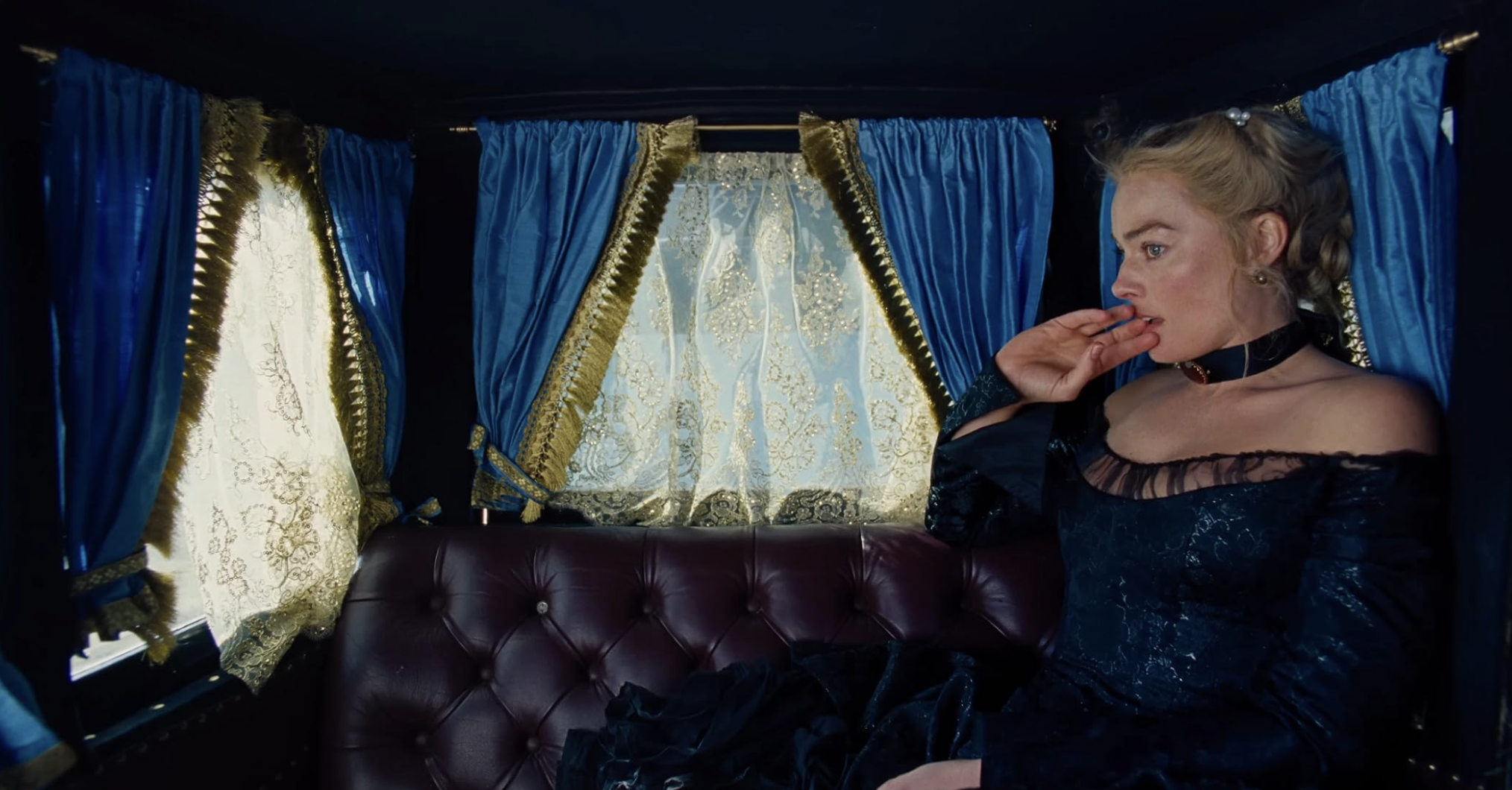
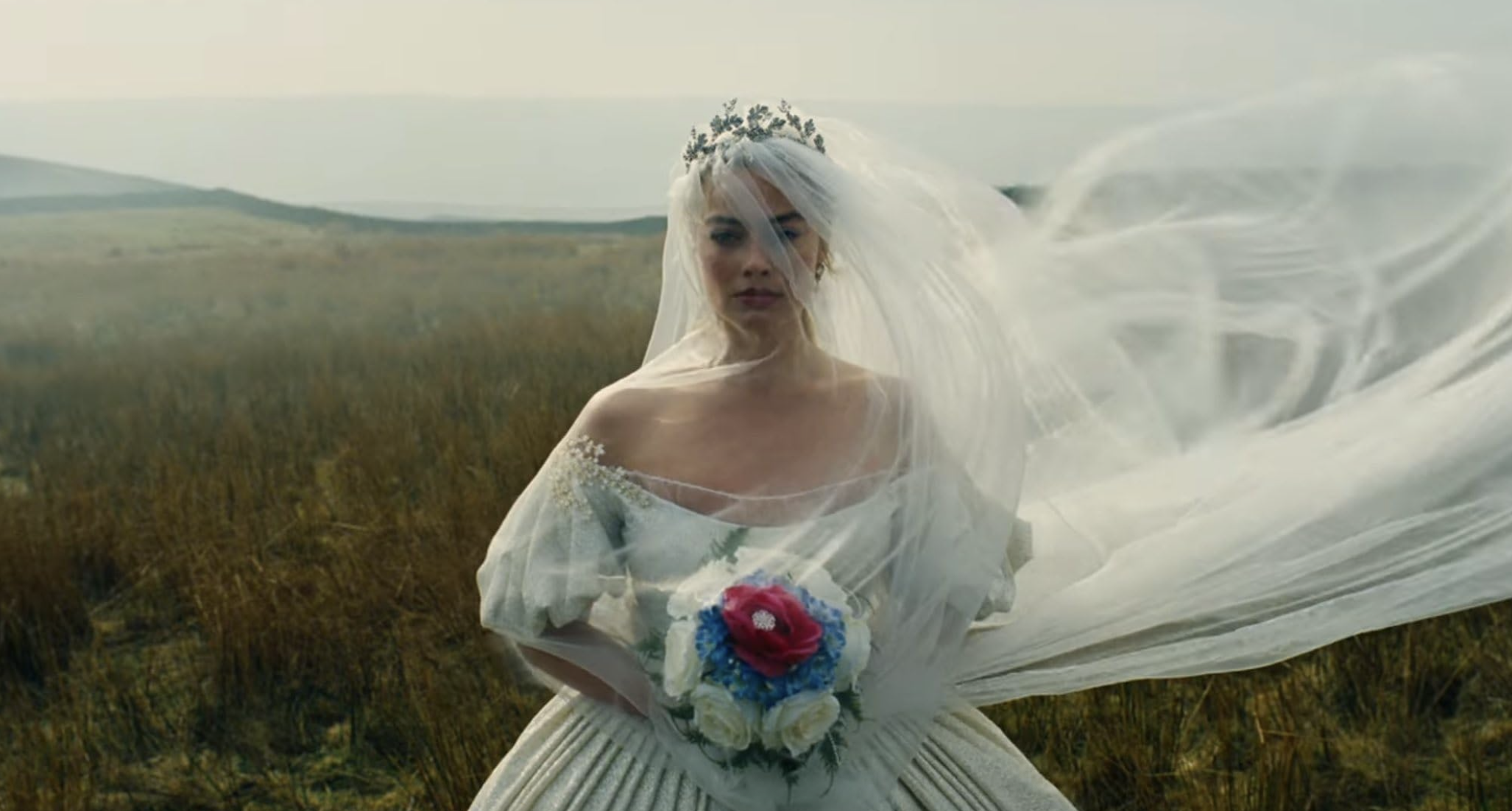
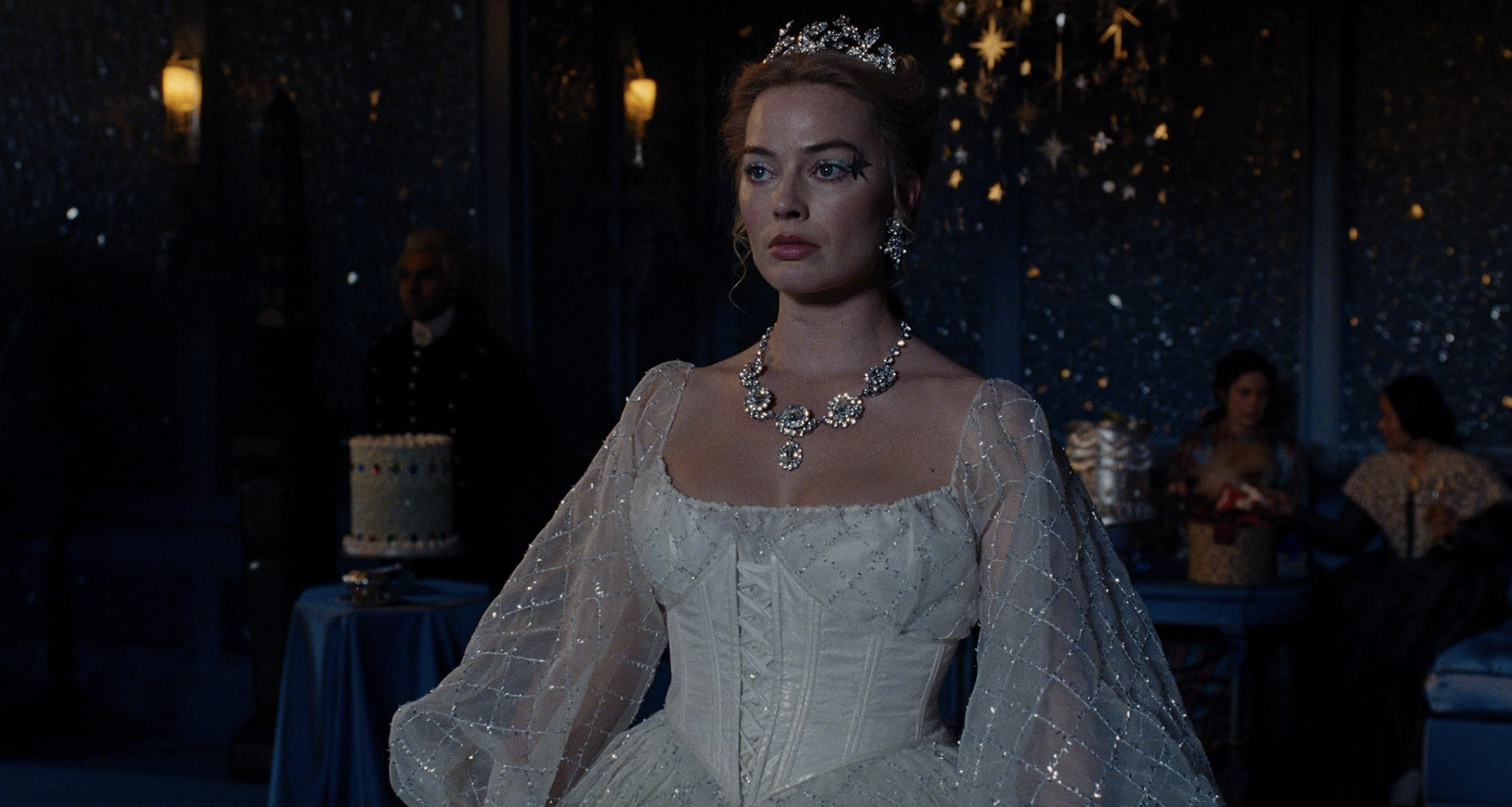
The production design is extravagant, with marvelous set designs, most notably when it comes to the Thrushcross Grange estate, which feels like a castle pulled straight out of a fairytale. Linus Sandgren’s cinematography is breathtaking. The shot compositions are bold and carefully constructed. The colors are lush and vibrant, especially the deep reds that emphasize the film’s themes of yearning and desire. Charli xcx’s original songs, in tandem with the score from Anthony Willis, give the film a pulsing, fiery atmosphere. Jacqueline Durran’s costume designs are immaculate, giving the film an edgy, timeless quality. Despite the film being a period drama, some of the dresses feel unexpectedly modern, making the film feel as though it can’t be confined to any specific time in history. Between the costumes that can’t be defined by a single era and Charli xcx’s songs, which add a contemporary musical flourish, it feels as though many of the stylistic choices in Wuthering Heights are intended to blend old and new, classic and modern. This unique approach almost feels inspired by Jacques Demy’s Donkey Skin (1970), another film with extravagant, colorful costumes and production design that feels like a period piece but with brief flashes of modernity.
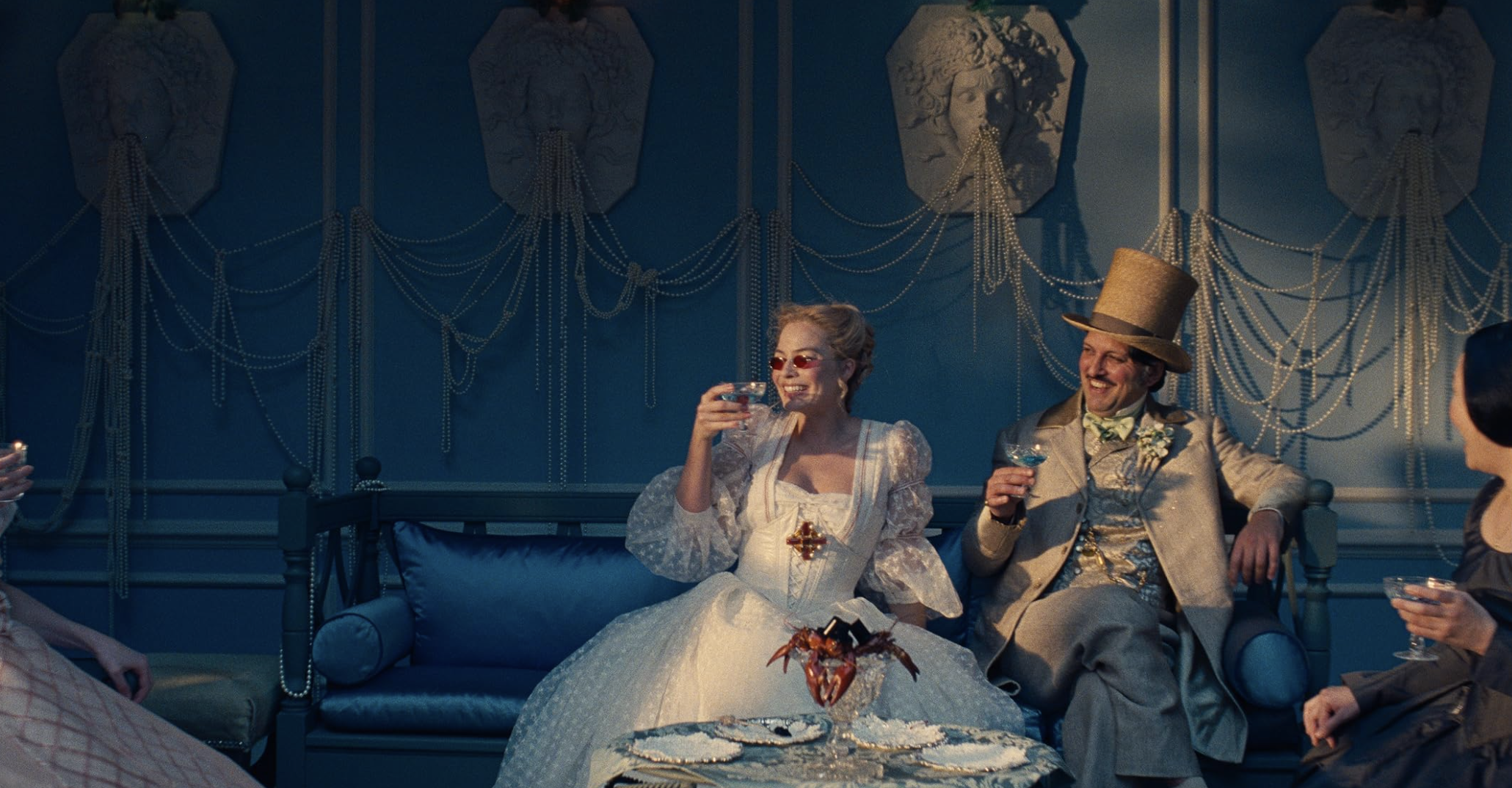
The technical aspects of Wuthering Heights are where the film truly soars. Surprisingly, the screenplay is the film’s weakest point. Narratively, the story is at its most compelling when it strays from the source material and ventures into new directions. It left me wishing Fennell opted to write an entirely original story instead. Had the film focused more on the forbidden romance between Cathy (Margot Robbie) and Heathcliff (Jacob Elordi), it would have been more captivating. However, when the film attempts to tie the story back to the novel’s themes, that’s where it stumbles, especially in the third act. The pacing also doesn’t do the film any favors in that regard. Margot Robbie and Jacob Elordi share steamy chemistry, though perhaps it isn’t as earth-shattering as the marketing may lead people to believe. Nonetheless, the buildup of tension between the two of them is undeniably effective. Alison Oliver’s performance as Isabella Linton is one of the highlights, offering comedic relief and moments of surprise.
Source: Warner Bros
Ultimately, Emerald Fennell’s Wuthering Heights is less of an adaptation of Emily Brontë’s novel and more of a visually intoxicating remix that prioritizes mood, style, and spectacle. The screenplay struggles to balance its reverence for the source material with its desire to reinvent it. Still, the film is a striking showcase of bold filmmaking and unapologetic artistic vision. Viewers longing for a faithful retelling of Wuthering Heights should actively avoid this version unless they want to leave the theater in frustration. However, those willing to embrace Fennell’s maximalist approach might just find themselves swept up in this lush, fantastical romance. Love it or hate it, Wuthering Heights confirms that Fennell is more interested in provocation and style than tradition—and for better or worse, that’s what makes her work almost impossible to ignore.
Wuthering Heights hits theaters on February 13, 2026.