All of a Sudden — NYFF Review
Source: Neon
Like many of Ryusuke Hamaguchi’s previous films, his latest feature, All of a Sudden, is a gentle, patient movie. It paints a fascinating portrait of the intersection of care and capitalism while simultaneously offering a thoughtful examination of work-life balance and how some people treat burnout like a badge of honor. Yet at its core, the film is a meditation on what it means to be alive and to truly connect with others.
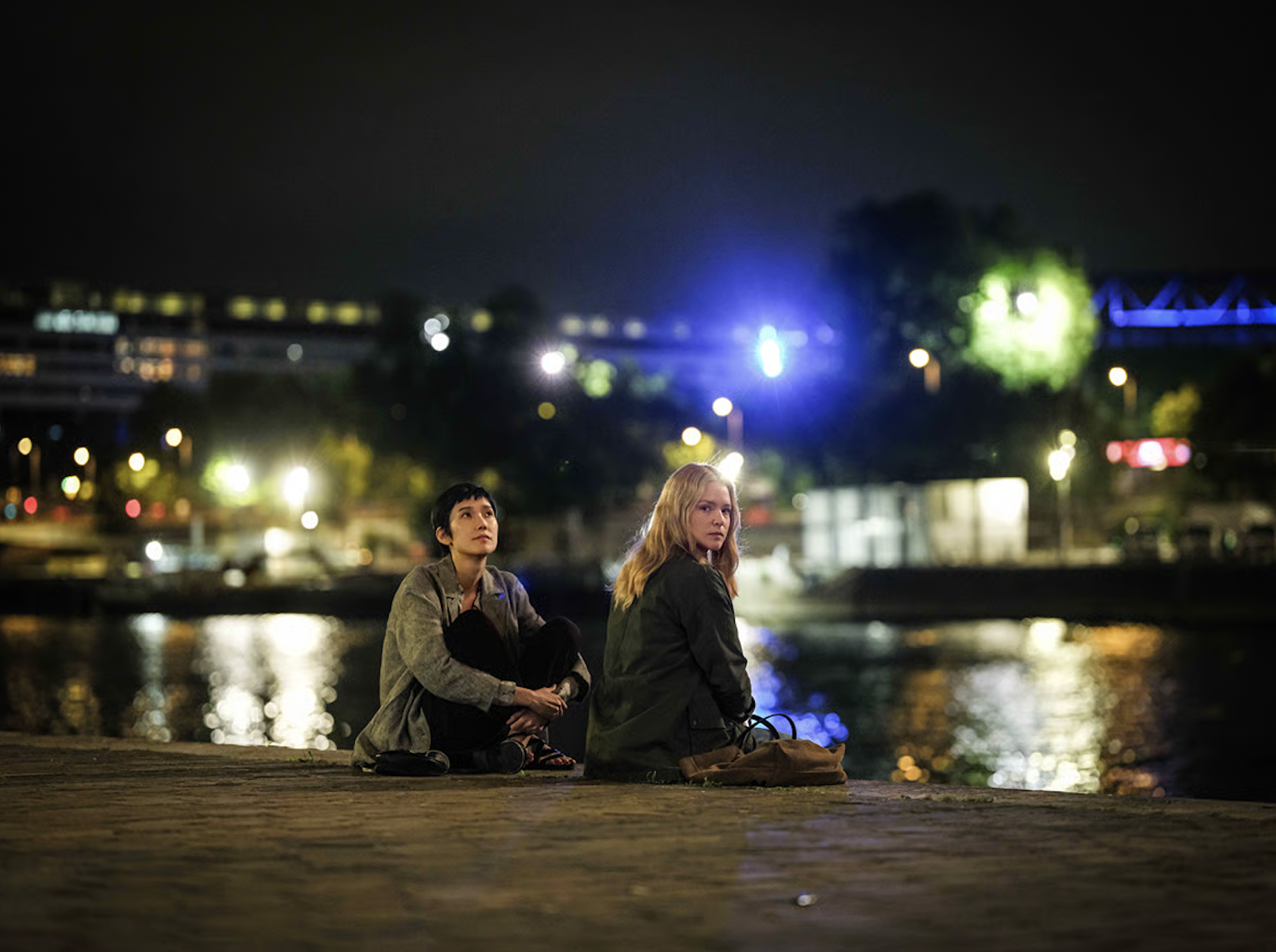
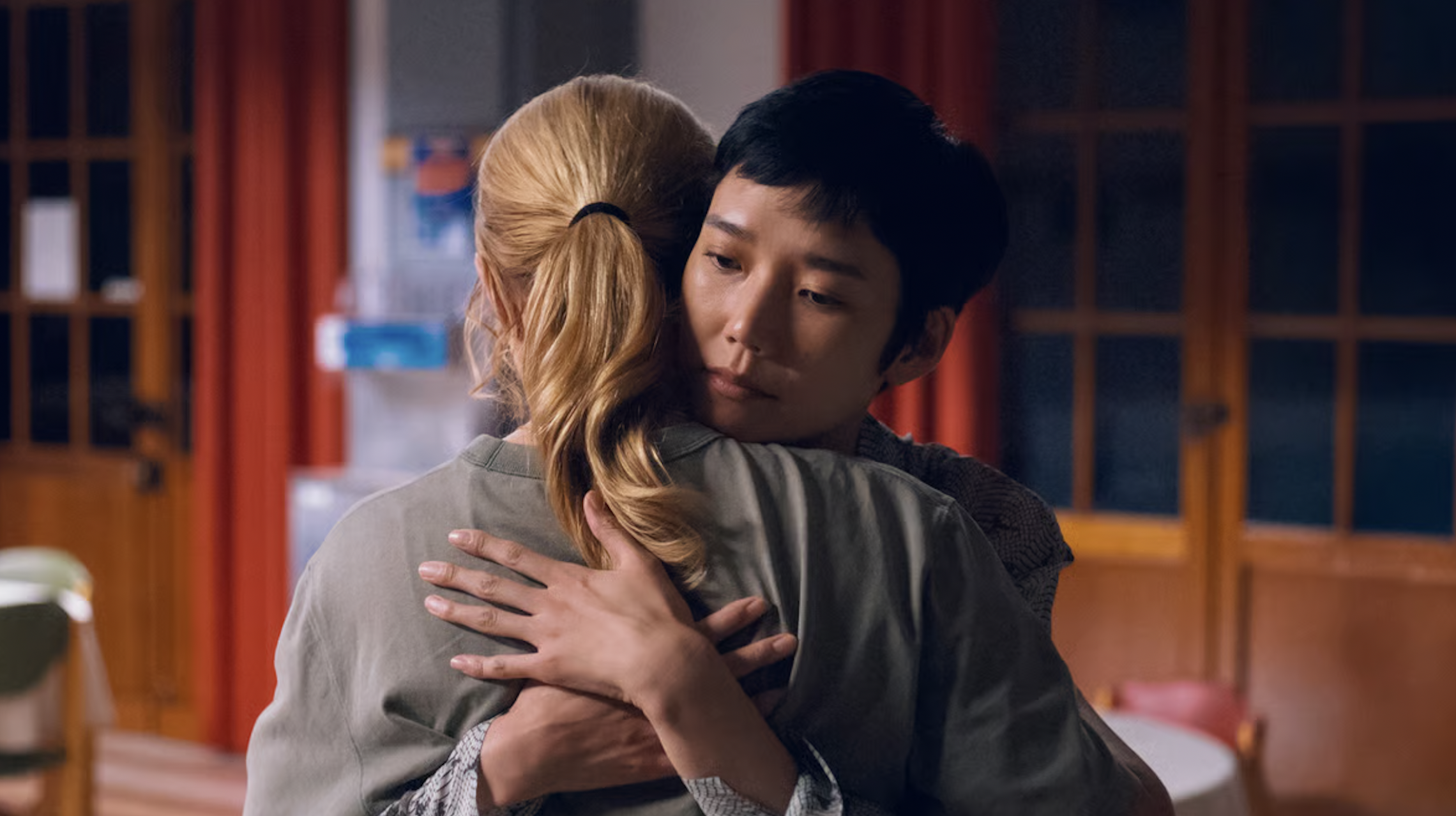
The film focuses on two women: Marie-Lou Fontaine (Virginie Efira), the director of a nursing home for patients with dementia in the Parisian suburbs, and Mari Morisaki (Tao Okamoto), a terminally ill Japanese playwright. The two unexpectedly cross paths, leading Marie-Lou to attend Mari’s play, “Up Close, No One Is Normal.” The performance deeply resonates with Marie-Lou, or as she puts it, the play “pierced her heart.” At the Garden of Freedom, the nursing home she runs, Marie-Lou has been training her staff in the Humanitude technique, which emphasizes compassion and treating patients as individuals. Mari’s play, which explores the abolition of mental hospitals in Italy, therefore strikes a particularly personal chord with Marie-Lou, who has devoted her career to caring for others and proudly loses sleep for the sake of her work.
Source: Neon
While many might consider Marie-Lou’s work ethic admirable, Hamaguchi invites us to question how we’ve developed that mindset. The juxtaposition of Marie-Lou losing sleep over work and Mari pouring herself into her art is particularly poignant because Mari is also confronting the limits of her own time. Both women are passionate about what they do, but their circumstances give that passion very different meanings. For Marie-Lou, work has become so intertwined with her identity that sacrificing her own well-being seems natural. For Mari, creating is a way to reflect on her remaining time as she confronts stage 4 cancer, but it’s also a way to connect with others before that time runs out. By putting the bond between these two women on display, it’s as though Hamaguchi is encouraging the audience to reflect on what we are actually living for, and whether we are really living at all. Marie-Lou lives to work, but Mari simply wants to live.
Early in the film, Marie-Lou pushes for pay raises for her staff, putting her own job on the line in the process. She repeatedly argues that the quality of care suffers when the people providing it aren’t paid well. If it weren’t already clear from her business meetings and interactions with the staff that the film is dissecting the divide between care and capitalism, Hamaguchi makes the connection even more explicit in a long take of Mari and Marie-Lou walking and talking about it. And, if that weren’t enough, Mari eventually breaks down the concept of capitalism on a whiteboard. While the whiteboard sequence is amusing, it’s hard to argue that the film earns every minute of its 196-minute runtime when it devotes so much time to exposition and reiterating ideas it has already established.

Source: Neon
The hefty runtime is All of a Sudden’s biggest drawback. While it’s shorter than his 2015 film Happy Hour, which clocks in at 317 minutes, the issue isn’t necessarily that Hamaguchi’s latest is too long. Rather, it’s that its nearly three-and-a-half-hour runtime doesn’t always feel justified. Hamaguchi is a master at allowing his films to unfold at a methodical pace, giving audiences time to reflect and letting each scene breathe. Usually, that extended runtime also contributes to deeper character development, but that isn’t always the case here. At one point, Mari texts Marie-Lou, “I still don’t know anything about you.” By the time the film ends, it doesn’t feel as though we’ve truly learned that much more about her either. If a film is going to devote more than three hours to two characters, we should come away feeling as though we’ve truly gotten to know them on a deeply personal level. All of a Sudden is a compassionate, intimate film, but there is still so much about Marie-Lou and Mari that remains unexplored.
Regardless, Virginie Efira and Tao Okamoto are absolutely magnetic. Efira portrays Marie-Lou with a restless energy, conveying both her passion for her work and her exhaustion. Okamoto, meanwhile, provides a quietly compelling presence as Mari. It feels as though Mari knows how to slow down, to appreciate the moment and make space for genuine connection in a way that Marie-Lou often struggles to do. It’s fitting that Mari embodies this idea of slowing down, because the movie itself moves at such a deliberate pace.
Alan Guichaoua’s cinematography is stunning. When Mari leads a workshop at the Garden of Freedom where the residents massage each other’s feet, even this pile of people becomes an artfully composed shot. Guichaoua’s images carry a warmth and intimacy that complements the film’s emphasis on human connection. Even the subtle, quieter moments feel carefully constructed. Samuel Andreyev’s score is equally mesmerizing, although there are a few moments when the music doesn’t quite match the emotions of the characters or the scenes.

Source: Neon
Overall, All of a Sudden doesn’t always justify its nearly three-and-a-half-hour runtime, but Hamaguchi’s patience has its rewards. Even when the film feels overly long, its compassion, intimacy, and meditation on connection remain deeply affecting. It’s as heartfelt and thoughtful as we’ve come to expect from Hamaguchi, but I found it to be a weaker entry in his oeuvre. My biggest frustration is that, despite spending so much time with Marie-Lou and Mari, I never felt as though I truly got to know either woman as deeply as I wanted to. The emotional distance between us and the characters keeps the film from reaching the heights of Hamaguchi’s best work. Still, there is plenty to admire here, particularly in its performances, visual beauty, and sincere belief in the importance of human connection. For all of its shortcomings, All of a Sudden is a deeply human film, one that encourages us to treat others with compassion, cherish the limited time we have, and, perhaps most importantly, slow down long enough to truly connect.
All of a Sudden will have its U.S. premiere at the 64th New York Film Festival on October 1, 2026.