Everything Else Is Noise — NYFF Review
Source: New York Film Festival
Everything Else Is Noise is a fitting title for writer, director, and cinematographer Nicolás Pereda’s new film. Sound is what carries the film, whether it’s the blaring horns of a traffic jam or the incessant barking of a neighbor’s dog. Not only does the film essentially function as a chamber piece, with only a few characters largely confined to one location, but it’s also a work of docufiction, blending elements of documentary and narrative filmmaking. Despite its genre hybridization, it also feels like a riff on the French New Wave. It devotes nearly the first five full minutes of its succinct 71-minute runtime to an overhead shot of a traffic jam, calling to mind the infamous scene from Jean-Luc Godard’s Breathless (1960). These stylistic choices make Everything Else Is Noise a fascinating filmmaking exercise, even if they do not always make for an especially entertaining film.
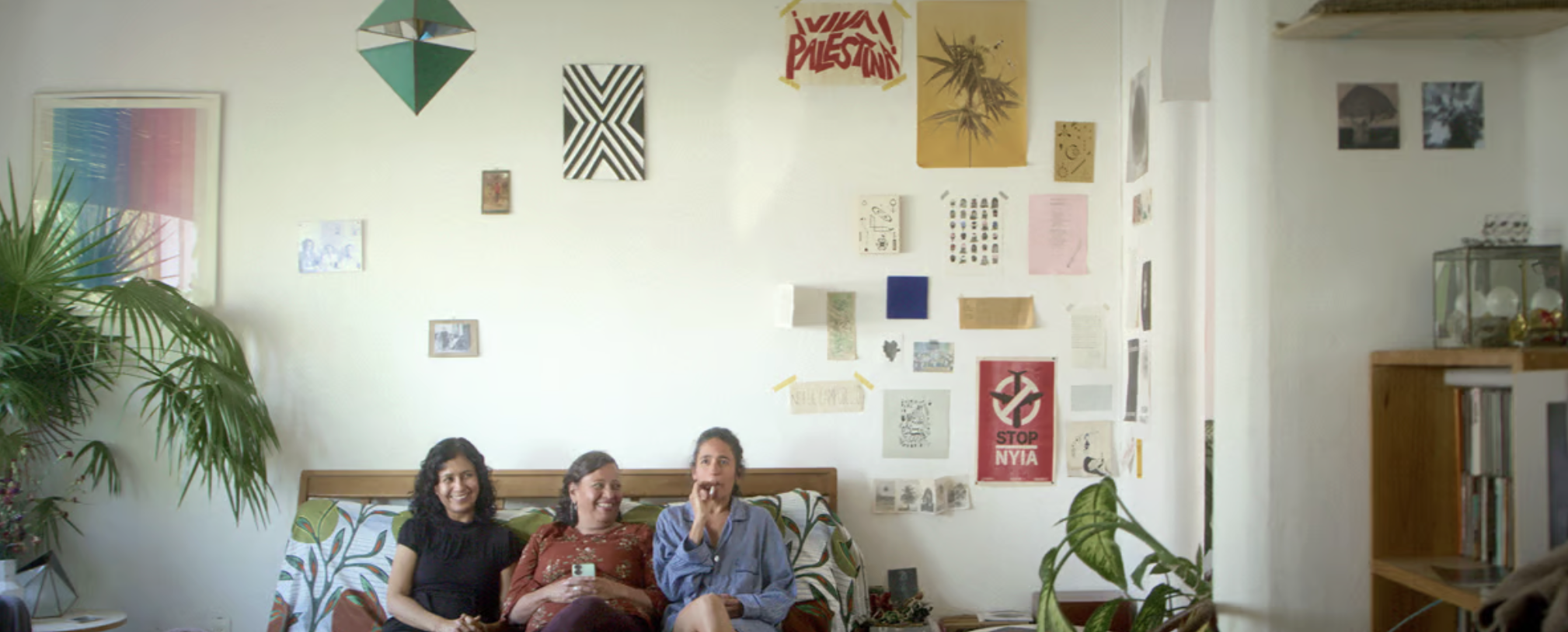
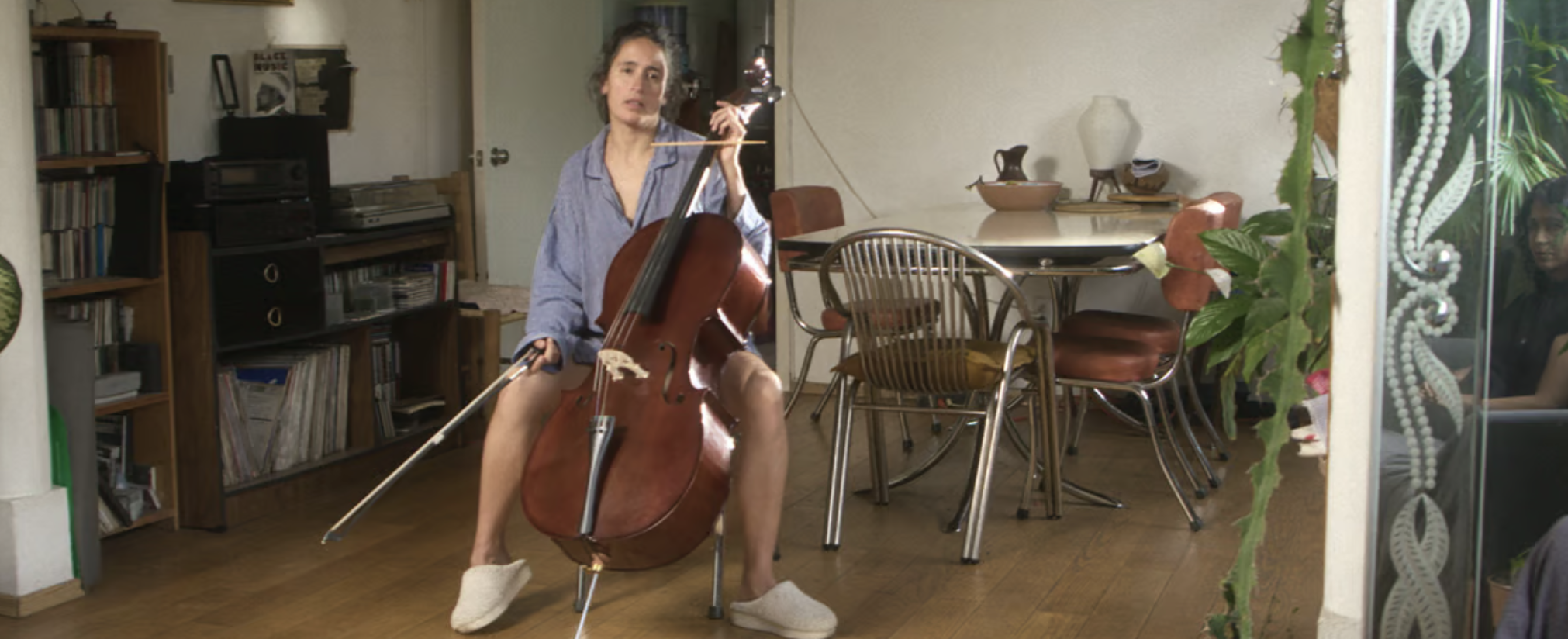
The film follows three women from different generations: Rosa (Rosa Estela Juárez Vargas), Tere (Teresita Sánchez), and Tere’s daughter, Luisa (Luisa Pardo). All three are musically inclined. Rosa is a composer who agrees to give her first television interview at Tere’s apartment so she can keep it a secret from her husband, Arturo. Aside from the traffic jam that opens the film, the story takes place entirely in Tere’s plant-covered apartment. It’s established right from the start that it’s a noisy building. When we first meet Tere, she’s playing the cello but is interrupted by a neighbor asking her to turn it down. This becomes the first of many interruptions throughout the film, as he repeatedly refers to her music, which is also her work, as “noise.” Ironically, he isn’t fazed by the barking dog or the cars outside, just the cello. Even Tere can’t help but laugh at the discrepancy.
Source: New York Film Festival
It would feel disingenuous to call Everything Else Is Noise a quiet film, given how dependent it is on its diegetic sounds. However, from a narrative standpoint, it feels quiet in the sense that little happens. Most of the runtime is spent on the interview itself. This is the type of film that’s more concerned with daily trivialities and dialogue than story. When Rosa arrives at the apartment, Tere tosses her keys out the window so she can let herself in, but accidentally hits Rosa on the head. It’s these types of small mishaps that make up the majority of the film.
Visually, the film relies more on a naturalistic style. It has an almost cinéma vérité quality to it. Tere’s apartment feels lived-in, with a plethora of plants and mismatched throw pillows. The large windows allow plenty of natural light to get in, contributing to the film’s unadorned visual style. Some might complain that the lighting is too dark, as we’re used to seeing brighter imagery in cinema, but it’s clear Pereda is opting for a more natural, realistic look. Up until the interview begins, the camera seldom moves. Shots are stagnant and consist of long shots and long takes. It feels as though we’re observing these people having a genuine conversation, with the editing and cinematography doing little to distract from it. The long takes and the distance between Pereda’s camera and the cast also enhance the film’s sense of dry, deadpan humor.
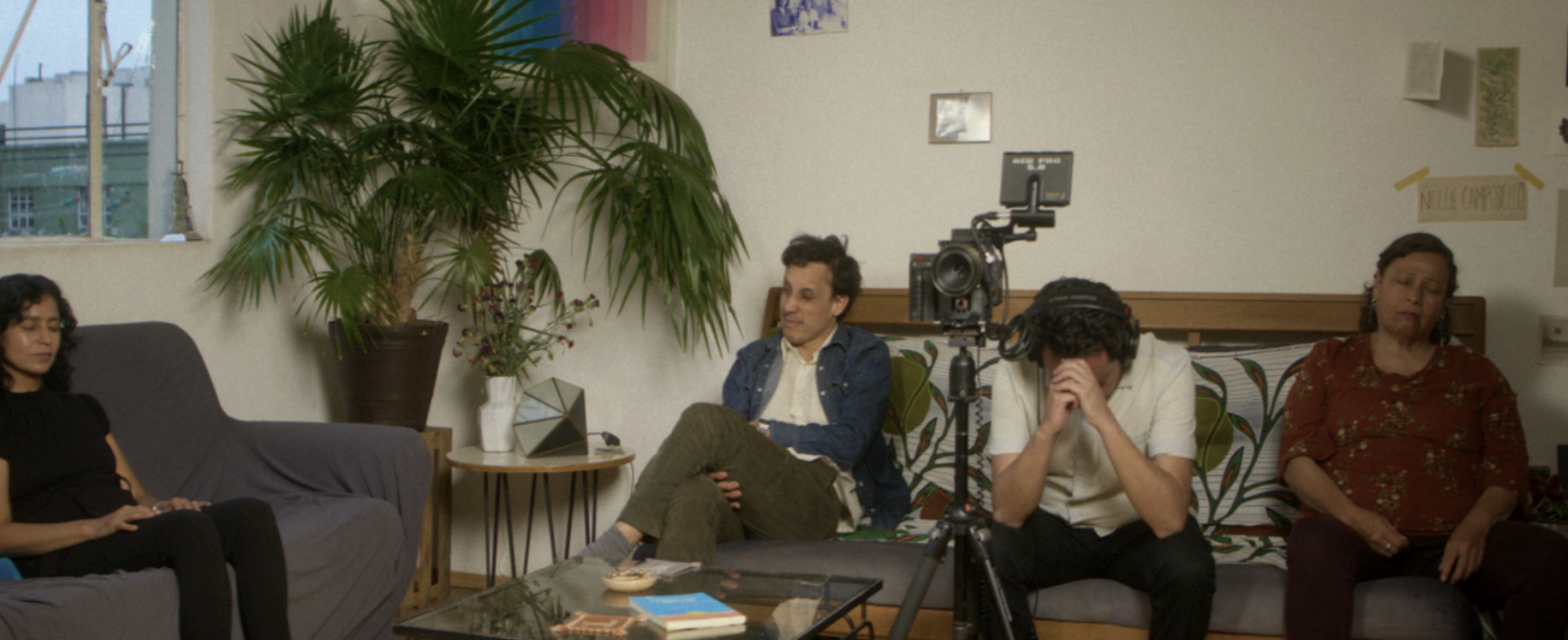
The journalist and his cameraman (Lázaro G. Rodríguez and Francisco Barreiro) arrive, and before the interview can even properly begin, a power outage occurs. One of the most fascinating moments in the film comes when the two men step outside, and the camera stays in the apartment, fixated on the women. We cannot hear their conversation; we can only hear the two men talking outside. The scene feels as though Pereda is making a statement about the art of filmmaking itself, challenging the assumption that what we hear should correspond directly with what we see. At one point, Luisa even remarks that “the visual often wins out over the auditory” and asks everyone to close her eyes before she plays the cello. It almost feels like an invitation to the audience to do the same.
Another intriguing formal choice that Pereda makes is that, while the camera is mostly static, it slowly pans around the room during the interview. The roles reverse, with Rosa asking the questions and Tere answering them. As Rosa speaks, the camera slowly pans across the room from her to Tere. At the same time, the television camera visible within the scene also moves across the room to focus on Tere as she begins speaking. The two cameras essentially mirror each other, creating a subtle visual joke while also drawing attention to the act of filmmaking itself.
Source: New York Film Festival
Despite a few fascinating and funny moments, Everything Else Is Noise feels like the type of work that would have been more effective as a short film. Its runtime may be brief, but the story feels as though it is stretched too thin. There’s enough material here for an intriguing 30-minute short film. However, the deliberate pacing and focus on dialogue and daily mishaps start to feel repetitive as the film trudges on. The film’s reliance on dialogue also makes its lack of narrative momentum more noticeable. The conversations feel natural and authentic, offering glimpses into these women, their relationships, and their careers. Still, without a strong narrative to carry them, many of these ideas ultimately feel underdeveloped.
Everything Else Is Noise will likely appeal to audiences who love intimate, minimalist films along the lines of Annie Baker’s Janet Planet (2023) or Ira Sachs’ Peter Hujar’s Day (2025), particularly the latter for its examination of art and gender. The film’s minimalism is clearly intentional, but it didn’t really work for me. The humor rarely lands, and the narrative is so sparse that it diminishes the impact of the women's more insightful conversations. However, as one of the men in the film remarks when discussing a musical composition, “It seems to be infused with, or colored by, a femininity that gives it a unique identity.” That observation could just as easily apply to the film itself. Its intimate focus on women, art, and the minutiae of everyday life gives Everything Else Is Noise a distinct identity, even if its minimalist approach ultimately left me unsatisfied.
Everything Else Is Noise will screen at the 64th New York Film Festival on September 26-27th, and October 5th.