Artificial — NYFF Review
Source: Neon
In many ways, Luca Guadagnino’s Artificial feels more like a spiritual successor to David Fincher’s The Social Network (2010) than Aaron Sorkin’s The Social Reckoning, and it’s not merely because Andrew Garfield appears in both. Like Fincher’s film, Artificial follows men shaping the future of technology while exploring how their egos and evolving power dynamics define the company they build. Where The Social Reckoning felt oddly behind the times, Artificial, much like The Social Network before it, feels as though it arrived at precisely the right moment, on the precipice of a major technological shift. These similarities notwithstanding, Artificial doesn’t feel as impactful and lacks the staying power of The Social Network. However, it’s impossible to say whether we’ll still be discussing Artificial a decade from now.
Written by Simon Rich, Guadagnino’s film traces the unlikely partnership between Israeli-Canadian computer scientist Ilya Sutskever (Yura Borisov) and American entrepreneur Sam Altman (Andrew Garfield), from their first meeting to the development of OpenAI and the conflicts that follow. While the film is comedic, I found it difficult to laugh. Knowing this story is based on real events, and that the characters are real individuals who wield immense unchecked power, is deeply disturbing. Even as the people around me cackled, I couldn’t shake the feeling of dread and despair. To be clear, that doesn’t mean the film is bad. Conversations about generative AI and its impact on the future often leave me with a pit in my stomach, so Artificial’s ability to make me feel nauseated seems appropriate.
Source: Neon
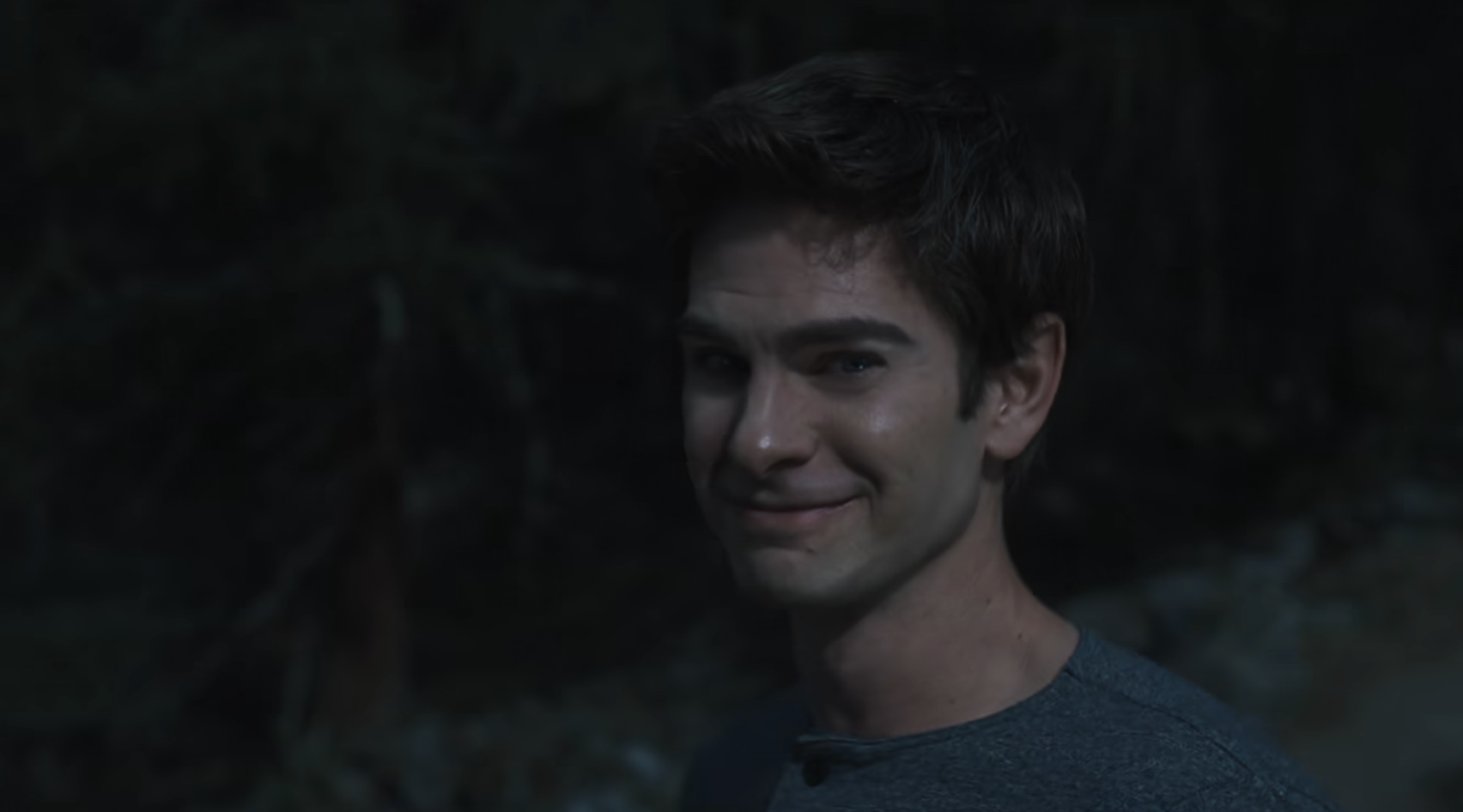
There’s a theatricality to Garfield’s depiction of Altman that makes this arguably his most menacing role to date. His portrayal plays a large part in making the film so frightening and in establishing its atmosphere of unease. There’s something about those eerily blue contact lenses and his giddy smile that signals something sinister as we watch him expertly manipulate everyone around him. I must admit, though, that I found Garfield’s strong, thick eyebrows mildly distracting, as they prevent him from really resembling Sam Altman, who sports the sperm brows of the ‘90s and early aughts.
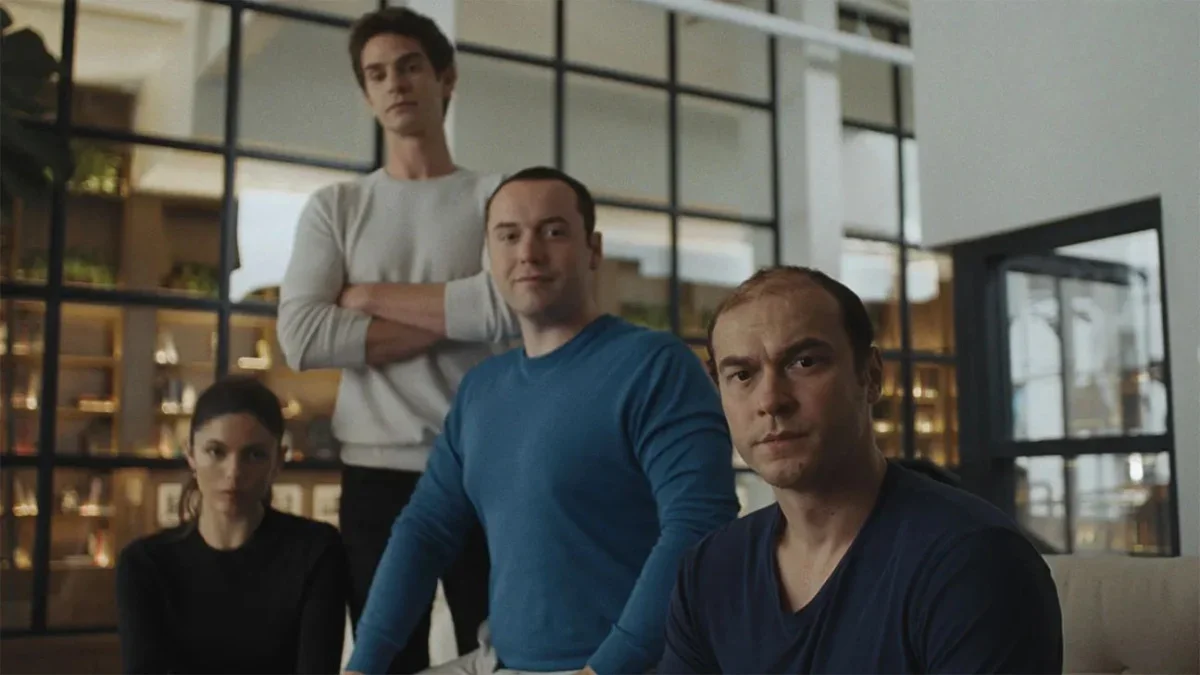
The role of Ilya Sutskever provides Borisov with the spotlight, allowing him to demonstrate his acting range and ability to carry a film. He’s the perfect foil to Garfield’s Sam Altman: deeply sincere and seemingly incapable of lying or concealing his true feelings. While Sam utilizes his charisma and outgoing, Machiavellian personality to get others to do his bidding, Ilya is more introverted and must rely on his intellect and authenticity to win people over.
Source: Neon
Conversely, Ike Barinholtz’s portrayal of Elon Musk feels less genuine, veering into caricature. It’s fitting that screenwriter Simon Rich previously wrote for Saturday Night Live, because Barinholtz’s performance feels better suited to the sketch comedy show than to the film itself. I’ve always thought Kevin Durand would be the ideal choice to play Musk in a movie. Truth be told, the first time I saw Durand in a film, I had to do a double take because he bears a startling resemblance to Musk, albeit a less frumpy and disheveled version. He also strikes me as the type of actor who could bring a more natural, grounded quality to the role without making the character feel overly bombastic. Of course, bombastic is arguably an apt description of Musk’s public persona, so perhaps Barinholtz’s performance is more accurate than I initially gave him credit for. For what it’s worth, nearly every time he appeared on screen, the audience around me guffawed.
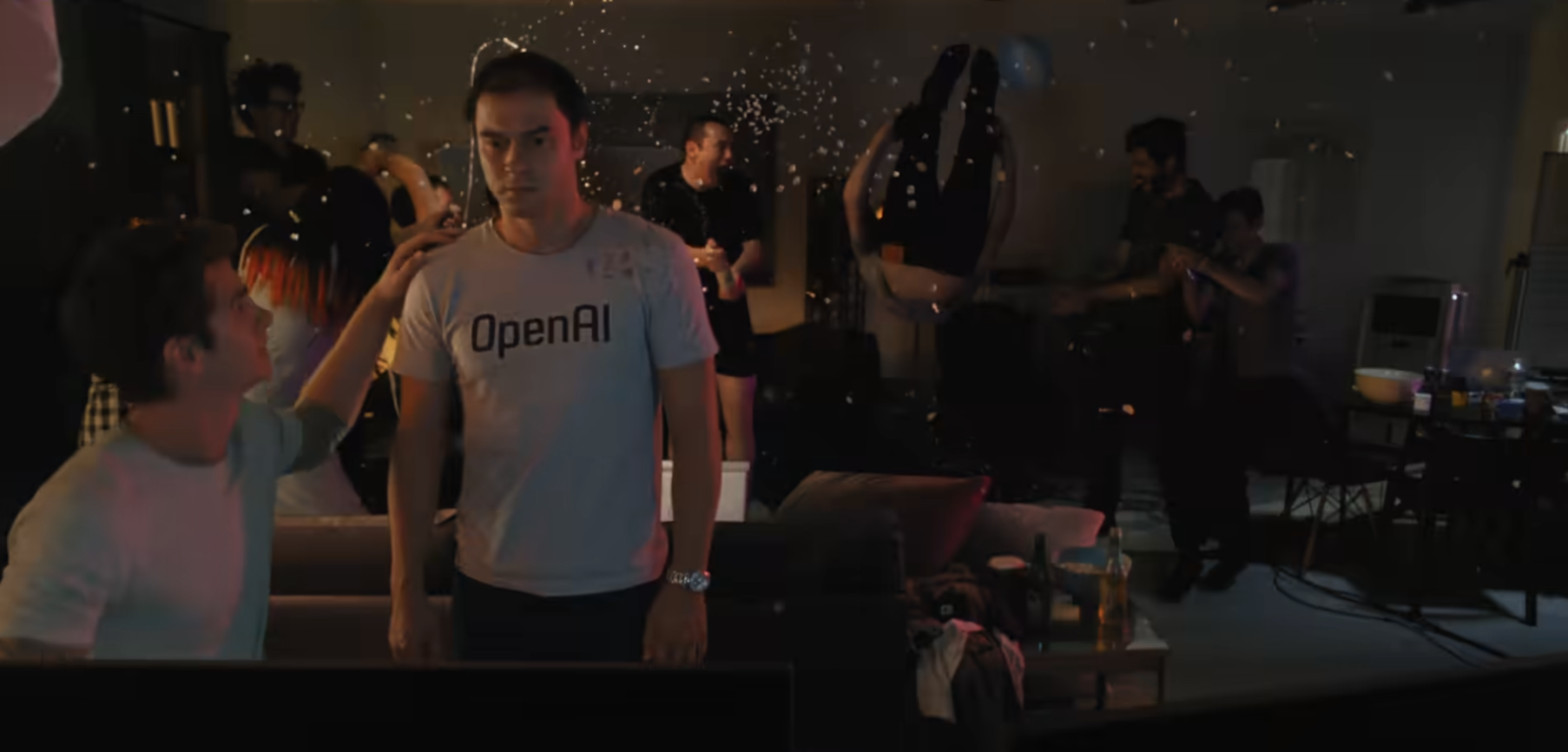
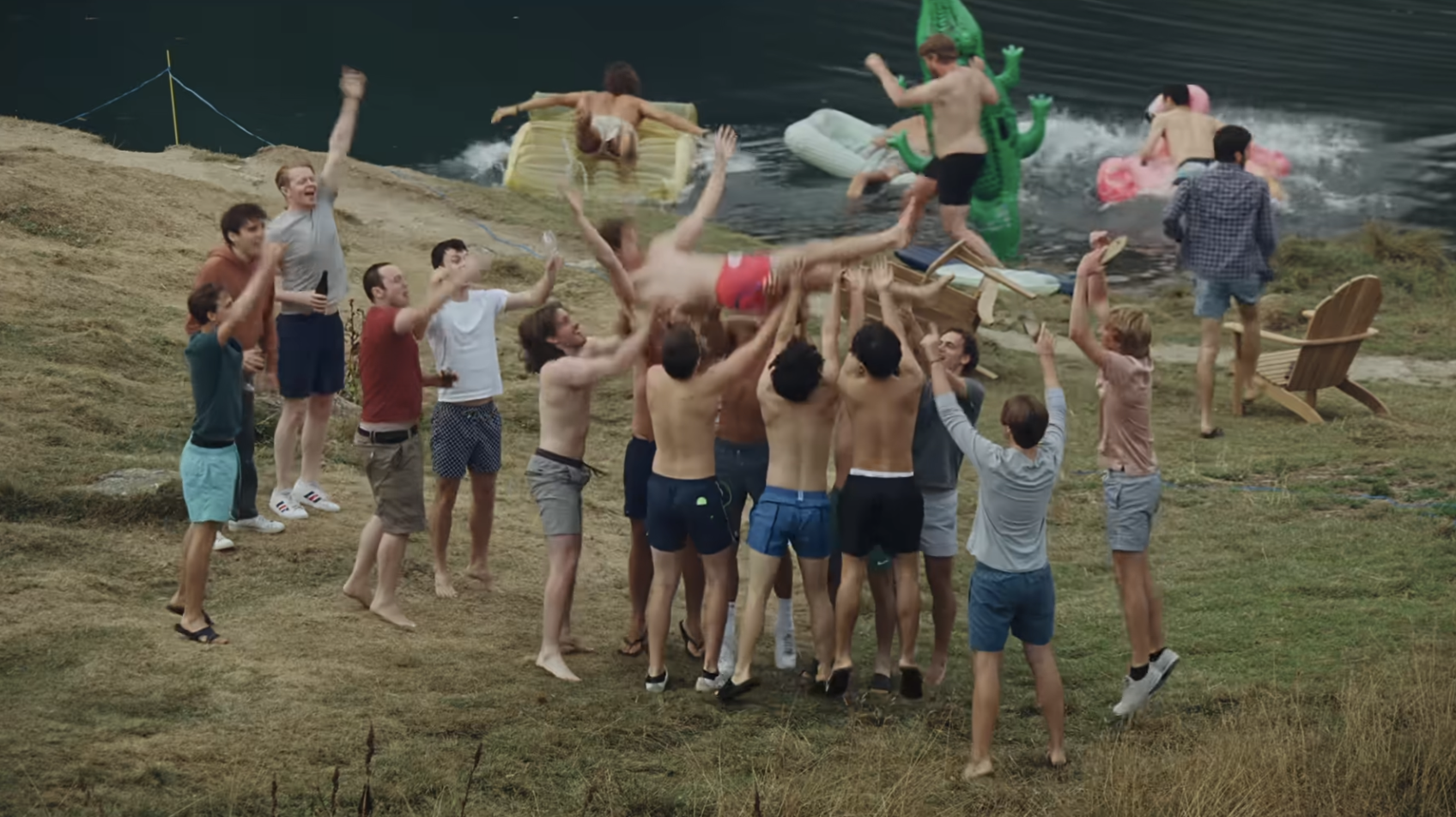
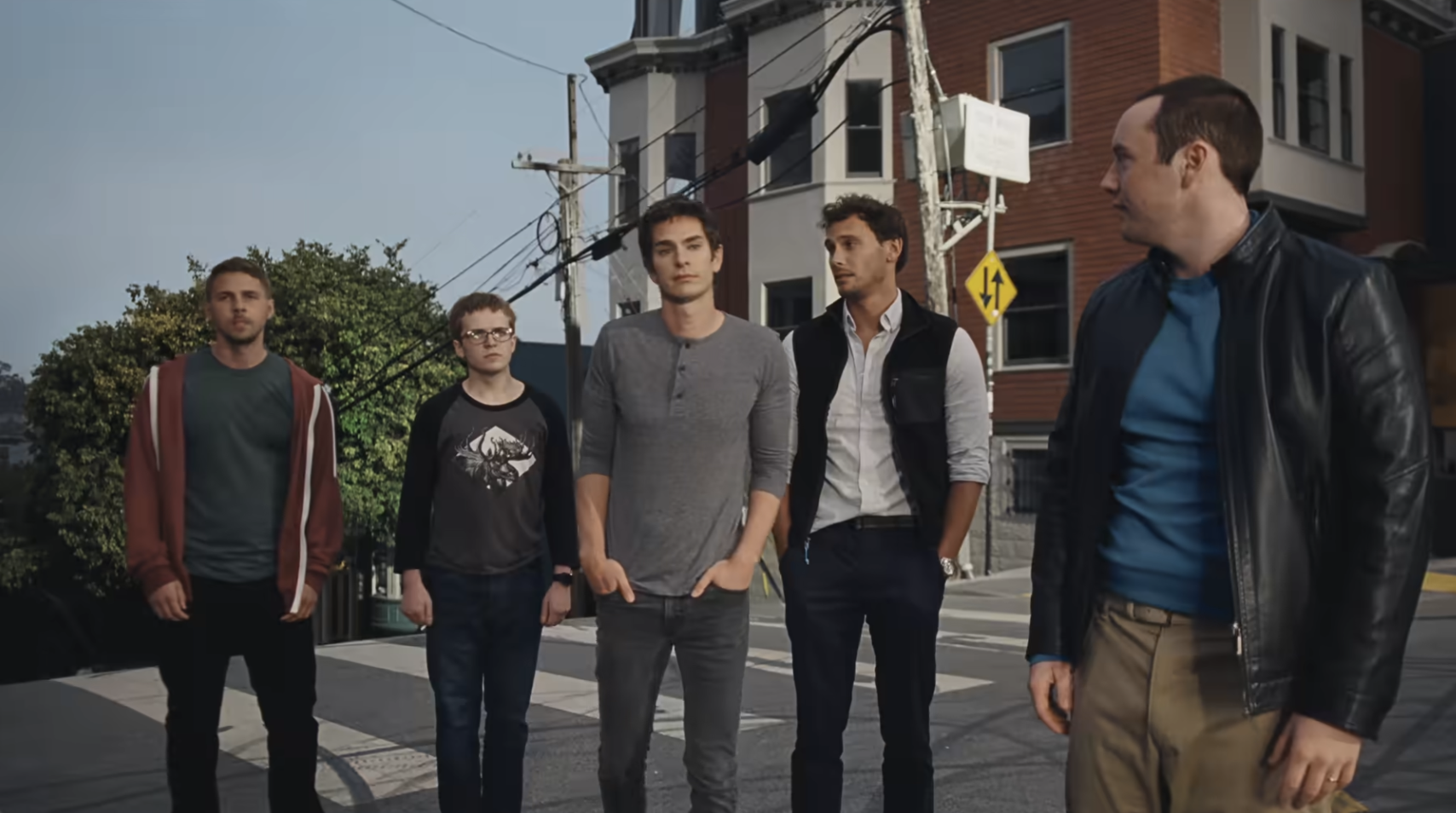
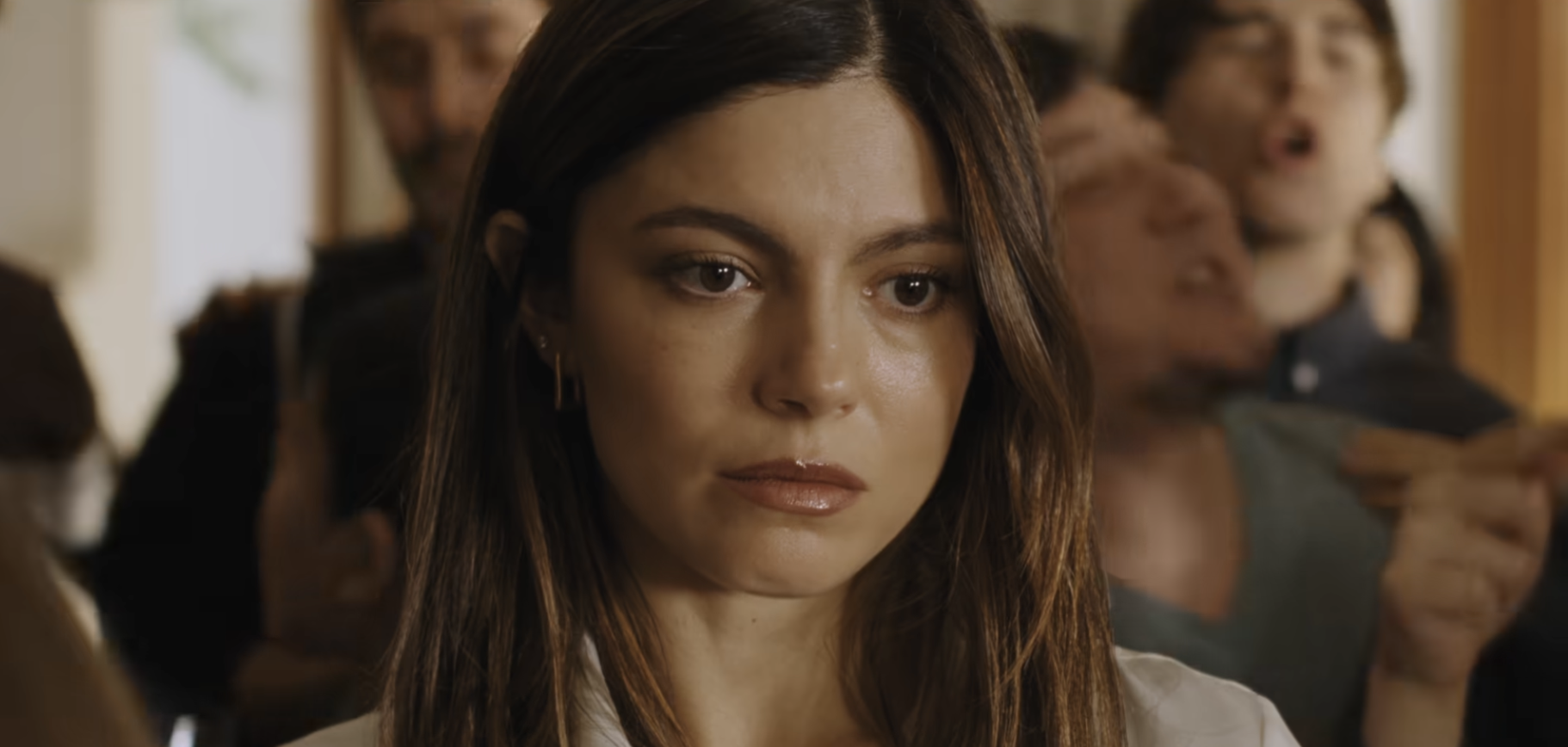
Artificial doesn’t paint these tech moguls in a positive light, and Guadagnino makes intriguing creative choices to convey that message. He frequently depicts these men with a level of immaturity and rowdiness more evocative of frat bros than the architects of a technological revolution. There’s an irony to this, given an early exchange in which Mira Murati (Monica Barbaro), while interviewing for a role at Tesla, is told by her interviewer, “First Dartmouth, then Goldman, now Tesla. You must be addicted to toxic masculinity.” She retorts, “This place doesn’t strike me as particularly masculine.” While these men may not fit the traditional masculine stereotype, as they’re more concerned with computers than sports, they represent a different type of toxic masculinity, one defined by bravado and a reckless competitiveness. One scene brilliantly encapsulates this dynamic: following a technological breakthrough, the camera pans around the room in slow motion as the men celebrate by jumping around shirtless and spraying each other with beverages as though they’ve just won the Super Bowl. At times, the film feels overwhelmingly testosterone-fueled, making Barbaro’s presence a welcome counterbalance to the male-dominated chaos.
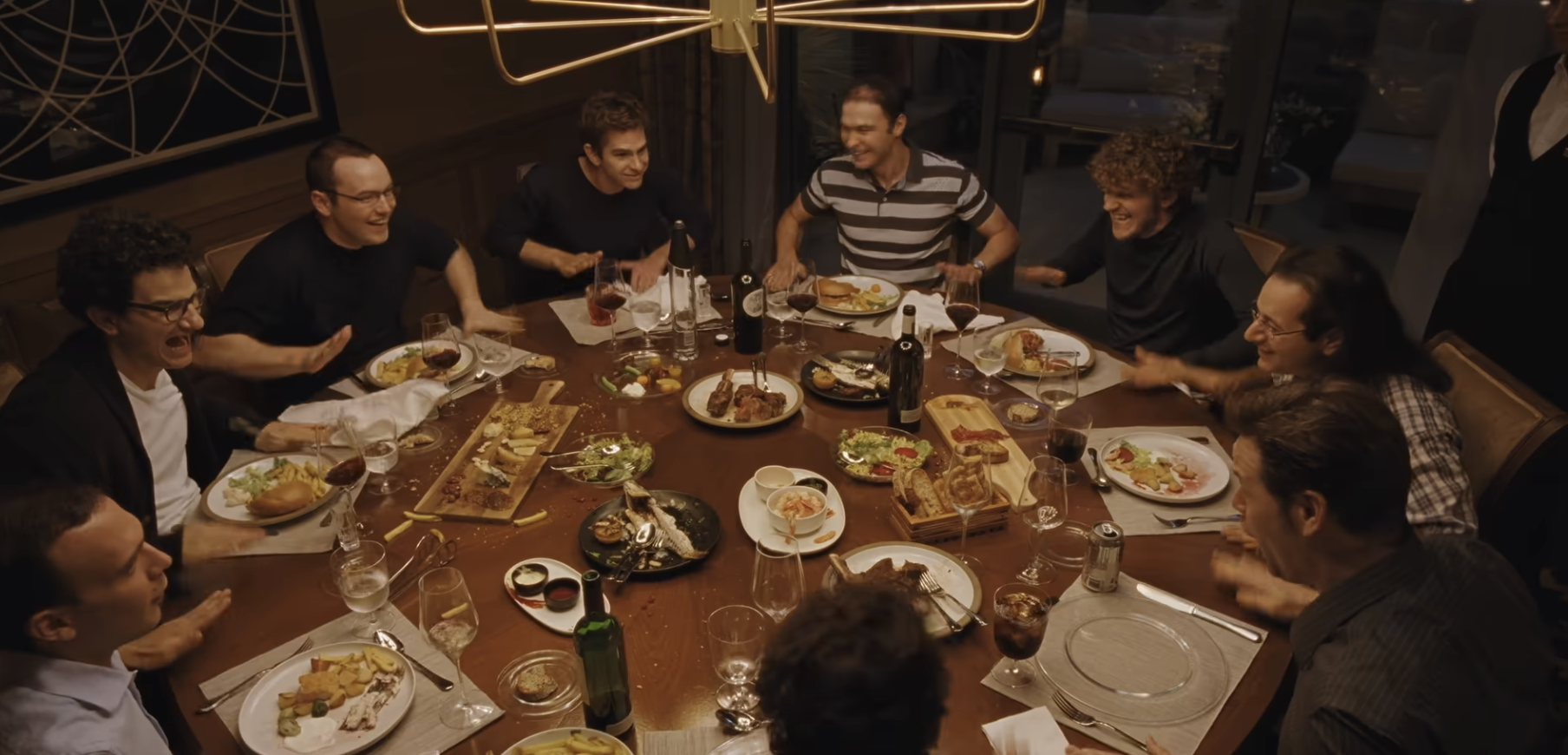
Source: Neon
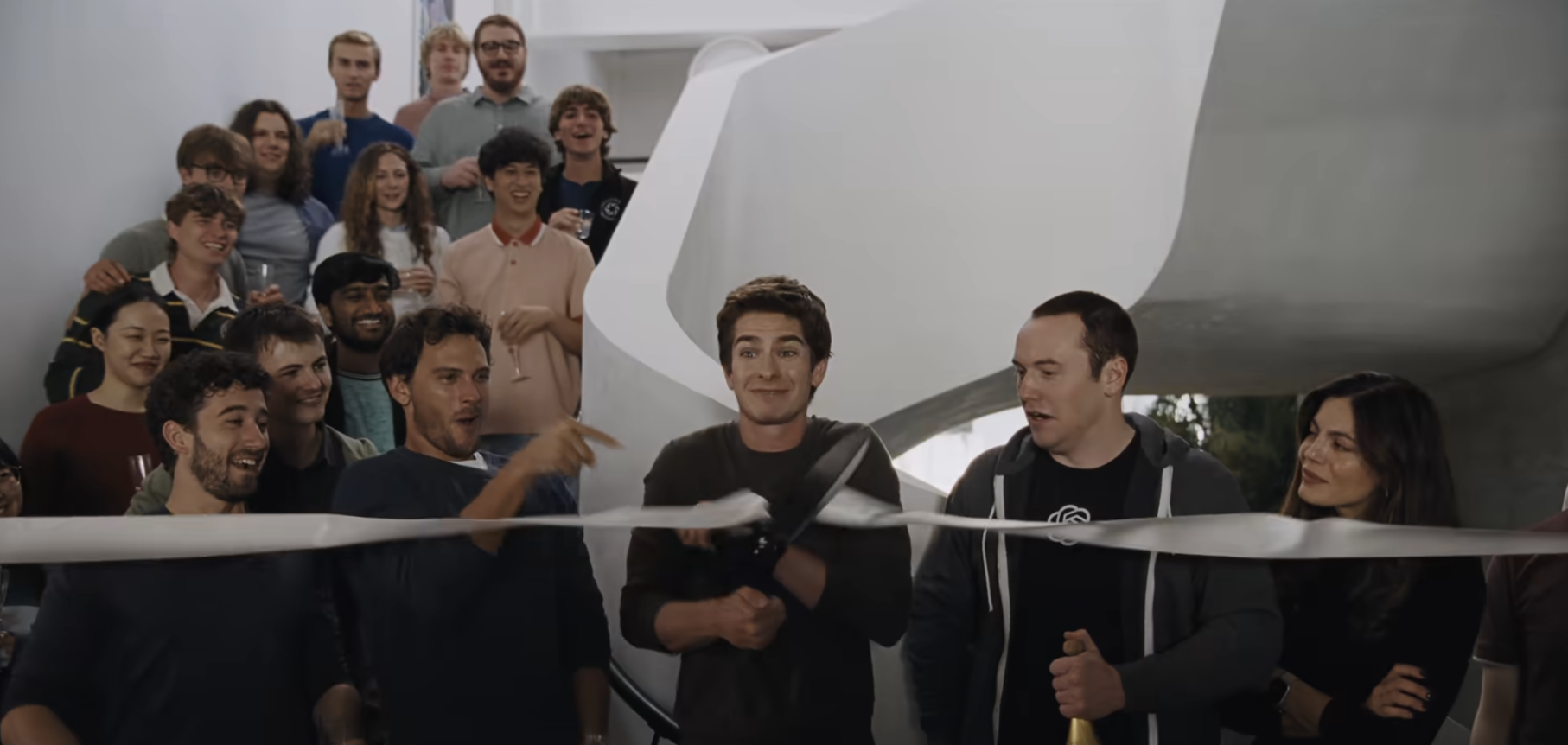
Guadagnino makes effective use of Malik Hassan Sayeed's cinematography to comment on generative AI and consumption. Food appears in countless frames throughout the film, most notably in a scene where the camera pans across the office, revealing workspaces littered with half-eaten meals, boxes of Ho Hos and other snacks, and an assortment of junk food and soda. There’s also a recurring emphasis on the men’s shirts, which are adorned with various company logos. At one point, they excitedly receive a box of shirts from American Apparel bearing the new OpenAI logo. Guadagnino turns these seemingly mundane details into a visual motif that reflects an industry that seems incapable of curbing its own appetite. It’s an especially fitting commentary given the enormous quantity of resources that generative AI consumes.
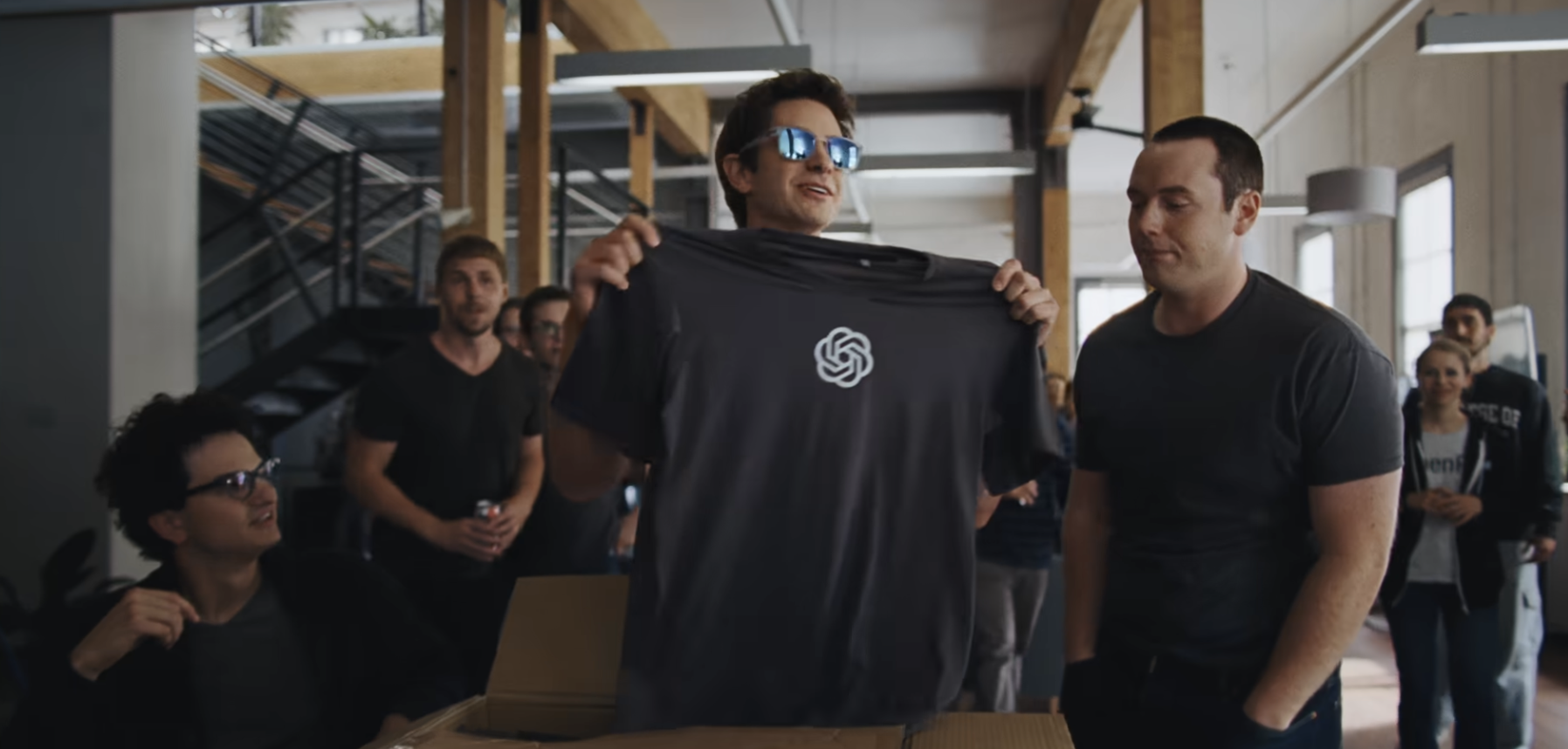
Source: Neon
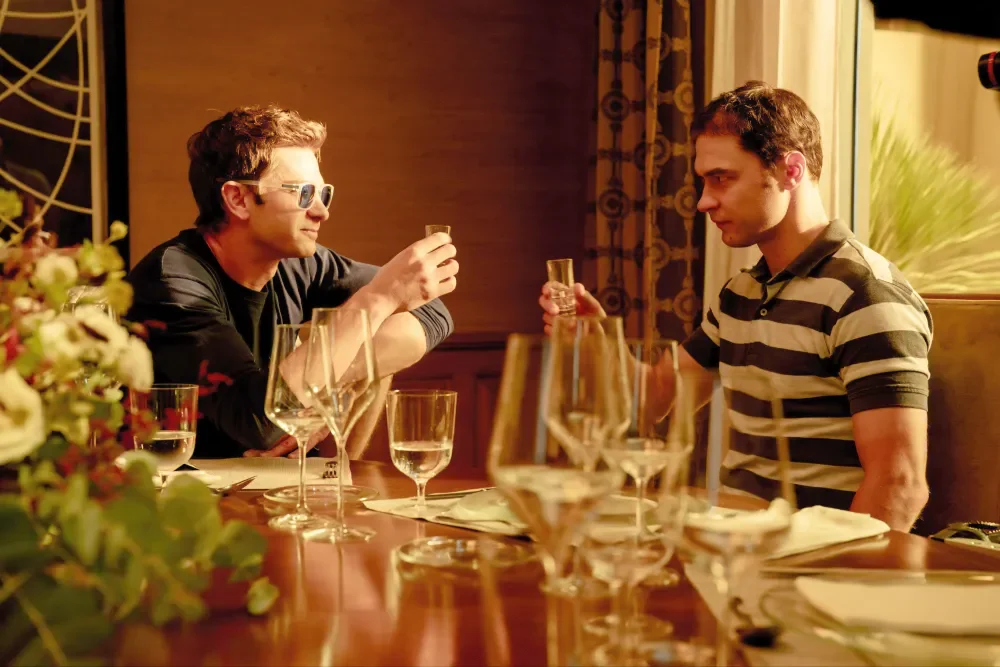
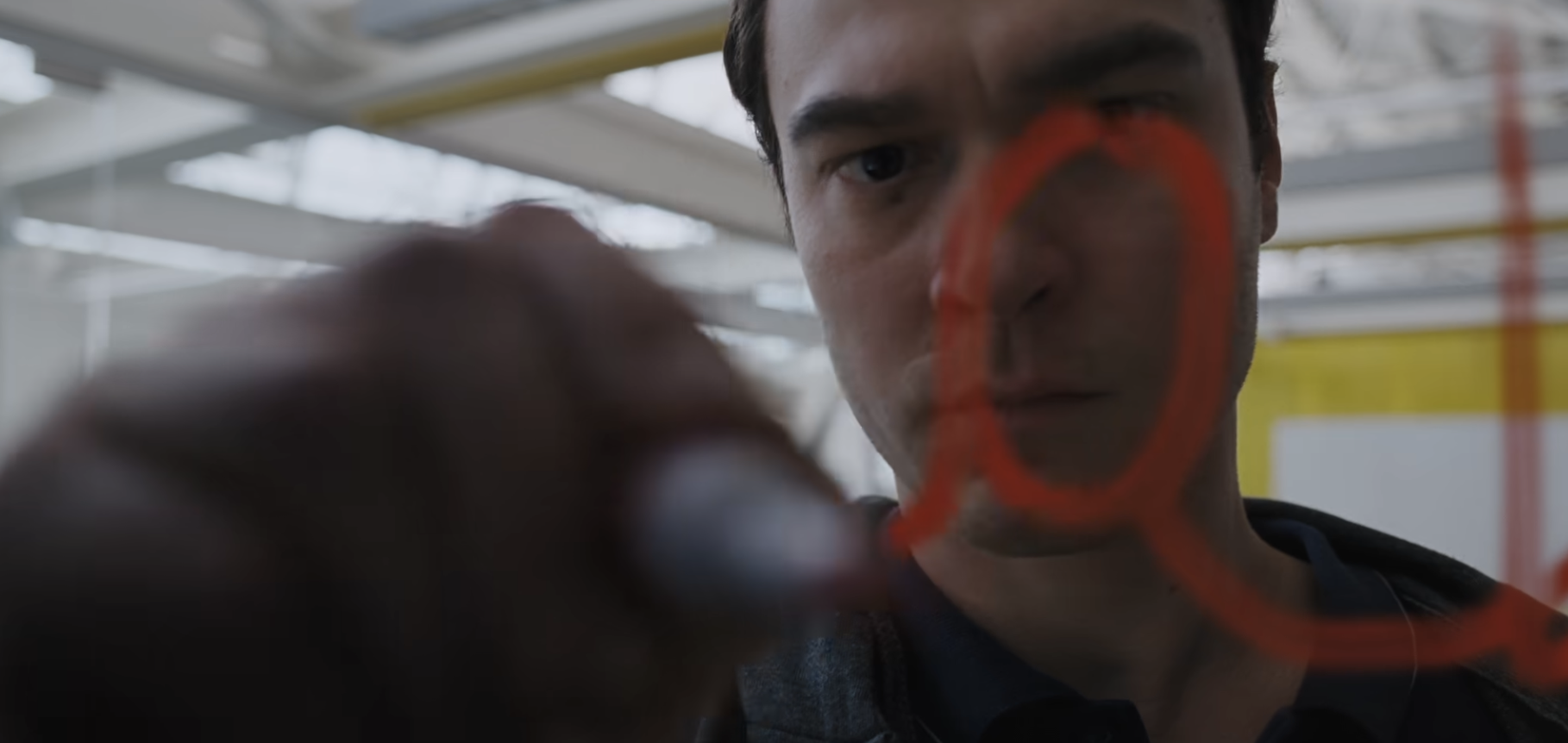
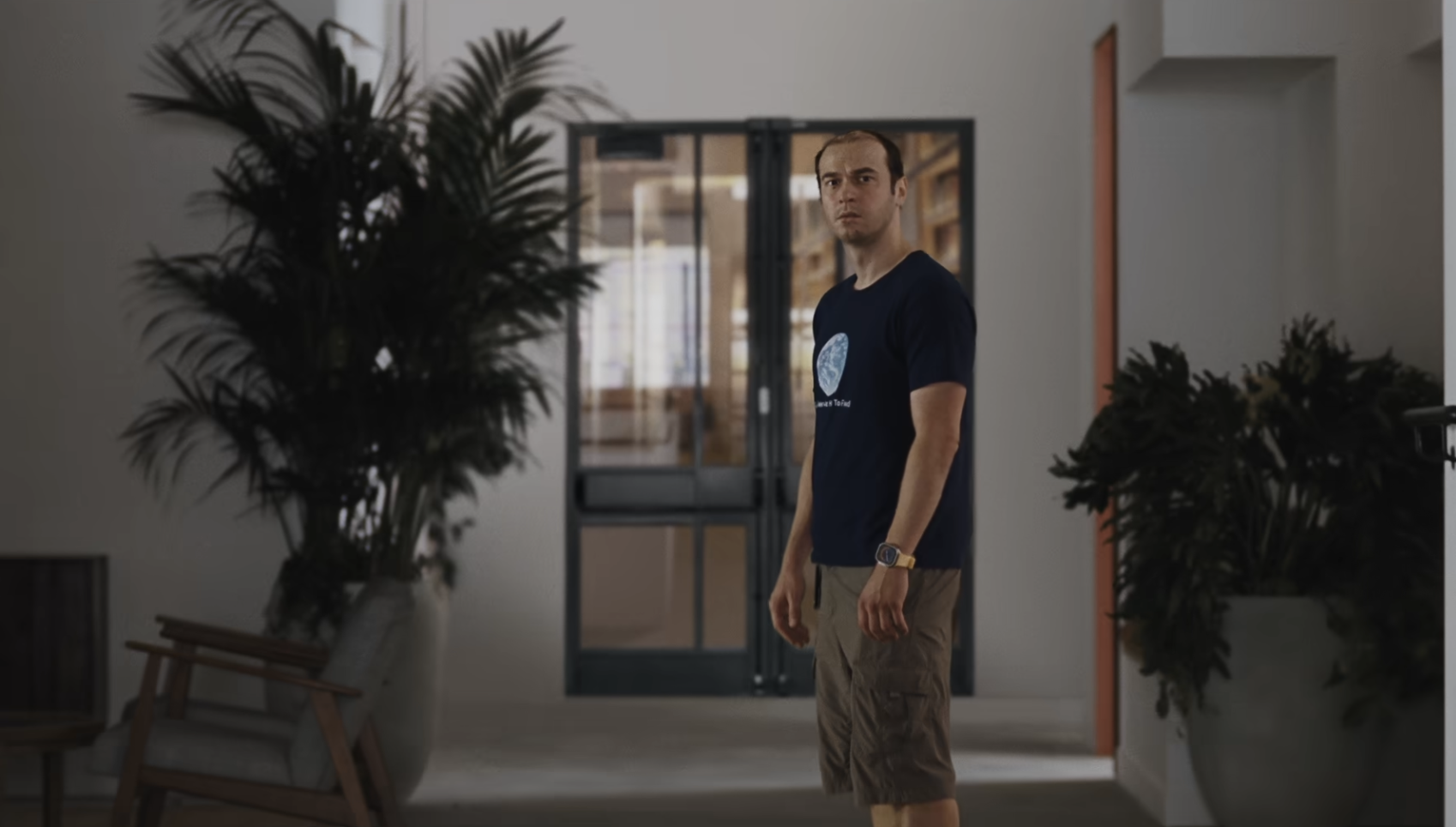
In contrast to the corporate logos emblazoned across the other men’s shirts, Ilya’s wardrobe feels like a pointed statement in its own right. In one scene, he dons a red shirt featuring a single black sheep surrounded by a flock of white ones. In another, he wears a shirt that reads, “Good planets are hard to find.” The symbolism is so on-the-nose that it’s nearly impossible to miss. Ilya is the black sheep of OpenAI and seemingly the only one seriously concerned about the potential consequences of the technology they’re developing. Another clever costume choice comes when Sam and Ilya face each other, with Ilya wearing a conventional pair of dark shades and Sam sporting sunglasses with mirrored lenses, capturing Ilya’s reflection. The contrast feels like a visual metaphor for generative AI, which often regurgitates our own ideas or tells us exactly what we want to hear, reinforcing our existing beliefs through confirmation bias. Like Sam’s sunglasses, generative AI acts like a reflective surface, mirroring our creations and ideas back at us rather than producing anything original.
Source: Neon
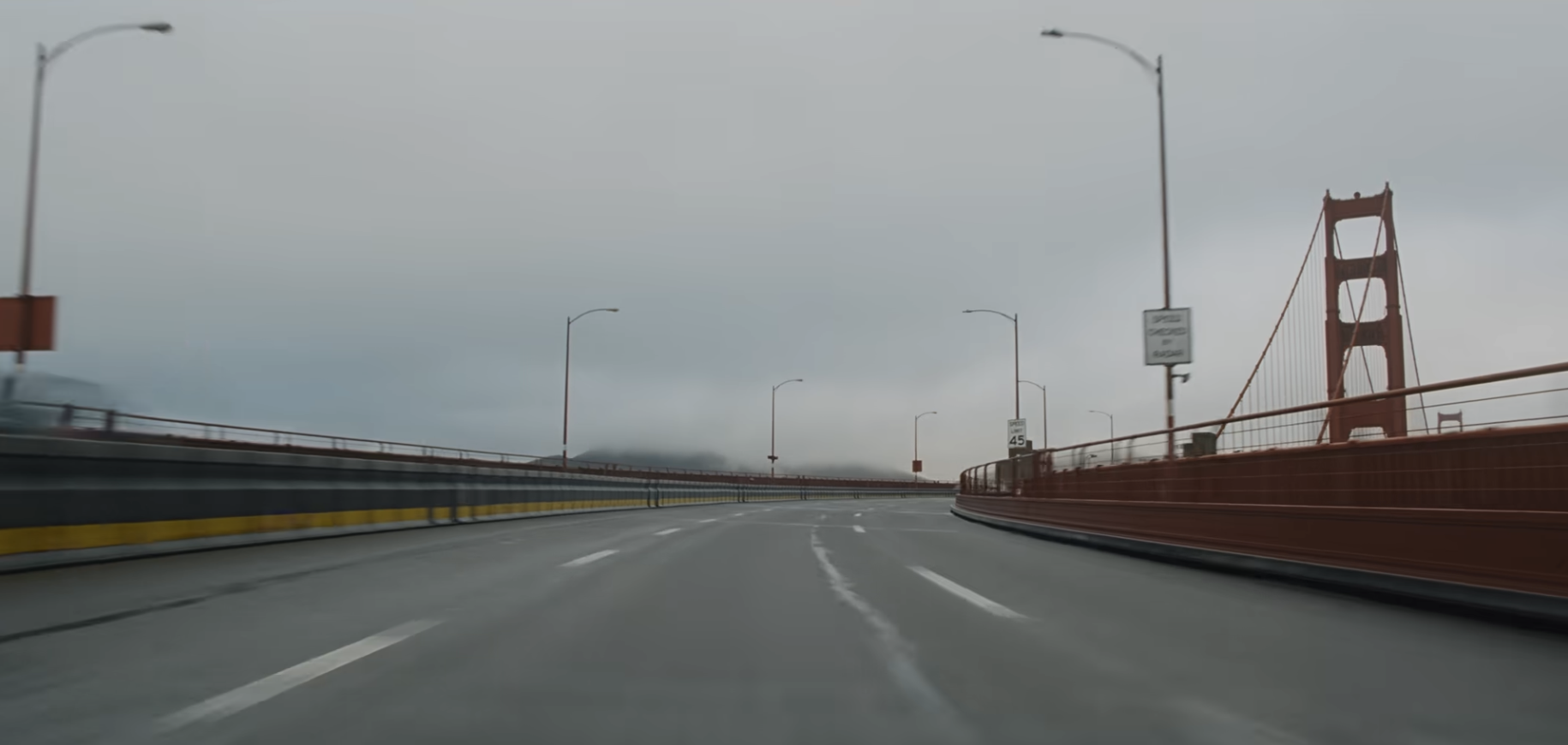
The Golden Gate Bridge also acts as one of the film’s most prominent visual motifs. The film opens with a shot of the iconic landmark, returns to it during a conversation between Sam and Ilya, and features an extended take of a car driving across it. Sam explains to Ilya that before the bridge was built, commuters had to rely on ferries, creating a bottleneck. He likens Ilya’s vision to a bridge, presenting it as a solution to every bottleneck. Initially, these men believed their work would change the world for the better. Like a bridge, their technology seemed like the answer to an assortment of problems. It was a symbol of progress. However, the bridge metaphor can be interpreted in multiple ways. The launch of OpenAI feels akin to the familiar adage, “If everyone else jumped off a bridge, would you?” Sam seems to be enthusiastically leaping into the unknown, with everyone else blindly following his lead. This is indicative of a herd mentality, echoing the earlier imagery of Ilya’s sheep shirt. The bridge motif also feels apropos because the existential anxieties surrounding generative AI make me want to jump off of one.
Many people turn to movies as a form of escapism, a temporary reprieve from a painful reality. That’s what makes Artificial so unsettling. Now more than ever, we could use a diversion from the present and the perturbing future society seems to be hurtling toward. Rather than offering an escape from our current problems, Guadagnino’s film forces us to confront an uncertain future, one that unfortunately feels far too bleak. While generative AI has benefited many people, its emergence has brought nothing but negative repercussions into my own life. I believe this context is imperative, as the perpetual existential crisis I’ve experienced over the rise of generative AI has inevitably shaped my response to the film. Even when the narrative is infused with humor and levity, it feels impossible to laugh when you’re constantly reminded of the damage this technology has inflicted on your life while the men responsible only grow richer.
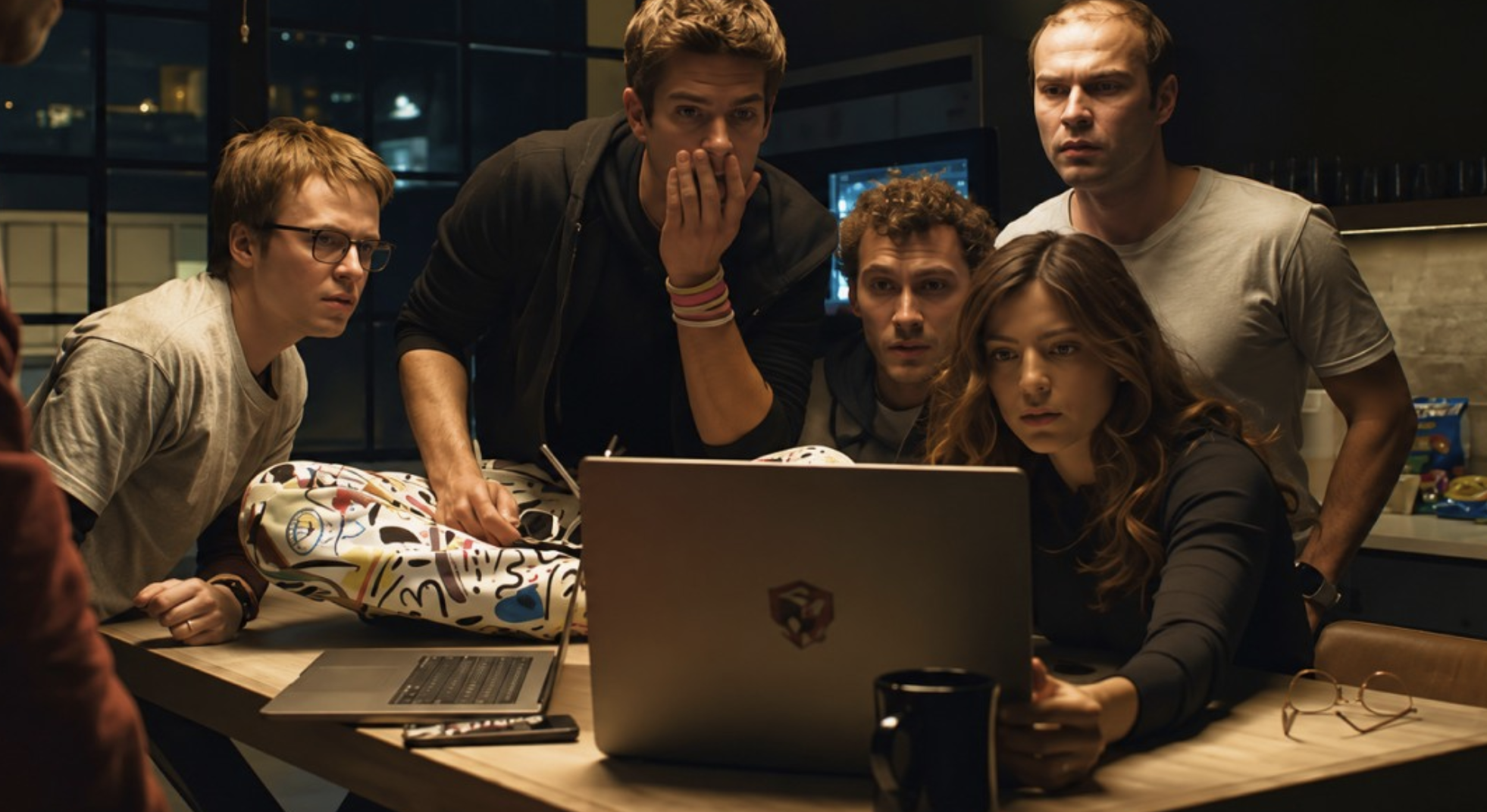
Source: Neon
ChatGPT launched to the public in November 2022, ushering in an unprecedented surge in generative AI that has rapidly transformed multiple facets of everyday life. As AI technology has advanced, apprehension around its impact on the workforce has amplified, with more and more people losing their jobs or worrying about the possibility of being replaced. Although AI wasn’t cited as the reason I lost my job in 2023, I undeniably felt its effects. I had a college degree, graduated summa cum laude, worked for multiple Fortune 500 companies, and had over a decade of professional experience under my belt. Yet suddenly, it seemed no one was hiring. Never in my wildest dreams did I imagine I would remain unemployed long enough to exhaust my unemployment benefits, eventually forcing me to rely on food stamps and move out of the apartment and city I loved.
I spent countless hours on LinkedIn, watching my mental health deteriorate as I applied to literally thousands of jobs with little progress to show for it. In the years since, I’ve managed to get by through temporary contract work, with meager benefits, no paid time off, and virtually no job security or financial stability. Even now, my job searches frequently entail sifting through a barrage of listings for AI companies or employers eager for their workers to embrace AI. It genuinely feels like the only way to remain employable is to participate in the very technological shift that has made the future of the workforce feel so precarious.
Source: Neon
Consequently, I’ve begrudgingly had to experiment with generative AI myself. Much like Ilya in Guadagnino’s film, I’m not particularly good at lying; I need there to be at least a sliver of truth in everything I say. When prospective employers ask whether I use AI, I want to be able to answer honestly, at least to some extent. That means familiarizing myself with the technology, even if I do so reluctantly. During my temporary assignments, I’ve watched colleagues train the very AI tools that will likely render their positions obsolete. The whole thing feels eerily dystopian, which brings me back to the production design and science fiction references woven throughout Artificial. Stanley Kubrick’s 2001: A Space Odyssey (1968) appears in both an exchange of dialogue and a poster hanging in a conference room. Stanislaw Lem's 1961 novel Solaris is also mentioned, as is Radiohead’s song “Paranoid Android.” These references are reminders that the story unfolding on screen is not merely a work of science fiction. This is our reality. It’s our future and our livelihoods hanging in the balance.
Source: Neon
While I’m fortunate to still be employed, the threat of obsolescence continues to loom overhead as more companies look to cut costs by reducing their workforces. Yet the existential crisis fueled by generative AI extends far beyond my professional life. I’m also a film critic in my spare time, as you may have gathered from reading this review. No one pays me to review movies. At this juncture, I’m not even running ads on my website, so I don’t make any money doing this. In fact, I’m actively losing money by commuting to press screenings and spending hours writing reviews. Therefore, there is absolutely no incentive for someone in my position to use generative AI to write reviews because no one is forcing me to write them. If I don’t want to review a movie, I can simply choose not to write about it. Nonetheless, we live in a world where people are constantly hurling AI accusations at one another, and this climate of suspicion has irrevocably damaged my relationship with the writing process.
A little piece of me dies inside every time I hear someone say the em dash is a “dead giveaway” that someone used AI, or that the “it’s not _____, it’s ____” sentence structure is an obvious tell. I’ve been following the rule of three since I was writing essays in high school, often to a fault. Yet now, even listing three adjectives in a sentence or using negative parallelism feels like an invitation for someone to accuse me of using AI. I earned my degree in English writing and film studies, and it’s disheartening to see that stylistic choices I’ve spent years developing are now being treated as evidence that someone’s writing isn’t their own.
Source: Neon
Admittedly, when people first started calling the em dash a telltale sign of AI-generated writing, I found the whole thing so hilarious that I doubled down and started using it more than ever. Once AI accusations started having detrimental effects on people’s careers and reputations, it stopped being funny. I eventually grew hesitant about using the em dash. When people started claiming the semicolon was another sign of AI use, that’s when I drew the line. If we’re no longer supposed to use em dashes or semicolons for fear of being mistaken for AI, we’re going to run out of punctuation marks eventually.
Perhaps my biggest pet peeve of all is when people cite AI detectors as evidence that someone did or did not use AI. I’ve tested every detector I could find against a variety of writing, including academic essays, movie reviews, informal pieces, and even pure nonsense. I tested both recent writing and pieces I had written long before generative AI entered the mainstream. I watched firsthand as these detectors flagged human-written work as AI-generated, with their scores fluctuating wildly in response to the most trivial edits. For example, Pangram labeled a sentence in my review of Jesse Eisenberg’s The Debut as AI-written. I swapped “At the same time,” for “Conversely,” and suddenly the entire sentence registered as 100% human. I changed “relied on” to “utilized,” and multiple unrelated sentences went from 100% AI to 100% human. If changing a couple of words is enough to produce such drastically different results, how can anyone reasonably treat these scores as definitive evidence of AI use? For a more in-depth examination of Pangram’s shortcomings, I recommend checking out Charlie Finch’s article on the subject. Don’t even get me started on the irony of people using AI-powered AI detectors to chastise those they suspect of using generative AI.
Source: Neon
There’s a meta element to Luca Guadagnino’s Artificial when he makes a brief cameo as a camera operator. In the spirit of that self-awareness, I’m going to introduce a meta element of my own to this piece of writing. Earlier in this review, I wrote, “It served as a symbol of progress.” While editing, I noticed I had used “serve” too many times, so I changed the sentence to “It represented a symbol of progress.” Suddenly, Pangram labeled my previously 100% human review as partially AI-written. Ironically, it wasn’t even that sentence that got flagged, but the few sentences leading up to it. I settled on “It was a symbol of progress” instead, which restored my 100% human score.
Now, you may be thinking this whole thing is preposterous. Obviously, I know this was written by a human because I’m sitting at my computer writing it at this exact moment. Yet witnessing how quickly people assume a piece of writing is AI-generated has fundamentally altered my approach to writing. I used to avoid writing reviews in the first person, despite Roger Ebert declaring in one of his books that film criticism should be written that way. I had always been taught that first person was too informal, and I had previously received feedback that my reviews were too experiential. Eventually I realized following that advice was making my reviews sound generic or robotic. At a time when AI seems to be encroaching on every aspect of our lives, the human element feels more valuable than ever. As a result, I’ve abandoned many of the grammar rules I used to religiously adhere to. Now, when I make a mistake, instead of beating myself up about it, I shrug and say, “Well, at least people will know a human wrote this.” Occasionally I’ll throw in an extremely personal anecdote or go off on a tangent, even if doing so might be considered unprofessional. At least those digressions reflect something distinctly human.
Source: Neon
For instance, I initially hesitated to mention my thoughts on Andrew Garfield’s eyebrows because it felt irrelevant and unprofessional. Upon further reflection, I realized that these oddly specific details are precisely the sorts of things that make my writing feel human. I was similarly reluctant to include my comment about Sam Altman’s sperm brows, until I realized that this is exactly the kind of nonsensical observation generative AI would never make. Guadagnino’s cameo feels like a reminder that there’s a person behind the camera influencing how we see these men. By pulling back the curtain on my own writing process, however messy and meandering it may be, I hope to remind readers that there’s a real person behind these words, too.
Source: Neon
In keeping with the idea that distinctly human qualities are more valuable than ever in an increasingly automated world, Damon Albarn, of the bands Blur and Gorillaz, composed a score for Artificial that reflects the tension between human and machine. The music underscores the film’s fast-paced, technology-driven atmosphere with electronic compositions that alternate between synthetic, futuristic sounds and an unmistakably human soulfulness. Despite its sleek, technological edge, the music retains an analog, rough-around-the-edges quality that lends it warmth and humanity. At times, the score takes on a slightly ominous tone, reflecting the feeling of foreboding that permeates the story. At other times, it has a lingering sense of melancholy, embodying the despair many of us feel about the future as Albarn croons, “In a corrupt world, I’ll sing the saddest song.” The eclectic instrumentation, which includes the Indonesian angklung and the marimba, enriches the film’s soundscape with a unique texture.
That tension between the human and the artificial also extends to the film’s title. Beyond its obvious association with artificial intelligence, Artificial speaks to the phoniness of Sam Altman’s persona. There’s something calculated about his mannerisms and the way he navigates relationships, manipulating those around him to serve his own interests. As Philip K. Dick once predicted, “Fake humans will generate fake realities and then sell them to other humans, turning them, eventually, into forgeries of themselves. So we wind up with fake humans inventing fake realities and then peddling them to other fake humans.” Artificiality begets more artificiality, until it becomes increasingly difficult to distinguish what is genuine from what is manufactured.
Source: Neon
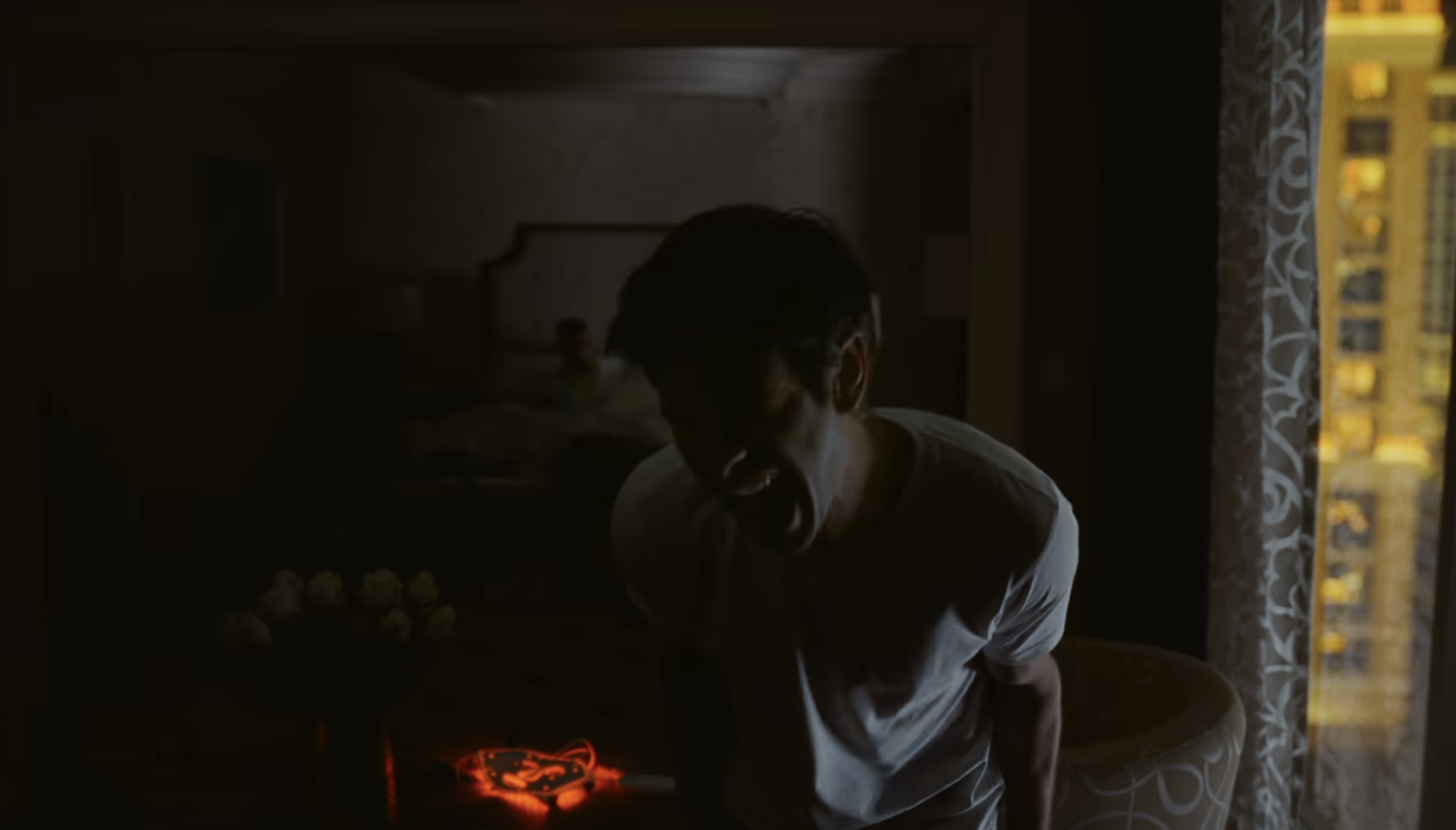
That cycle of artificiality has consequences that extend far beyond Sam Altman himself. The film seems to suggest there are multiple villains at play: Sam Altman, the people who enable him, and the artificial intelligence they’re developing. In fact, the AI jokingly remarks, “I suppose if things get out of hand, you could always just unplug us.” The line feels reminiscent of another film released this year, Jane Schoenbrun’s Teenage Sex and Death at Camp Miasma, which features the recurring tagline “if it gets too real, you can always turn it off.” Both lines evoke the fantasy that we can simply shut down whatever frightens us. However, artificial intelligence has already become a part of our lives, and the people making the decisions that shape its future have interests that may not align with our own. This is not a horror movie. This is real life, and we can’t change the channel, turn it off, or unplug because we are not the ones in control.
Source: Neon
That sense of helplessness is what makes Artificial so unnerving. It’s a well-crafted film, but not necessarily an easy one to enjoy. Your feelings about generative AI will likely influence how much amusement you find in its absurd characters and comedic sensibilities. For me, the film inspired more dread than laughter. There’s something deeply disconcerting about the prospect of our future being left in the hands of people who feel as artificial as the technology they invent. While Guadagnino doesn’t portray these men in a flattering light, I still found myself wishing the film had a bit more bite. A more scathing, satirical critique of these men might have offered some catharsis, but perhaps the absence of catharsis is the point. In an episode of The Twilight Zone titled “The Brain Center at Whipple’s,” Rod Serling explores what happens when people are eager to replace men with machines or trade efficiency for pride; he concludes, “There are many bromides applicable here: ‘too much of a good thing’, ‘tiger by the tail’, ‘as you sow so shall you reap’. The point is that, too often, Man becomes clever instead of becoming wise; he becomes inventive and not thoughtful; and sometimes… he can create himself right out of existence.” When Serling spoke those words, he was warning of a future in which humanity’s pursuit of progress and efficiency could lead to its own undoing. Watching Artificial today, that future no longer seems so distant. Back then, it felt like a cautionary tale. Now, it feels too late.
Artificial had its world premiere at the 64th New York Film Festival. It will receive a theatrical release on December 25, 2026.