Everytime — NYFF Review

Source: 1-2 Special
Grief has a funny way of altering our perception of time. One moment, each day feels like a lifetime. You’re struggling to get through the day without breaking down, just trying to make it from one morning to the next. Then, suddenly, you find yourself wondering how years have gone by when it feels like the loss only happened yesterday. Grief isn’t something ephemeral. It never fully dissipates. Instead, we learn to live with it. Some days, it can feel too heavy to bear, as though you’re collapsing under its weight. Yet, no matter how much time passes, it’s something we permanently carry with us. Sandra Wollner's third feature film, Everytime, which won the top prize in the Un Certain Regard section of the 2026 Cannes Film Festival, demonstrates this idea in a beautifully understated manner.
Source: 1-2 Special
The film follows a family grappling with tragedy. It’s best to go into it knowing as little as possible. Although the event happens too early in the film to be deemed a spoiler, its impact is harrowing. Aside from a few audible gasps throughout the auditorium, the room went eerily silent in that moment, as though all the oxygen had been sucked out of it. In the aftermath of the tragedy, a mother, Ella (Birgit Minichmayr), her young daughter, Melli (Lotte Shirin Keiling), and a teenage boy named Lux (Tristán López) find themselves bound together by their shared heartache.

Source: 1-2 Special
It’s fitting that cinematographer Gregory Oke shot the film, having previously worked on Charlotte Wells’s 2022 film Aftersun, as the two films share much of the same DNA. Both are haunting meditations on memory and grief, unfolding largely against the backdrop of a vacation. Like Aftersun, Everytime evokes the nostalgia of a sun-drenched summer spent splashing around in the water, with the memories becoming twisted and tinged with melancholy. In both films, the past and present converge in intriguing ways that reflect the pain of grief and the desire to go back and do things differently. Everytime also feels reminiscent of Céline Sciamma's 2021 film Petite Maman in the way it blurs the boundaries between past and present, using elements of fantasy or magical realism to explore the complexities of grief.

Source: 1-2 Special
The performances are thoroughly convincing. The three lead actors convey the immense weight of mutual grief without veering into melodrama. Much of the film’s emotional power lies in what goes unspoken, with subtle gestures of support, lingering silences, and fleeting expressions of anguish revealing the depths of their pain in ways dialogue never could. However, some viewers may find that the film’s restrained approach comes at the expense of emotional immediacy, with its delicate depiction of grief occasionally feeling too detached or distant. This sense of detachment may be further exacerbated by the narrative shift in the third act, when the film begins to play more overtly with our perception of time. Having spent much of its runtime grounded in reality, the film’s departure from that approach can come across as jarring, leaving viewers struggling with how to interpret the final act and make sense of Wollner’s intentions.

Source: 1-2 Special
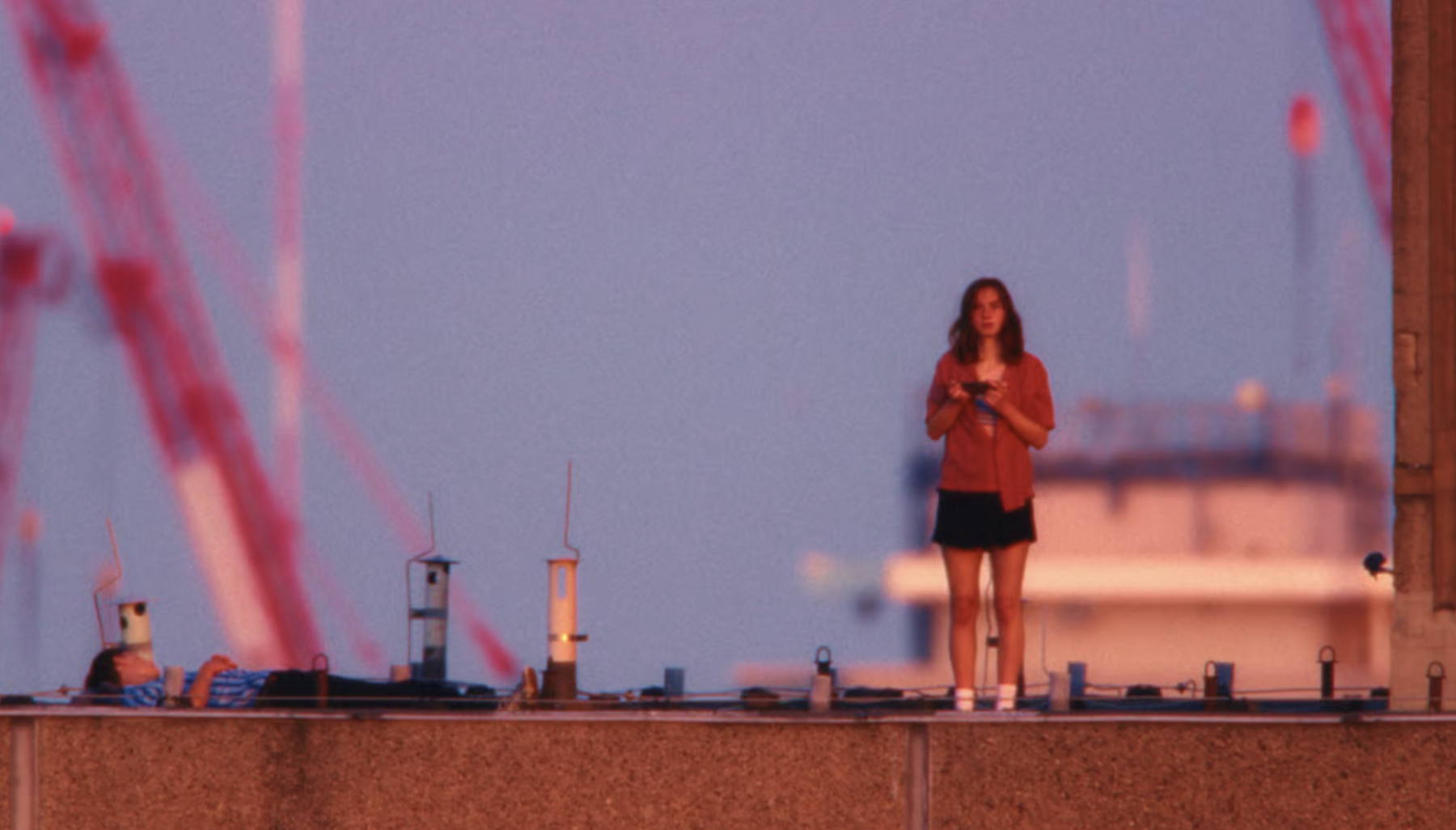
Gregory Oke’s cinematography is one of the film’s greatest strengths. Much of the film is shot in tightly framed compositions that draw us into the characters’ emotional worlds, allowing us to observe their sorrow in intimate detail. Yet, in scenes set in bodies of water or out in nature, the camera often pulls back into long shots, making the characters appear small against the vastness of their surroundings. It’s almost as though the imagery reflects the duality of grief: the intensely personal feeling that your entire world has collapsed, even as the world around you continues to move forward. Perhaps the film’s most striking images, however, are its sunrises and sunsets, which bathe the screen in a warm, golden light and serve as a poignant reminder of the passage of time.

Source: 1-2 Special
Sandra Wollner’s Everytime may not work for everyone. The film treads familiar territory, bringing to mind not only Aftersun and Petite Maman, but also shades of Julia Ducournau’s Alpha (2025) and Olivier Assayas's Personal Shopper (2016). More recently, Sophy Romvari explored grief and memory in a similarly beguiling, distinct way with her feature directorial debut, Blue Heron. Wollner’s film, by comparison, feels less confident in its direction and less assured in its experimentation. Nonetheless, Everytime remains an atmospheric, ambiguous, shape-shifting meditation on grief. It’s a haunting reminder that grief is like a wave threatening to pull you into the current and drag you under, but at the same time it’s also like the sun. The memories of a loved one can provide a ray of light, a warmth that breaks through the clouds. Yet sometimes the sunlight can be so bright and blinding that it becomes difficult to see a way forward. Grief is a sun that refuses to set.
Everytime has its U.S. premiere at the 64th New York Film Festival. It was released in Germany on August 6, 2026, and will be released in Austria on November 27th.