Lady — Sundance Review
Source: Sundance
The opening frame of Olive Nwosu’s feature debut, Lady, is upside down—a visual choice that makes sense from both a literal and metaphorical standpoint. The next frame reveals two young girls, their heads hanging back over a jetty, so they are quite literally seeing the world upside down in that moment. Metaphorically speaking, it’s fitting to introduce Lagos to the audience with an upside-down image. It’s almost reminiscent of the iconic shot of the Statue of Liberty in The Brutalist (2024) that inverted the symbol of the American Dream. The more one seeks out international cinema, the more one recognizes the struggles that other countries face, and America is far from the only country where the dream of financial freedom and stability feels precarious and unattainable.
The titular Lady (Jessica Gabriel's Ujah) is fiercely independent and one of the few female cab drivers in Lagos. She’s constantly working, saving up, dreaming of escaping to Freetown, its name boldly sprawled across the top of her vision board. One evening, her childhood friend, Pinky (Amanda Oruh), re-enters her life with a job offer. Pinky is now a sex worker, and she and the women she works with are in need of a new driver. However, Lady has an aversion toward sex work and men rooted in past trauma that makes her hesitant to take the role. It’s a setup that’s oddly evocative of Michael Mann’s Collateral (2004): a cab driver with a dream they’re trying to save up for, who reluctantly ends up embedded in a criminal organization of sorts. However, Olive Nwosu’s film carves out its own narrative path and forges a distinct identity all its own.
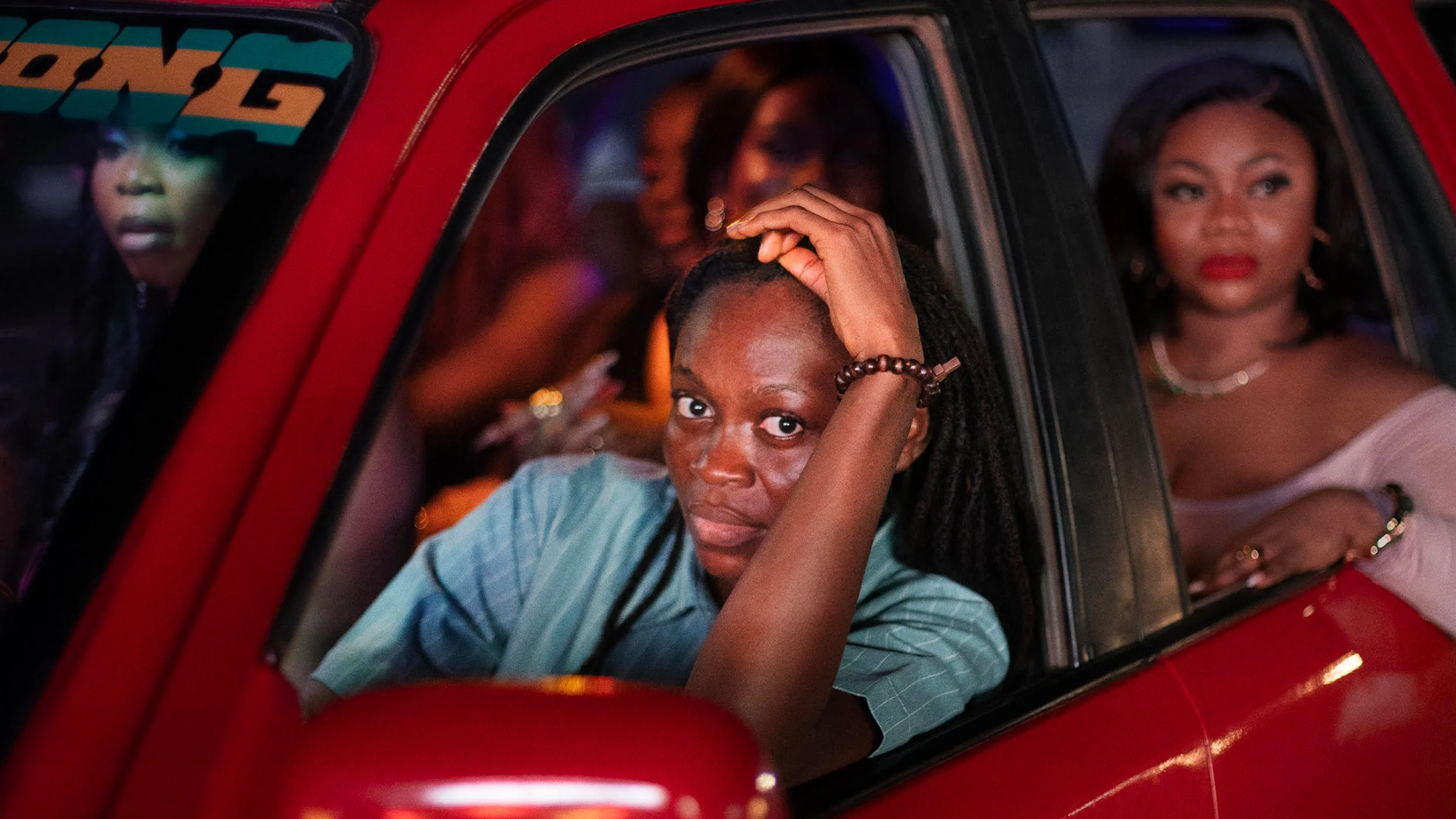
Alana Mejia Gonzalez’s cinematography is energizing, full of stunning neon colors that emphasize the nightlife in Lagos. The saturated color palette makes the red of Lady’s vehicle pop against the city’s green and blue lights. At times, the camera moves with a rich fluidity, panning and gliding seamlessly around the corners of a house or the city streets. At others, the camera remains static, creating a stillness that allows Jessica Gabriel's Ujah’s phenomenal performance room to breathe. Her gaze from behind her steering wheel could burn a hole through the screen; it carries the weight of a woman’s strength and resilience. Oliver Mayo’s score feels like a fitting nod to Bernard Herrmann’s score in Martin Scorsese’s Taxi Driver (1976), infusing the film with a jazzy rhythm.
Not only did Olive Nwosu direct the film, but she also penned the screenplay. Lady is a powerful, layered character study. As the protagonist’s bond with Pinky, Sugar (Tinuade Jemiseye), and the other sex workers deepens, the story transforms into a meaningful exploration of identity, sexuality, and sisterhood. In addition, there’s a radio show hosted by DJ Revolution that characters frequently listen to throughout the film, offering insight into Lagos's current political and economic climate. Lady’s depiction of sex work feels refreshing as the characters feel like human beings, not caricatures, and the film captures how sex work can be both exploitative and empowering.
Nwosu’s direction feels more confident and assured than her writing. For a 93-minute-long film to cover themes of identity, revolution, sexuality, feminism, and more, it’s understandable that some of the ideas explored in the film ultimately feel a little half-baked. It feels as though some of the character motivations and backstories could have been fleshed out further, as not all of the narrative threads coalesce. The film starts off incredibly strong, but the third act feels rushed. Lady is an impressive feature debut, but it left me wanting more, and I can’t wait to see what Olive Nwosu does next.
Lady is a vibrant character study and a stirring love letter to the city of Lagos. It’s a stunning feature debut from Olive Nwosu, full of stellar performances, most notably from Jessica Gabriel's Ujah. It’s a neon-drenched exploration of independence, identity, sexuality, sisterhood, and solidarity. Perhaps it could have delved deeper, but one thing is undeniable: Olive Nwosu is a filmmaker to watch.
Lady premiered at the Sundance Film Festival on January 22, 2026.