Resident Evil — Review
Source: Sony
Adapting a video game into a film isn’t easy, especially when the game in question has a dedicated fanbase hoping the film stays as faithful to the source material as possible. In fact, when word got out that Zach Cregger’s Resident Evil would include point-of-view shots, fans quickly pointed out that the first Resident Evil game isn’t played from a first-person perspective. Fans hoping for a flawless film version of the game should keep their expectations in check. Cregger’s film isn’t so much an adaptation as it is an entirely original story that happens to be set in the world of Raccoon City.
The decision to tell an original story within the game’s universe was a wise one. If you’ve ever watched someone play a video game, you know that many games are fun to play but a lot less fun to watch. What makes Resident Evil work as a game isn’t limited to its story or characters. It’s also about the feeling of exploring unfamiliar, isolated, eerie spaces, unaware of what danger might be lurking around the corner or behind the next door. The film embodies that atmosphere, along with the sense of discovery that comes from trying to figure things out and navigate a strange environment. Stylistically, it feels as close to playing a video game as possible while still being an entertaining movie.
Source: Sony
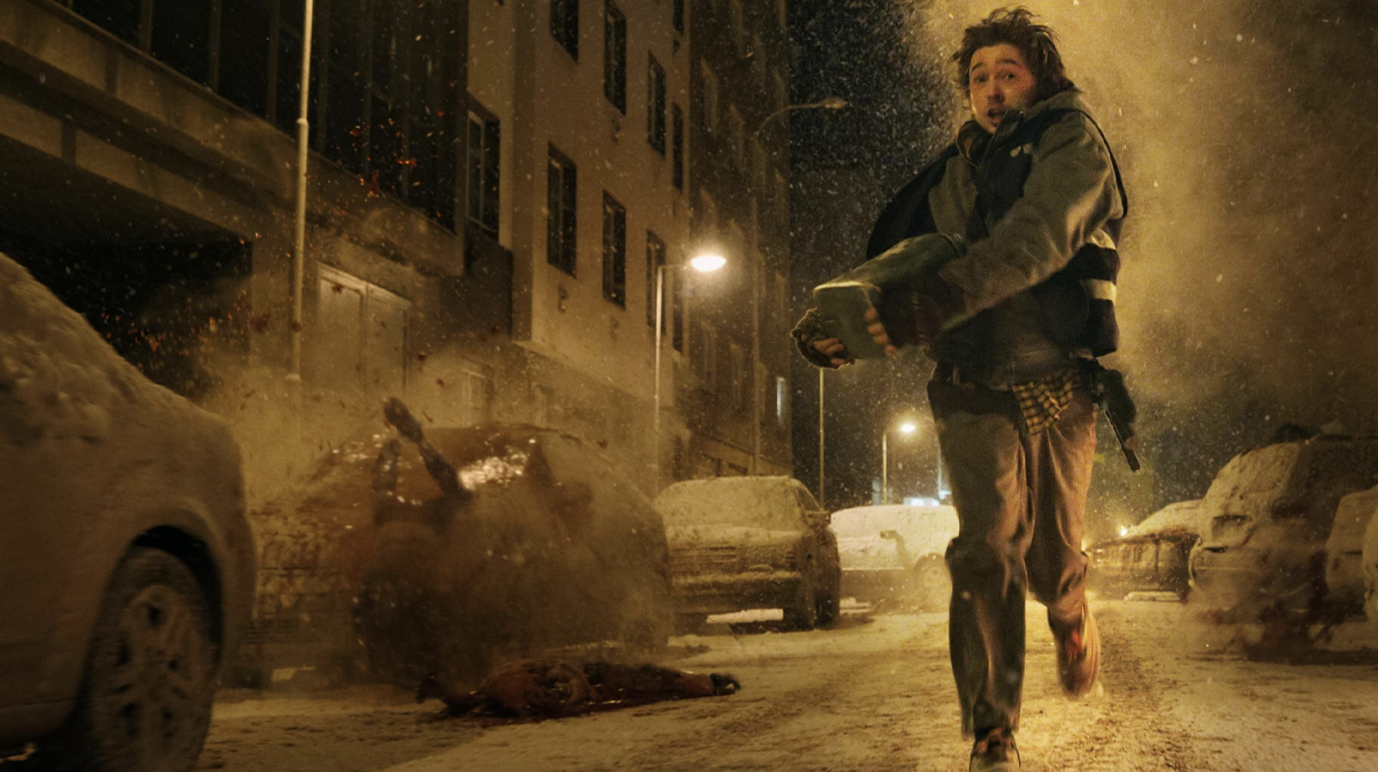
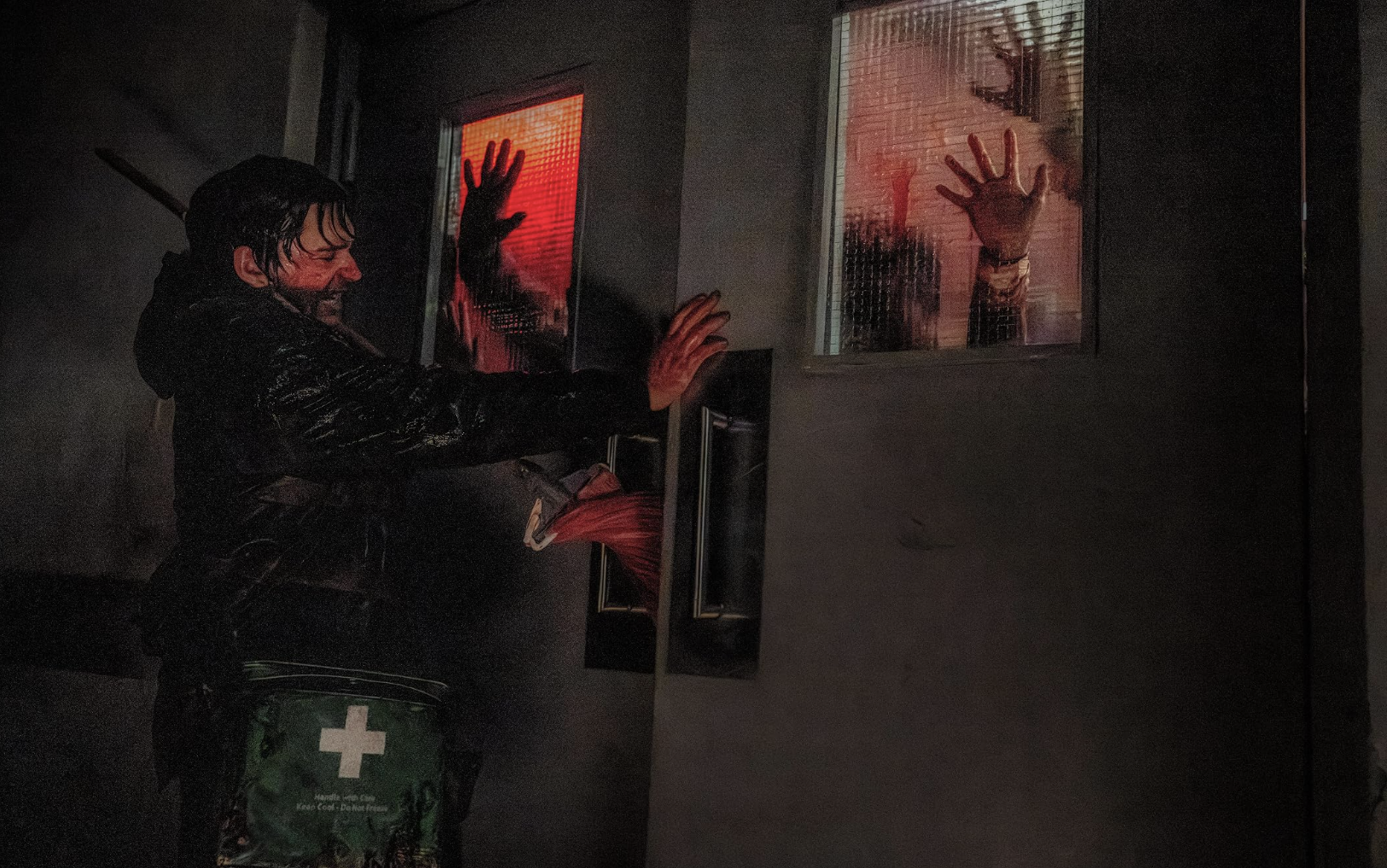
The film follows Bryan (Austin Abrams), a young man working as a medical courier who is tasked with making a delivery to Raccoon City General Hospital. Snowy conditions make his journey difficult, and things start to go horribly wrong. He quickly discovers that an unknown outbreak has plagued the city. The premise itself feels like something out of a video game, largely because it’s built around a simple, task-oriented objective: make the delivery and survive the night.
Bryan makes for the perfect video-game-inspired protagonist. He has no special skills or prior knowledge of Raccoon City when he arrives, so he has no idea what he’s getting himself into and must figure things out as he goes. He searches abandoned buildings, rummages through drawers for useful items, picks up whatever weapons he can find, and gradually pieces together what’s happening around him. He feels very much like a player navigating a game for the first time, trying to determine how to accomplish his mission and do whatever it takes to survive.
Source: Sony
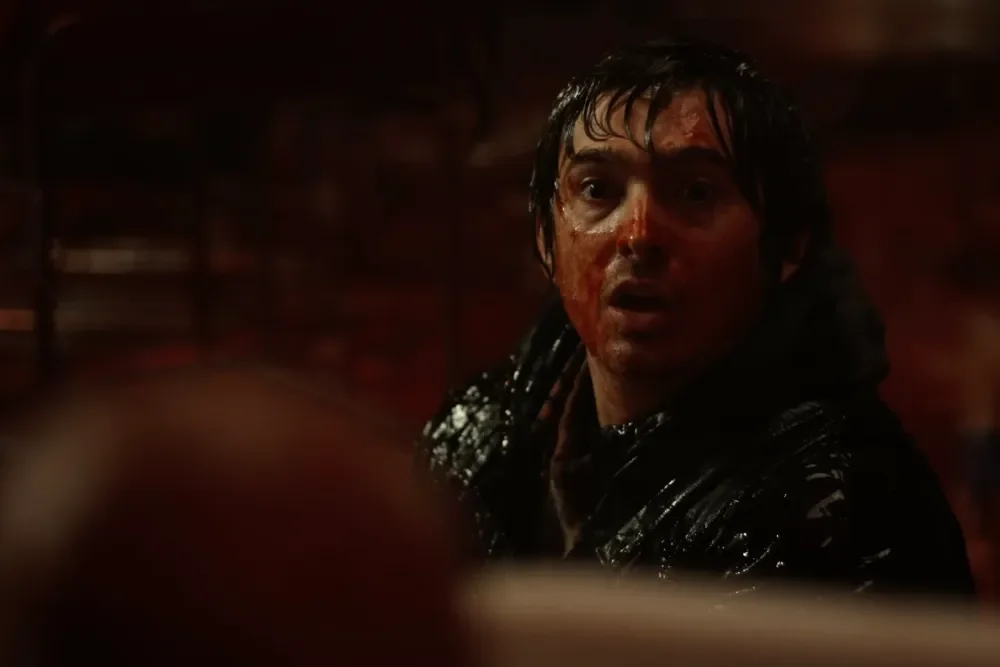
Much of what makes Bryan such an effective protagonist comes down to Austin Abrams’ performance. In fact, Abrams is the film’s greatest asset. He was my favorite part of Cregger’s previous film, Weapons (2025), but here he’s given the full spotlight as the lead in a film with very few other characters. I’ve been saying for years that he’s a talented actor who just needs to be cast in better projects, and it looks like his big break has finally arrived. He not only captures the stress and panic of being thrust into an unexpected, life-threatening situation, but also infuses the role with plenty of physical comedy and hilarious line deliveries. He brings a frantic energy to the character that accurately conveys what it’s like to be completely out of your depth. Bryan doesn’t know how to use a gun, and Abrams gets a lot of mileage out of his fumbling attempts to defend himself. After particularly terrifying encounters, Bryan will often mutter commentary to himself, turning his anxiety into some of the film’s funniest moments.

Source: Sony
Behind Abrams’ performance is Cregger’s increasingly confident direction. With each subsequent film, it’s clear he continues to hone his skills as both a writer and director. Each one is funnier, scarier, and more refined than the last. Weapons is bigger, bolder, and more creative, but I believe Resident Evil is his best film to date, though I suspect most moviegoers will disagree. It may not be as ambitious as Weapons, but it benefits from a tighter narrative and feels much more streamlined overall.
Dariusz Wolski’s striking cinematography brings Cregger’s vision to life. In addition to the point-of-view shots that evoke the experience of playing a video game, the camera movements further capture that feeling, making the viewer feel as though they’re navigating the world alongside Bryan. The lighting and use of darkness are equally effective. There are moments when Bryan opens a door only to find the room beyond completely shrouded in darkness, immediately calling to mind the doors that open throughout the video game. The juxtaposition between the quiet stillness of the falling snow and the bloody, grotesque imagery makes the violence all the more unsettling. These visuals, combined with the ominous sound design and Ryan and Hays Holladay’s pulse-pounding score, help Cregger establish an atmosphere drenched in dread. I was stressed out for every single minute of the film’s brisk 93-minute runtime. However, there’s enough humor and levity to keep the film from feeling too oppressive.
Source: Sony
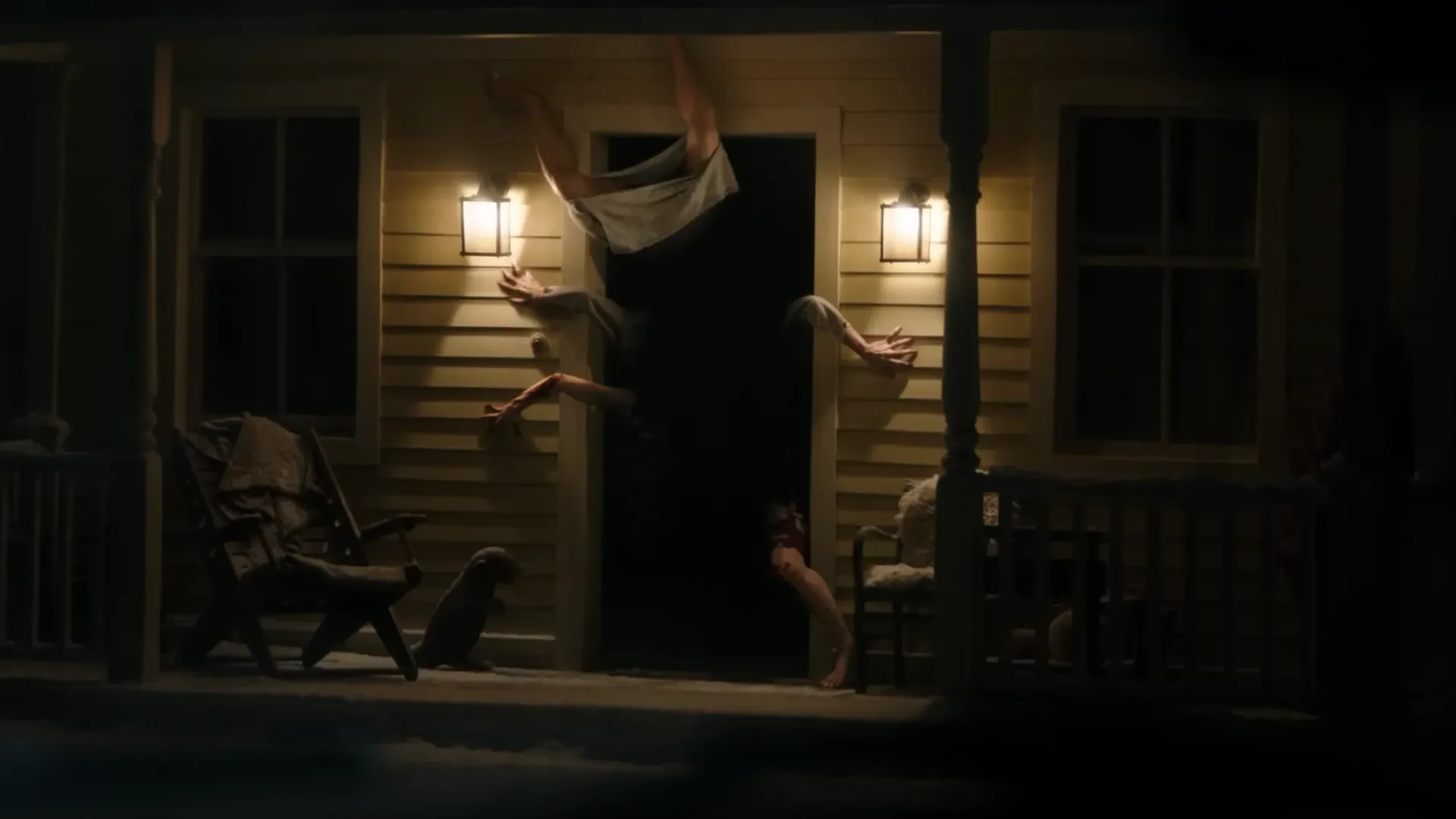
The film creates a constant sense of dread, but what makes its horror particularly effective is how it slowly builds tension. The stakes feel higher with each passing sequence, as Bryan faces increasingly dangerous obstacles and finds himself in situations that are harder to escape. Cregger avoids showing his cards too early, allowing the tension to gradually ratchet up and giving every new threat more weight. As a result, the film seldom feels predictable. We never know from one minute to the next who or what Bryan will encounter, or how much worse things could possibly get. Oddly enough, the film feels comparable to Martin Scorsese’s After Hours (1985), as both films take place over the course of a single evening and follow an ordinary guy whose night spirals increasingly out of control. Meanwhile, the creature designs and the isolated, nightmarish ambiance of Raccoon City are reminiscent of the Upside Down in Stranger Things.

Source: Sony
Ultimately, it feels as though Zach Cregger understood that the best way to bring Resident Evil to the big screen wasn’t to recreate the characters and storylines from the game, but to recreate the experience of playing it. Rather than simply adapting Resident Evil, he captures its essence and transforms it into an entertaining horror movie that’s entirely his own. It’s stressful, scary, funny, and full of surprises. It’s fitting that Austin Abrams plays a courier, because he not only carries the film but also delivers exactly what it needs in the form of a frantic, hilarious performance. For a movie about surviving a nightmarish night in Raccoon City, Resident Evil turns out to be a surprisingly fun trip.
Resident Evil hits theaters on September 18, 2026.