A Statement — NYFF Review
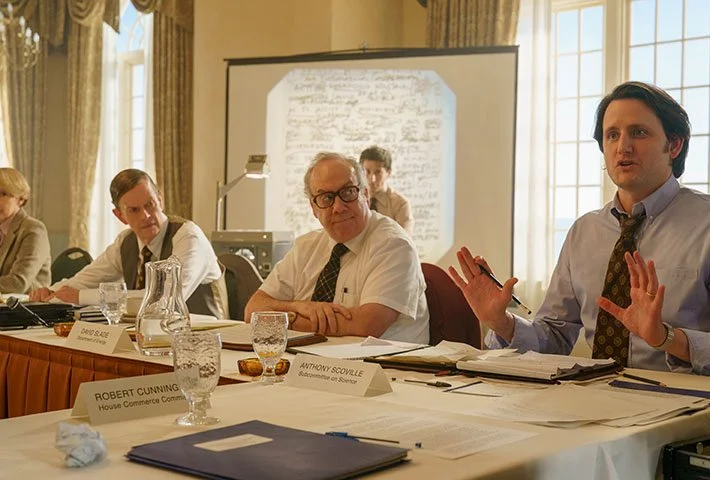
Source: Sony Pictures Classics
In 1980, a group of environmental activists, scientists, policymakers, lawyers, and other professionals gathered in St. Petersburg, Florida, for a conference with a mandate from Congress to draft a statement on how to address the effects of carbon dioxide emissions on the climate. This conference is one microcosm of Nathaniel Rich’s 2019 non-fiction book, Losing Earth, but it’s the focus of Tom McCarthy’s new film, A Statement. Based on Rich’s book and the meeting transcripts, McCarthy penned the screenplay with Thomas Bidegain and Noé Debré. What’s ironic, however, is that although the film takes its title from the meeting’s objective, A Statement itself feels much more like a dialogue. Furthermore, its urgent subject matter is likely to spark conversations among moviegoers.
The film boasts an impressive ensemble cast, including Paul Rudd, Paul Giamatti, Evan Peters, Tatiana Maslany, John Turturro, Amy Ryan, Dylan Baker, Jason Clarke, Zach Woods, Noah Robbins, and more. What’s impressive isn’t necessarily the size of the ensemble, but what each actor brings to the table and how deftly McCarthy uses those performances. No one seems like the lead; instead, they function as a collective. Paul Rudd stars as Thomas Jorling, a professor of environmental studies at Williams College who serves as the group’s moderator, and he maintains the perfect level of neutrality for the part.
Stuart Dryburgh’s cinematography reinforces that sense of collectivity, frequently favoring wide shots that keep numerous actors in the frame even when only one person is speaking. As a result, we see and hear how everyone in the room reacts to one another, allowing us to feel the subtle shifts in energy and tension within the group. Much of what makes the film so engrossing lies in those quiet moments—the glances, murmurs, and chuckles exchanged around the room. A Statement has a theatrical quality, as if we’re watching a play in which all the actors are onstage simultaneously. Yet at the same time it has a level of cinematic intimacy that lets us detect even the smallest reactions or changes in someone’s demeanor.
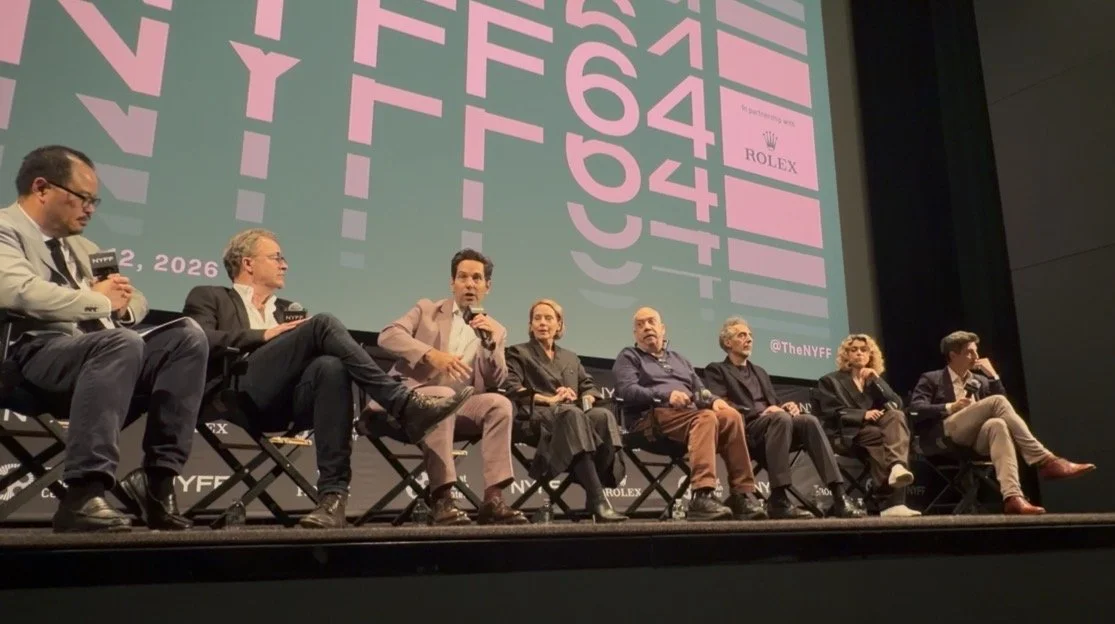
Tom McCarthy, Paul Rudd, Amy Ryan, Paul Giamatti, John Turturro, Tatiana Maslany, and Nathaniel Rich at the NYFF press conference.
It’s evident that each actor conducted thorough research in order to truly embody their character. Every person at that table feels fully fleshed out and real because we can sense that each of them has their own beliefs, experiences, and motivations. Sometimes their personalities and opinions clash, making it feel like we’re witnessing a genuine debate rather than watching actors deliver scripted dialogue. Part of the reason is that every line of dialogue spoken during the four sessions of this conference was lifted verbatim from the actual transcripts. McCarthy even incorporates excerpts from those transcripts visually on screen, adding to the film’s atmosphere of authenticity and blurring the boundary between historical record and dramatization.
The production design, hair, makeup, and costumes look true to the time period in which the film takes place, yet there’s a distinctly modern quality to the cinematography. It’s as though McCarthy is trying to remind us how timely and pertinent this topic remains to this day. This conference may have happened in 1980, but watching it unfold makes it clear how little has changed. Things have only become more urgent since then. The film has a darkly comedic tone, with plenty of wry and witty banter. The conference takes place a few days before the 1980 presidential election, and it includes numerous references to Reagan that seem very much aimed squarely at the United States of today. It’s as though McCarthy is drawing deliberate parallels between the political climate of 1980 and that of the present day. The sharp yet understated sense of humor helps to balance out the bleakness of the film’s subject matter.
Considering where the United States is currently at politically and environmentally, A Statement seems like a tough sell. Many of us are already concerned about the future of the planet, and many moviegoers go to the movies to escape a harsh reality. A Statement makes it feel like we’re in the room witnessing a piece of history in real time, but I must admit that it’s not necessarily a conversation I would personally want to witness or participate in, as the subject is grim to contemplate, even more so now than it was in 1980. While A Statement is a well-crafted and captivating film, it isn’t one I’d be eager to revisit for that very reason. Nevertheless, the screenplay and performances infuse the film with enough levity that it never becomes too heavy or didactic.
The most surprising aspect of the film is that despite depicting little more than a conversation among a large group of people, it’s never dull. In fact, it’s consistently riveting. The cinematography also gives it momentum, with the camera panning around the room and shifting our attention from one speaker to another. Bryce Dessner’s score is another highlight, helping sustain that momentum and giving the narrative palpable energy. There’s a consistent pulse or rhythm running through the music that almost resembles the ticking of a clock, creating a subtle sense of urgency as the conference unfolds.
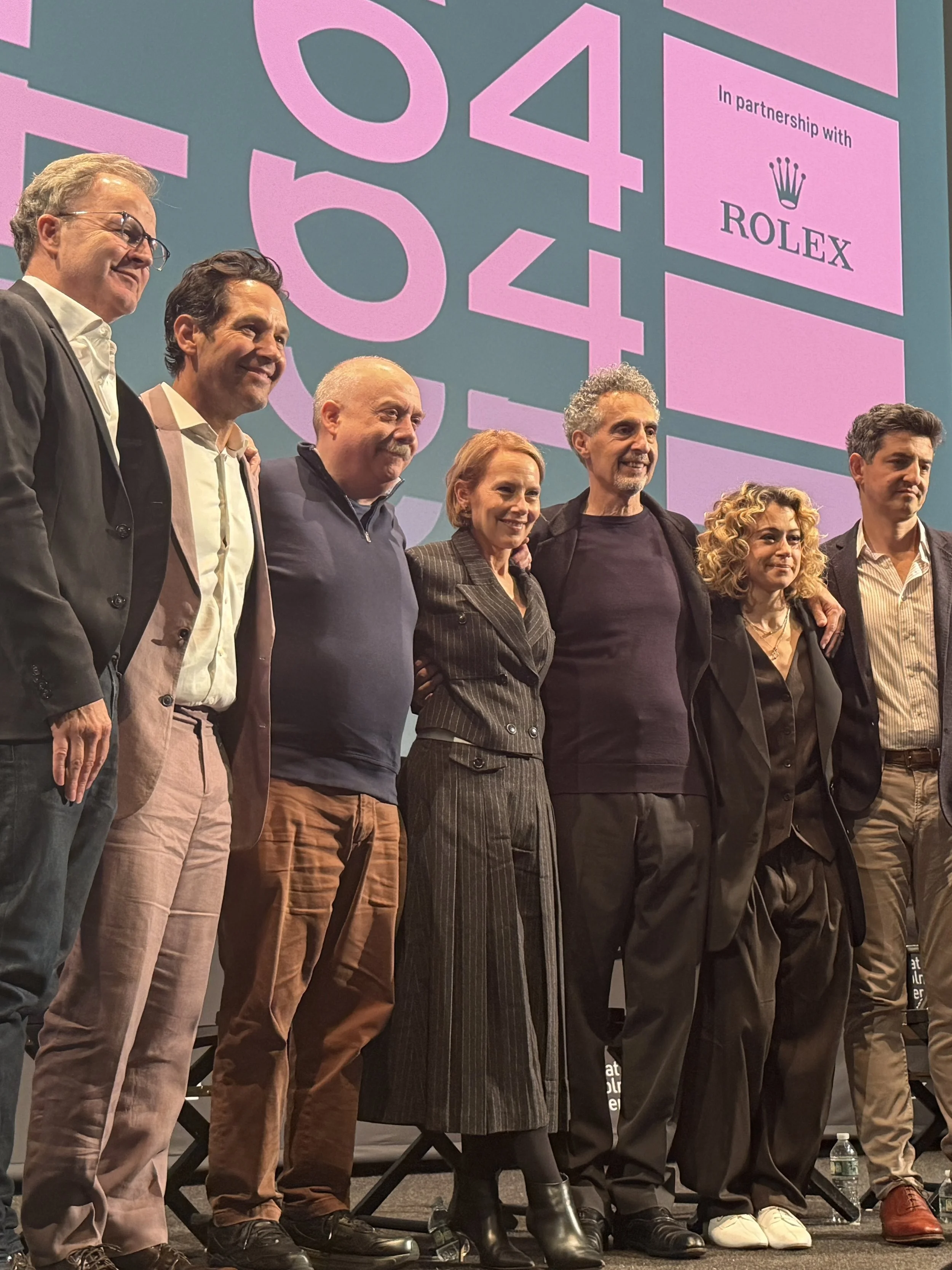
Tom McCarthy, Paul Rudd, Paul Giamatti, Amy Ryan, John Turturro, Tatiana Maslany, and Nathaniel Rich at the press conference for A Statement at the New York Film Festival on October 3, 2026.
As time goes on, climate change is a topic that is impossible to ignore, and with A Statement, Tom McCarthy ensures that audiences can’t look away from it. He takes a conversation that took place in 1980 and makes it feel like it’s happening right now, giving us a seat at the table alongside these activists, scientists, and policymakers. It’s not always an easy conversation to sit through, but the dynamic between the actors is enthralling. Their performances, combined with the dialogue derived directly from the transcripts, the witty banter between conference sessions, the fluidity of Dryburgh’s camera, and Dessner’s measured score, bring the discussion to life. The film may be titled A Statement, but what McCarthy ultimately presents us with is an ongoing dialogue—one that began in 1980 and demands our attention now more than ever.
A Statement had its world premiere at the 64th New York Film Festival on October 3, 2026.