Club Kid — NYFF Review
Source: A24
Jordan Firstman’s Club Kid is one of the strongest feature film debuts in recent years. Firstman serves as the film’s writer, director, star, and executive producer. Yet the film feels more refined than some of the recent movies from far more seasoned filmmakers. I try to refrain from being hyperbolic in my reviews, and while I understand that no film can ever legitimately be described as perfect, Club Kid is about as close to a flawless film as I think you could get. Literally the only criticism I could come up with is that its multiple sequences featuring strobe lights may make the film inaccessible to people with photosensitive epilepsy. Beyond that, I honestly cannot think of a single thing I would change about this film.
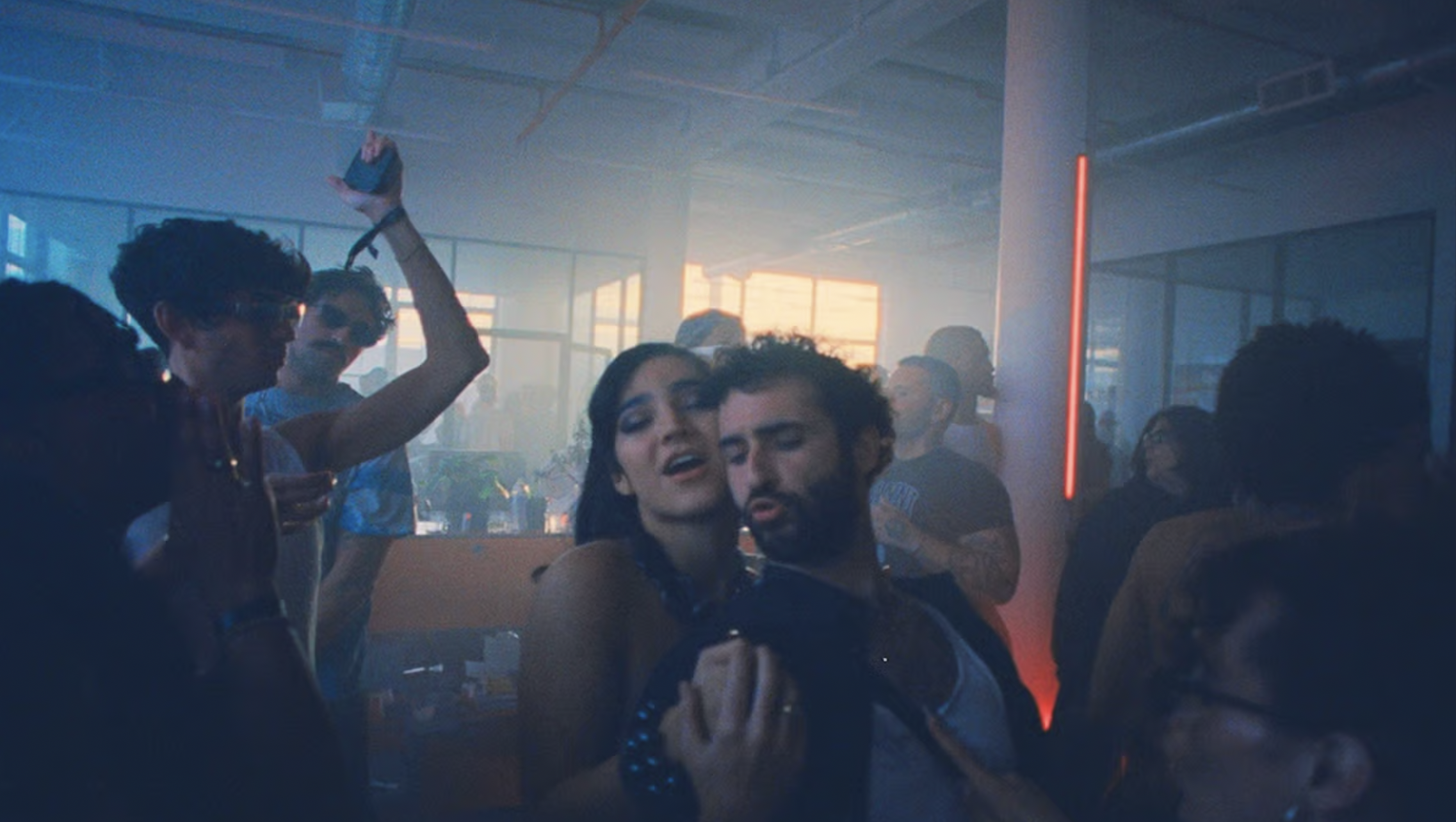
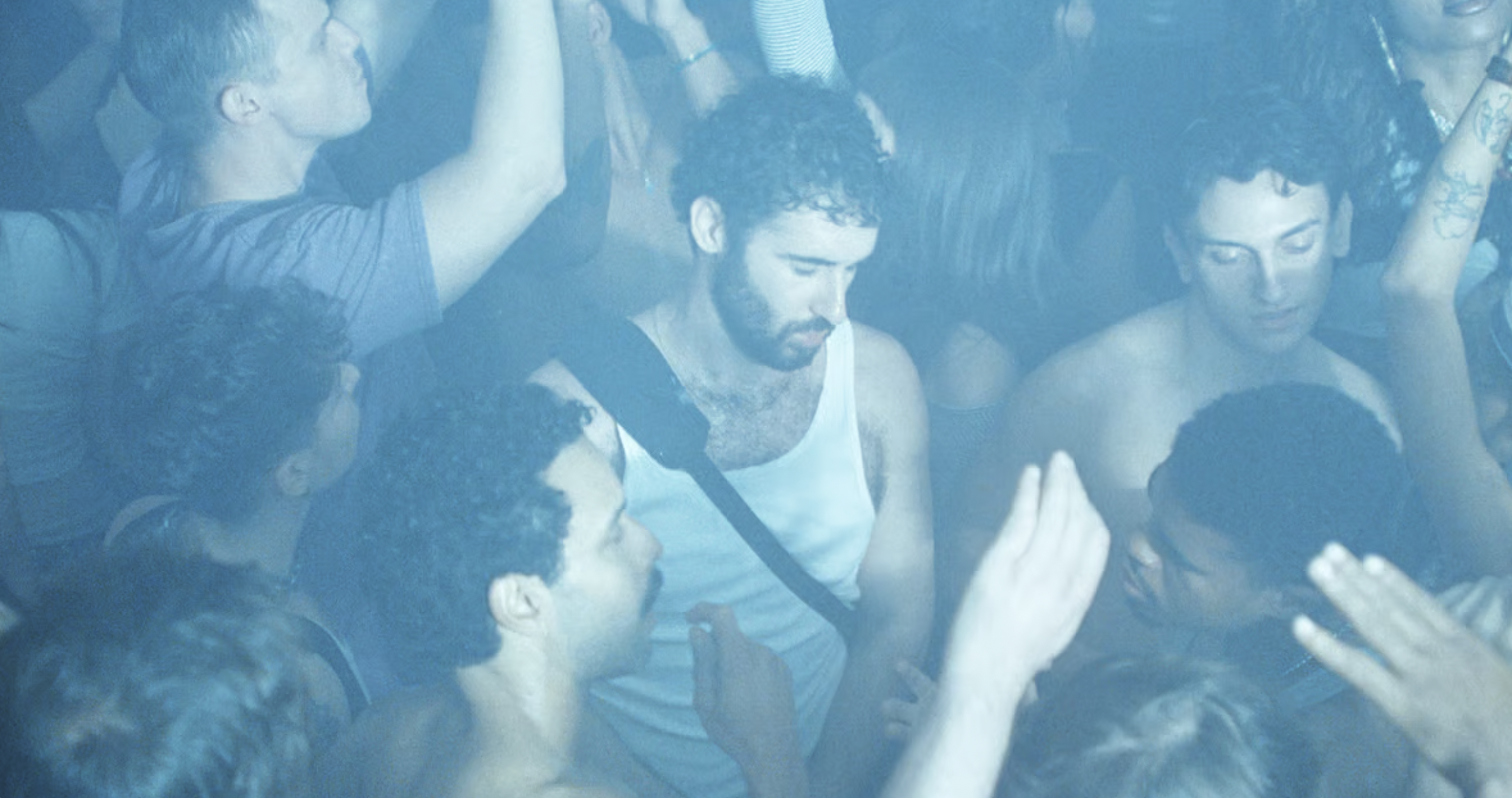
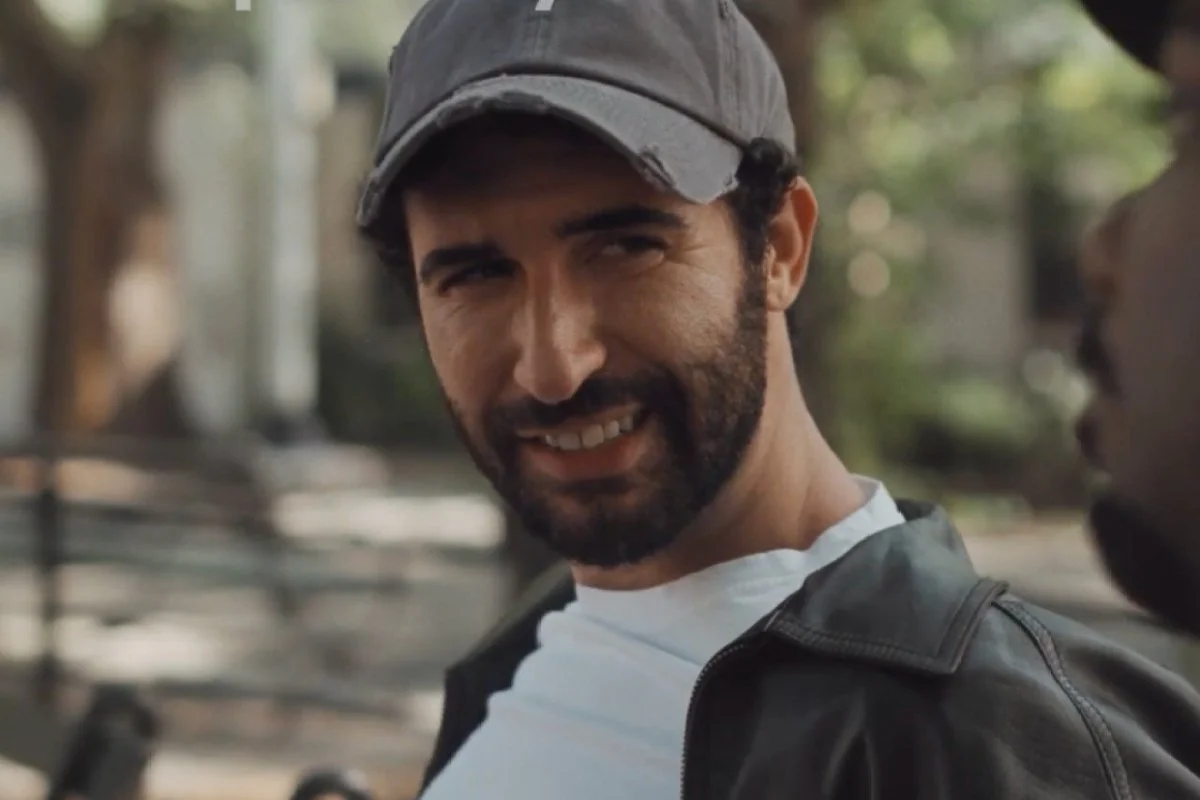
Club Kid follows Peter (Firstman), a gay party promoter living in New York City who frequently sells and gets high on drugs, much to the chagrin of his business partner, Sophie (Cara Delevingne), despite the fact that she has a similarly reckless lifestyle. His life is upended when Edison (Kirby Howell-Baptiste) shows up at his apartment with a 10-year-old boy named Arlo (Reggie Absolom) and reveals that he is Peter’s son and that his mother, who had been living in London, is no longer alive. Because Arlo’s stepfather was abusive, Edison believes Peter should take him in. Peter is therefore unexpectedly forced to take on the role of father to a child he just met.
Source: A24
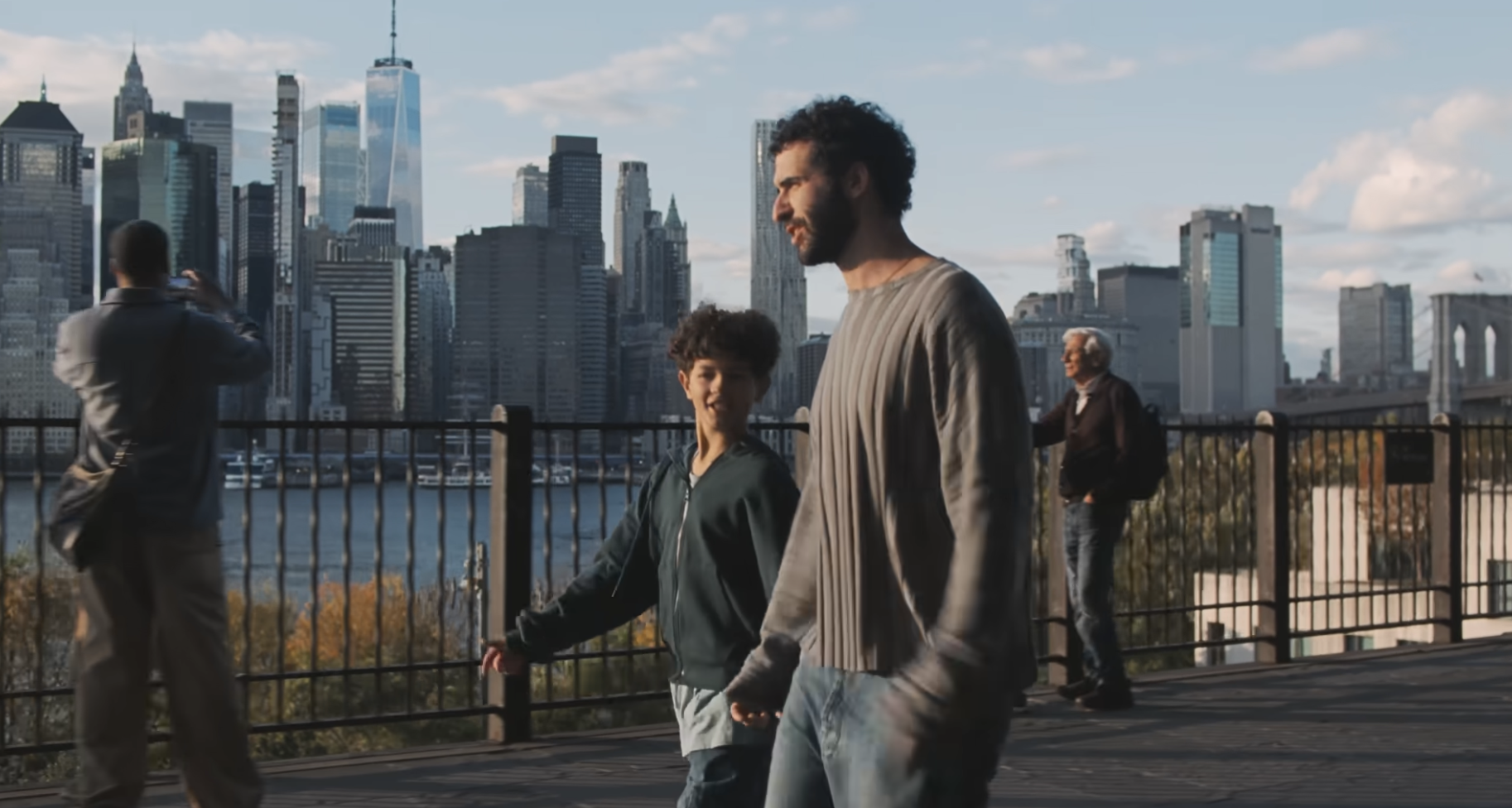
Firstman’s film feels like an amalgamation of Charlie Chaplin’s The Kid (1921), Wim Wenders’ Paris, Texas (1984), Peter Bogdanovich’s Paper Moon (1973), and Mike Mills’ C’mon C’mon (2021). Like The Kid, it centers on an adult who unexpectedly finds himself caring for a child and gradually develops a bond with him. Like Paris, Texas, it explores the complicated relationship between a father and son and the process of two people who barely know each other learning how to connect. Like Paper Moon, it involves an irresponsible man suddenly having to look out for a child he never knew he had after the child’s mother passes away. Like C’mon C’mon, it pairs an adult with a precocious child and follows the two of them as they spend time together in New York City. Yet for all its similarities to these films, Club Kid puts a queer spin on the familiar story of an unlikely parent-child relationship, giving it a perspective that feels entirely its own.
The screenplay is magnificent. The characters feel fully fleshed out and achingly human. They’re all deeply flawed yet so likable and endearing that you want to root for them despite their mistakes. No one is reduced to a stereotype. Even the supporting characters feel like fully realized people rather than characters who exist solely to advance the narrative. Take Peter’s friend Saffron (Saturn Risin9), for example, who teaches Arlo how to DJ. She isn’t simply a plot device or an extension of Peter’s story. She feels like a real person with her own life and narrative arc beyond her relationship with Peter and Arlo. Even Oscar (Diego Calva) feels like more than just a love interest for Peter, and his storyline feels deeper than a haphazardly inserted romantic subplot. The characters may have messy, complicated relationships at times, but they always feel authentic.
Source: A24
Moreover, the screenplay consistently subverts expectations and clichés. A lesser film might have Peter repeatedly slip back into his old habits before some dramatic incident finally forces him to change. Instead, his life is drastically altered by the presence of his son, and he constantly pushes himself to do and be better for Arlo’s sake. It’s a beautiful and inspiring story about how becoming responsible for another person can give someone a reason to change. Early in the film, Peter reveals to Arlo that he doesn’t have the highest self-esteem, and it becomes clear that his reckless partying stems from not liking himself. What makes his transformation so moving is that once he starts to genuinely care about Arlo, he realizes that he needs to take care of himself so he can be there for his son. It reminded me of Julien Baker’s song “Hurt Less,” particularly the lyric “This year I've started wearing safety belts / When I'm driving / Because when I'm with you / I don't have to think about myself / And it hurts less,” because it expresses this idea that caring for another person can finally push you to care about yourself. The comparison feels particularly fitting because Peter’s journey is ultimately not just about learning how to be a father, but learning that his own life has value, too. Despite how Club Kid subverts expectations, one could argue it follows a fairly predictable trajectory—however, any anticipated beat lands with such sincerity that it’s incredibly effective and never feels contrived. Every emotional moment feels earned.
It’s obvious that so much care and thought went into crafting this film, even down to the smallest details. Early in the film, it’s revealed that Arlo can’t digest dairy, so later, when we see the duo eating cereal, Firstman includes a shot of the milk carton in the frame, making it clear they’re using oat milk instead of cow’s milk. In addition, too many movies set in New York have characters living in huge apartments they could obviously never afford, but here the dialogue naturally divulges that Peter lives in a rent-controlled apartment passed down to him after his mother died. These may seem like insignificant details, but filmmakers often overlook them. Perhaps my favorite example, though, is the animation of the title card and opening credits. The words and names first appear on screen in a blurry font before gradually coming into focus, subtly mirroring Peter’s character growth. His story starts in a drug-induced haze and gradually crystallizes as he finds a sense of purpose. It’s a small creative choice, but it encapsulates Peter’s entire arc before the film has even really begun. Within the first few seconds, it signaled to me that an extraordinary amount of love and passion had been poured into this project. In fact, much of the beauty of this film lies in its subtle details. Even something as simple as the time on Peter’s alarm or whether he answers a phone call is enough to convey character growth.
Source: A24
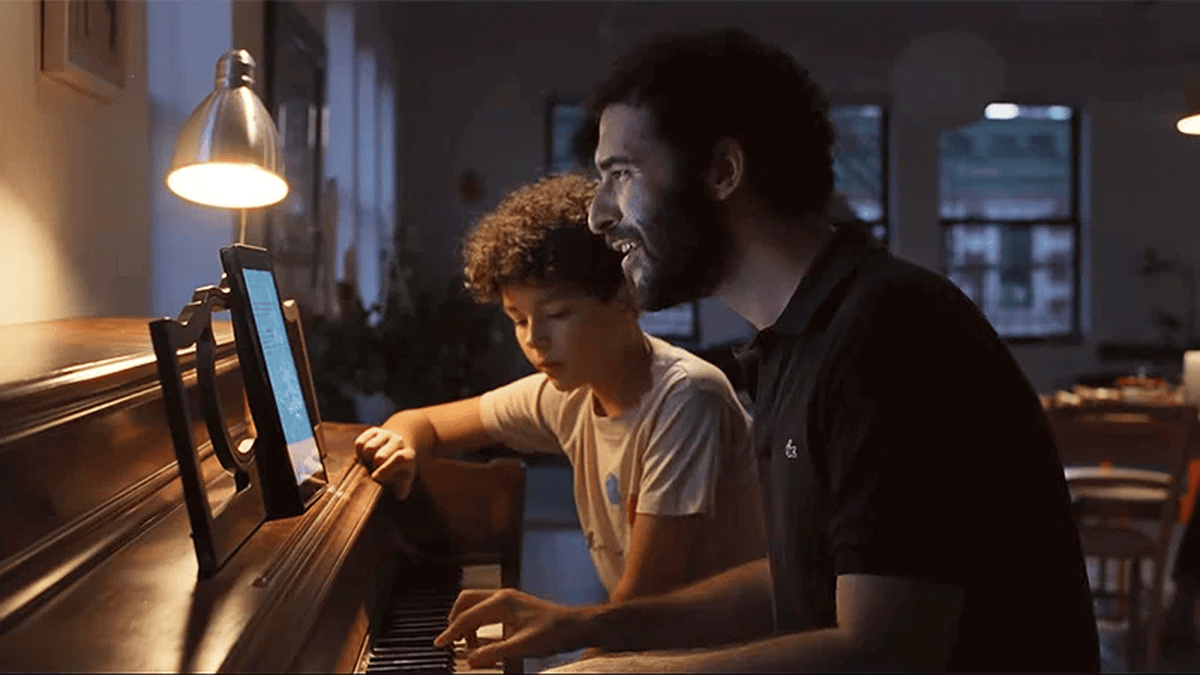
Cinematographer Adam Newport-Berra, who won a Primetime Emmy Award for his work on The Studio, brings an equally meticulous eye to Club Kid. His frequent close-ups lend the film an atmosphere of intimacy. During the first act, the close-ups and frenetic camera movements create a feeling of claustrophobia and chaos, reflecting how little direction Peter’s life has and how overwhelming Arlo’s sudden arrival is. As Peter and Arlo begin to bond, the camera becomes more still and the close-ups less extreme, as if to signify that Peter is finally able to zoom out and see the bigger picture. In one of the film’s most stunning moments, Peter and Arlo play the piano together as the camera slowly zooms out. The shot visually captures how much his life has changed. What initially felt chaotic and out of control has gradually given way to a newfound tranquility full of love and connection.
Source: A24
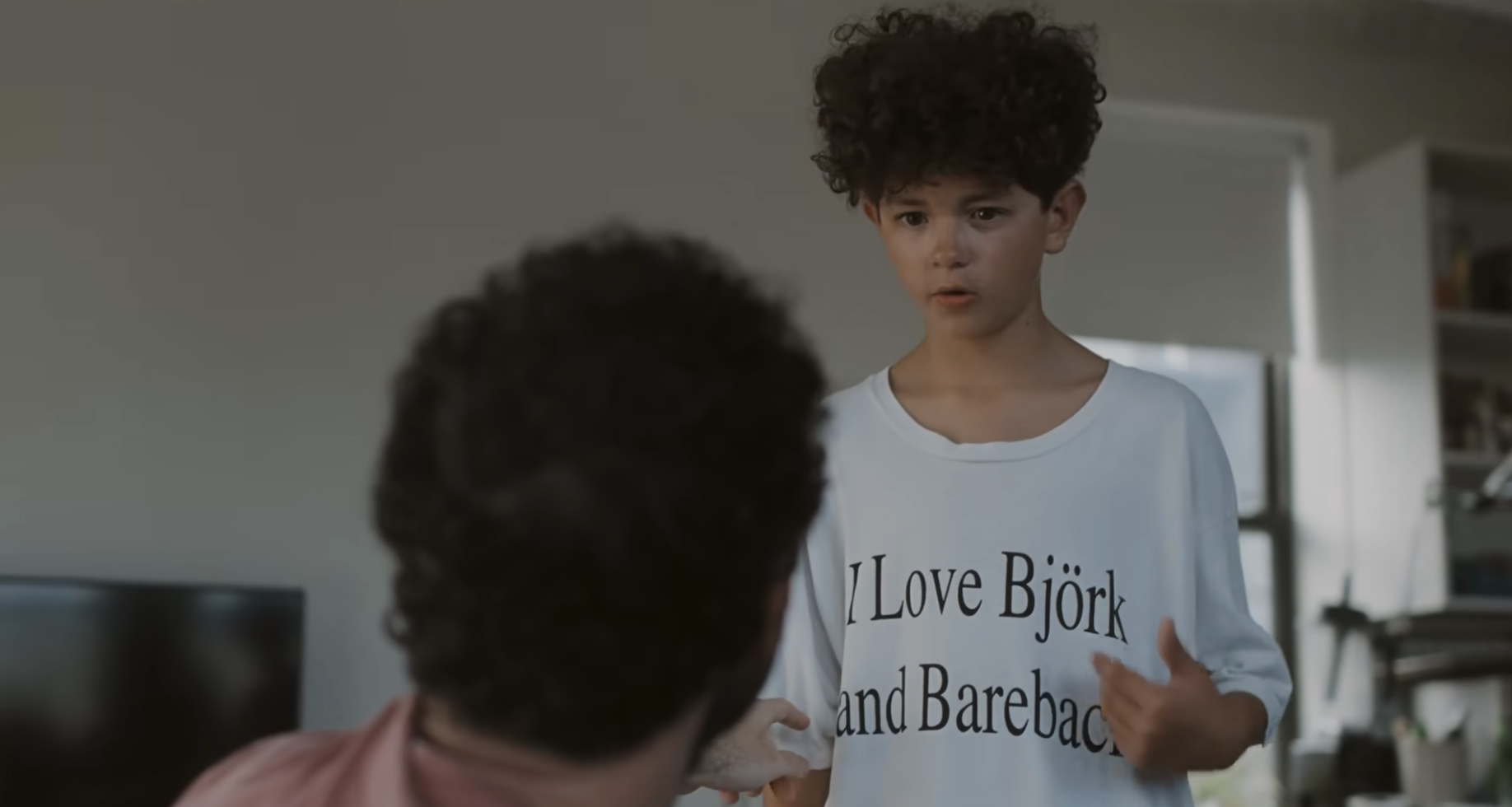
Cristobal Tapia de Veer’s score strikes the perfect balance between the film’s high-energy party scenes and its softer, more emotionally intimate and delicate moments. While the music complements the narrative’s emotional beats, it never feels forced or manipulative. The film never dictates how we should feel. Instead, it simply presents these characters and their stories without judgment, allowing us to experience their emotions for ourselves. The needle drops are also incredibly compelling, and not simply because the film is set against the backdrop of New York City’s club scene. There’s a delightful juxtaposition between the house music that accompanies the nightlife and the music that Peter and Arlo bond over. Arlo mentions being a fan of Cocteau Twins and Massive Attack, and when they’re out shopping, he asks if he can get an Elliott Smith record. When Peter tells him he can’t wear his shirt, which humorously reads “I love Björk and bareback,” Arlo retorts, “Why? I like Björk.” This child clearly has exceptional taste in music, and the film’s soundtrack reflects that. These musical choices do more than establish Arlo’s personality; they become another way for him and Peter to connect, as they share a Spotify playlist they each add songs to. It’s a small but meaningful detail that shows how music becomes part of the language they use to understand one another.
The performances are phenomenal. Typically, when a director makes their feature debut, it’s wise to cast someone else as the lead instead of trying to write, direct, produce, and act themselves. Yet Firstman brings this character to life with astounding authenticity. Reggie Absolom is incredible as Arlo, and the chemistry between them is one of the film’s greatest strengths. Their relationship feels completely natural, with their interactions capturing both the awkwardness of two people who barely know each other and the genuine affection that gradually develops. Their rapport is so convincing that it’s easy to get swept up in the story and completely buy into the evolution of their relationship. Even the supporting performances shine, and every relationship feels real. They have their own chemistry with Peter and with one another, making the world of the film feel like a real community rather than a collection of characters who exist solely to serve the protagonist. Club Kid boasts an eclectic ensemble and remarkable LGBTQIA+ representation, without it ever feeling shoehorned in. The characters’ identities are simply part of who they are, not something the film feels the need to constantly highlight.
Taylor Levy and Sofia Subercaseaux’s editing is wonderfully efficient. There’s not a moment in the film that drags, and the scene transitions feel carefully thought out. For example, during a club scene, strobe lights repeatedly plunge the screen into darkness. Instead of simply fading to black to transition to a new scene, the film uses one of those moments of darkness between the flashes to transport us to a new time and place. The transition is so seamless that it helps immerse the viewer in the story. At 122 minutes long, the film never overstays its welcome. In fact, I loved the world and characters that Firstman constructed so much that I would have happily spent another hour with them. Part of me was disappointed when the end credits began to roll because I adored the film so much that I didn’t want it to end.
Source: A24
It’s almost ironic that Peter starts off the story with such a lack of self-esteem, because Firstman himself displays remarkable confidence in his storytelling, characterization, and direction. Club Kid announces Firstman as a filmmaker to watch, and it’s the type of film that excites me about the possibilities of independent cinema and what future filmmakers can accomplish. Club Kid feels like the closest we’ve got to a modern-day version of Charlie Chaplin’s The Kid (1921), a film that’s endured for over a century and one I often cite as one of the best examples of storytelling. Like Chaplin, Firstman understands that the most powerful and poignant stories don’t need to be complicated or overdramatic to be deeply moving. It’s a simple story about an unexpected bond between parent and child, but he finds so much tenderness, humor, and humanity within that premise. Firstman delivers this timeless setup with a distinctly contemporary, queer perspective, ensuring Club Kid finds the ideal balance between fresh and familiar. It's not only an extraordinary feature debut, but an extraordinary film in general. People often say you have to learn to love yourself before you can love someone else, and Club Kid proves that false. It’s a bittersweet, beautiful portrait of parenthood and finding your purpose, demonstrating how being responsible for another person and loving them can finally push you to love and take care of yourself in the process. It’s a transcendent, tremendously affecting film, and I adored every single second of it.
Club Kid will have its New York premiere at the 64th New York Film Festival on October 3, 2026.