Possible Love — NYFF Review
Source: Netflix
The title of Lee Chang-dong’s first film in almost a decade feels somewhat misleading. Possible Love suggests a simple love story, but in reality, it delves into something far more complex. The film draws inspiration from Krzysztof Kieślowski’s Dekalog (1989) and even opens with the commandment: “Thou shalt not covet.” Yet to call this a story about envy would also be far too reductive. Instead, Possible Love is a richly nuanced character study and an understated examination of class divisions, desire, and the subtle tensions that emerge between people from vastly different circumstances.
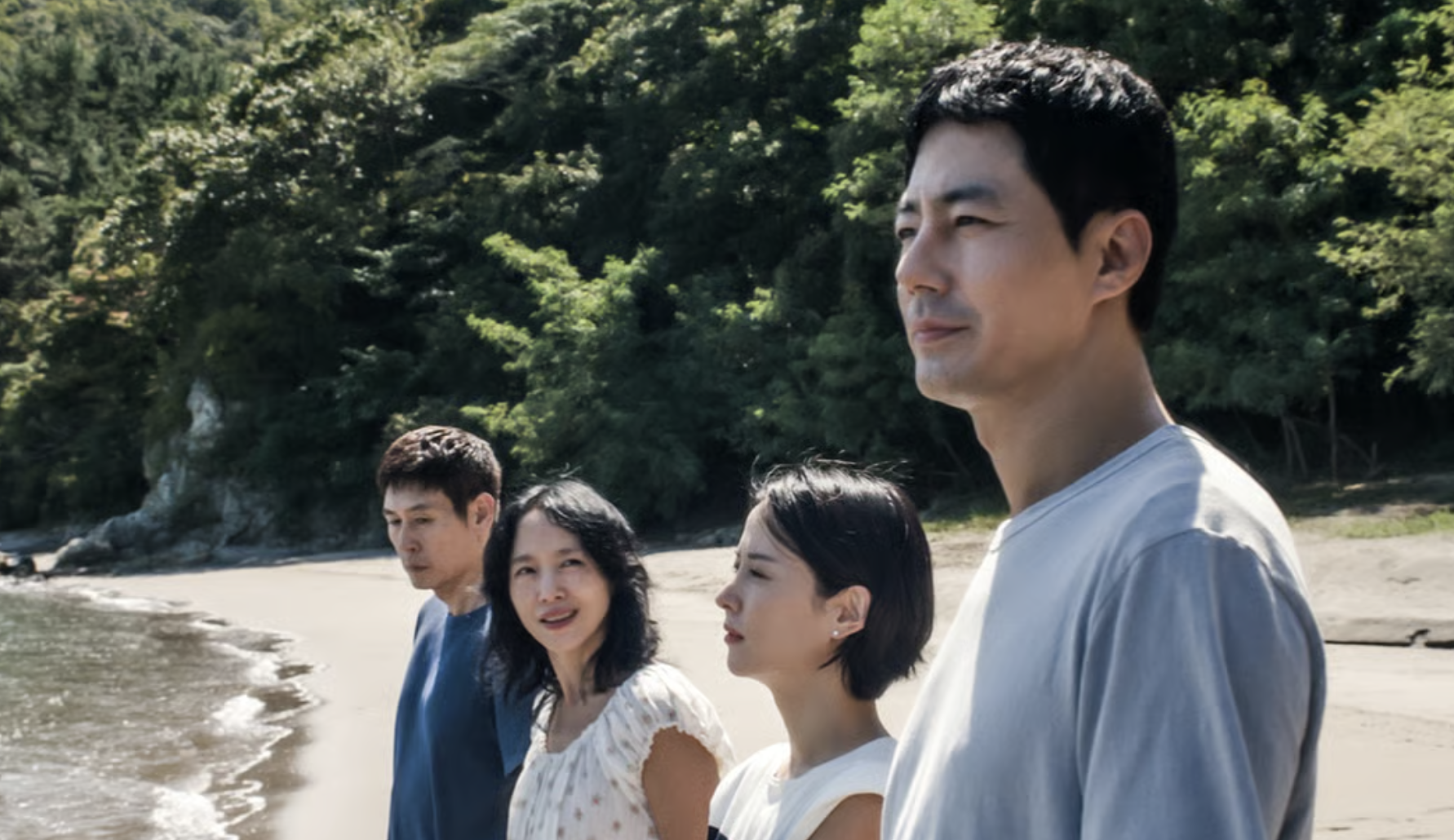
The film follows Mi-ok (Jeon Do-yeon), whose husband, Ho-seok (Sul Kyung-gu), was recently laid off from his job at SP Industries. The couple meets documentary filmmaker Ye-ji (Cho Yeo-jeong) and her wealthy husband, Sang-woo (Zo In-sung). Ye-ji is working on a documentary about labor and believes Ho-seok would make a compelling subject. Ho-seok, however, is far more resistant to being interviewed than his wife. The two couples gradually spend more time together as Ye-ji tries to befriend the subjects of her documentary.
Source: Netflix
Possible Love is a difficult film to describe. Despite its sprawling 164-minute runtime, relatively little happens in terms of conventional plot points. Yet beneath its deliberately slow pace, there is a great deal happening. This is the type of story that slowly simmers: tensions are constantly building, details about the characters slowly rise to the surface, and relationship dynamics shift. Even the smallest interactions eventually take on greater meaning. It always feels as though the film is building toward something, while its characters often behave in unpredictable ways. Their motives are not always immediately clear, and the only way to understand them is to keep watching as the story patiently unfolds.
Kim Ji-yong’s cinematography and the work of sound designers Han Myung-hwan and Lee Seung-cheol work in tandem to create feelings of distance or intimacy. Early in the film, for example, Mi-ok loses her ring, and Sang-woo tries to help her find it using his headlights. The camera remains inside the car, watching the two characters search for the ring through the windshield. At the same time, the audio is muffled, as if we are truly observing the scene from inside the vehicle. A similar technique is implemented later at a restaurant, when a family sings “Happy Birthday.” The camera observes from outside the restaurant, with the sound barely audible through the glass. It’s as though Lee Chang-dong is intentionally keeping the audience at a distance in these moments, reminding us that we are merely passive observers watching from the outside.
Source: Netflix
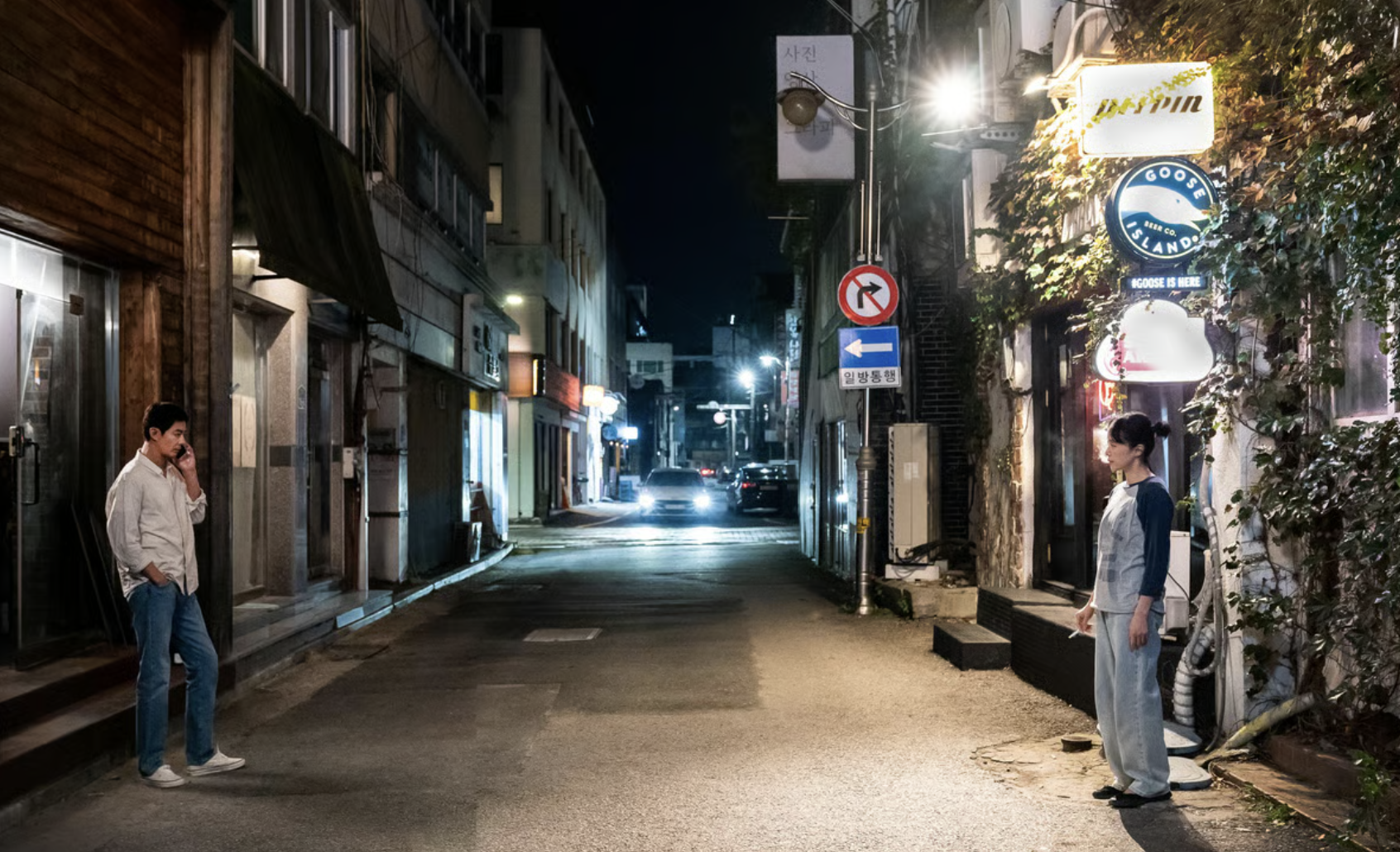
This idea of observation ties in with the film’s themes of privilege and art. At the beginning of the film, Ye-ji and Sang-woo’s wealth is not explicitly stated, but the film provides plenty of hints. Ye-ji finances her films herself rather than relying on her husband’s money, yet even her clothes suggest a level of wealth that contrasts sharply with Ho-seok and Mi-ok’s circumstances. There is also a cruel irony to the documentary she is making. Ye-ji is interested in documenting the struggles of people like Ho-seok, seemingly in the hope that her film might make a difference, while her own family has the means to help the family struggling right in front of them. At one point, a character makes a particularly revealing comment, “You’re different from those people, but you yourself believe you’re the same.” This line captures the contradiction at the heart of Ye-ji’s relationship with her subjects. She may genuinely empathize with their struggles, but she is still privileged enough to observe them from a distance and transform their experiences into art. In that sense, she is a passive observer, much like the audience. We can watch their difficulties, empathize with them, and feel moved by them, but we are still outsiders looking in.
Source: Netflix
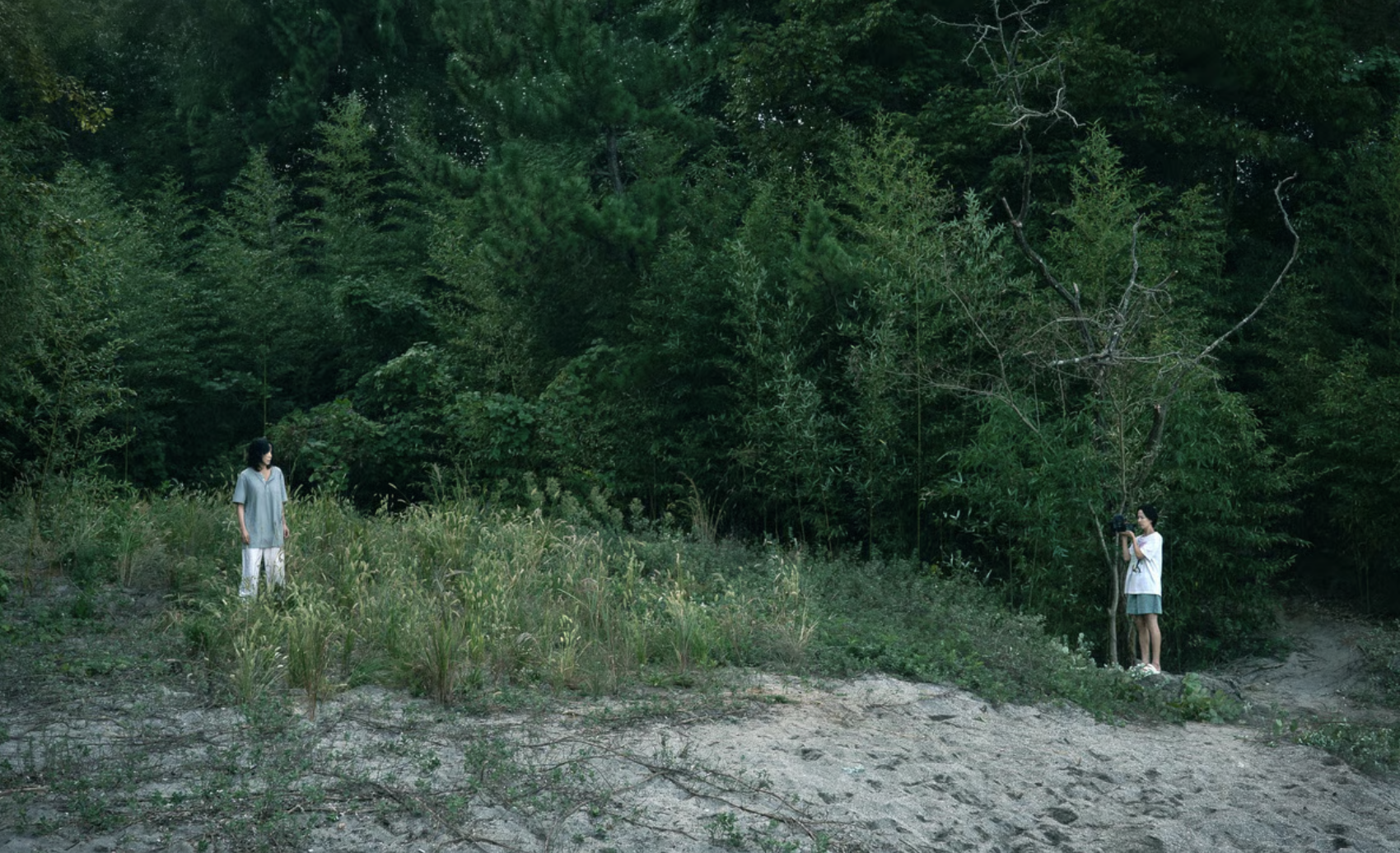
The cinematography reinforces this idea by drawing attention to the act of filmmaking itself. At times, Ye-ji’s camera is visible in the frame; at others, the film shows us exactly what her camera is recording. By making us conscious of the camera, and of our own role as viewers, it’s as though the film is asking us to consider the ethics of turning someone else’s pain into art. In an interview with Variety, Lee Chang-dong even stated, “When we deal with the lives of other people, are we worthy of telling their story, and are we not only using it for our own purposes?” This question lies at the heart of Possible Love, inviting us to contemplate where the lines are drawn between empathy, entertainment, and exploitation. It raises a series of thought-provoking questions: How essential is art when other people are barely surviving? Can telling someone’s story genuinely help them, or does it simply turn their hardships into something for others to consume? Can a filmmaker ever truly remain detached from the people they are documenting? Should they remain detached? And as viewers, are we any different when we sit back and watch someone else’s struggles unfold on screen?
That question of how we engage with other people’s suffering also extends to the film’s treatment of unemployment. Compared to Park Chan-wook’s No Other Choice (2025), Possible Love’s exploration of job loss is far more subtle. This film does not have that same bite or rage, but rather a gentle melancholy. Ho-seok even remarks that he refers to the people who are still employed at SP Industries as “the living” and those who have lost their jobs as “the dead.” To anyone who hasn’t experienced job loss, this might seem extreme, but in the world we currently live in, it feels painfully accurate. Everyone needs a source of income to survive, and when someone loses their job, it can feel as though they have lost much more than just a paycheck. Their sense of security, purpose, and place in society often disappears along with it.
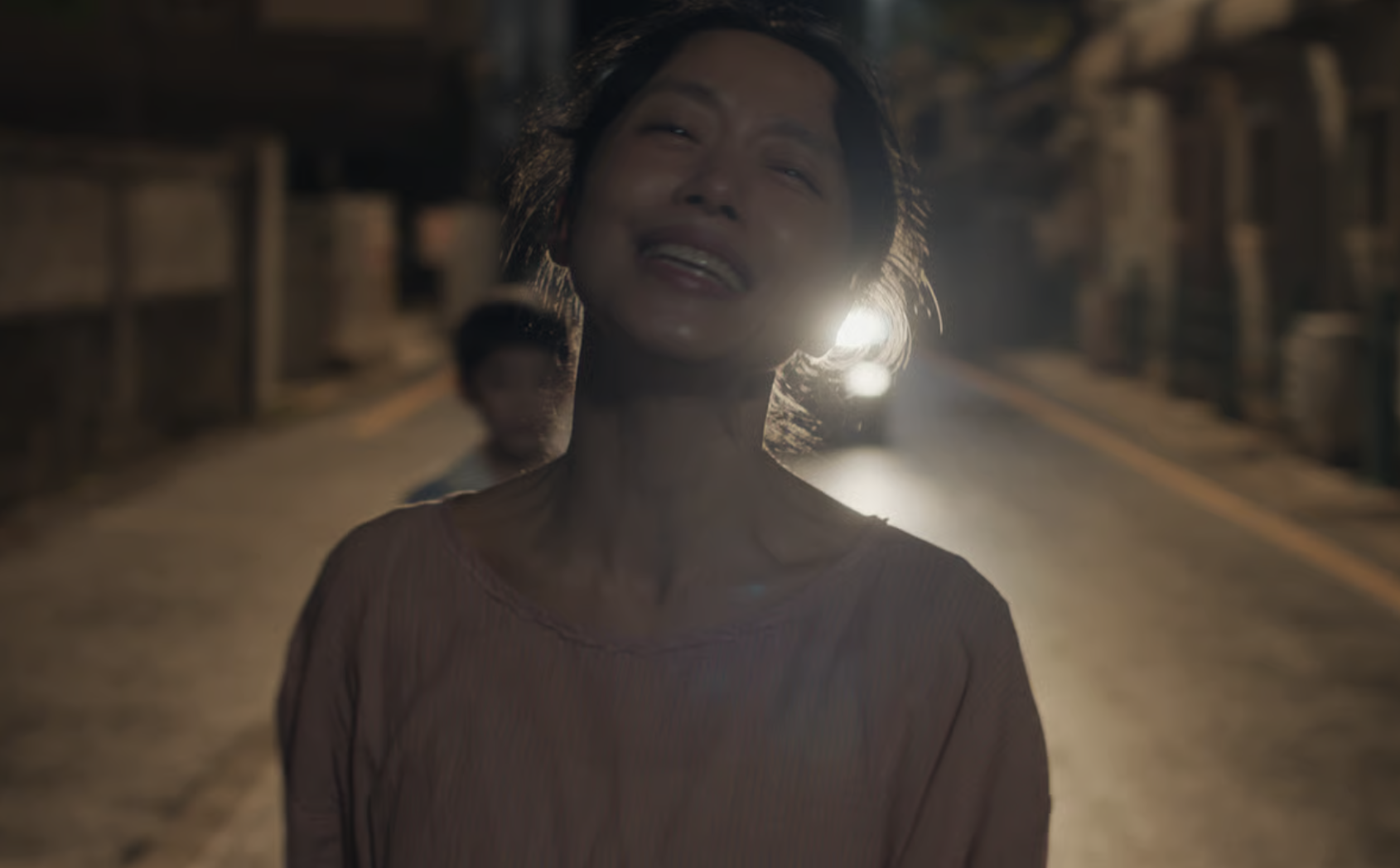
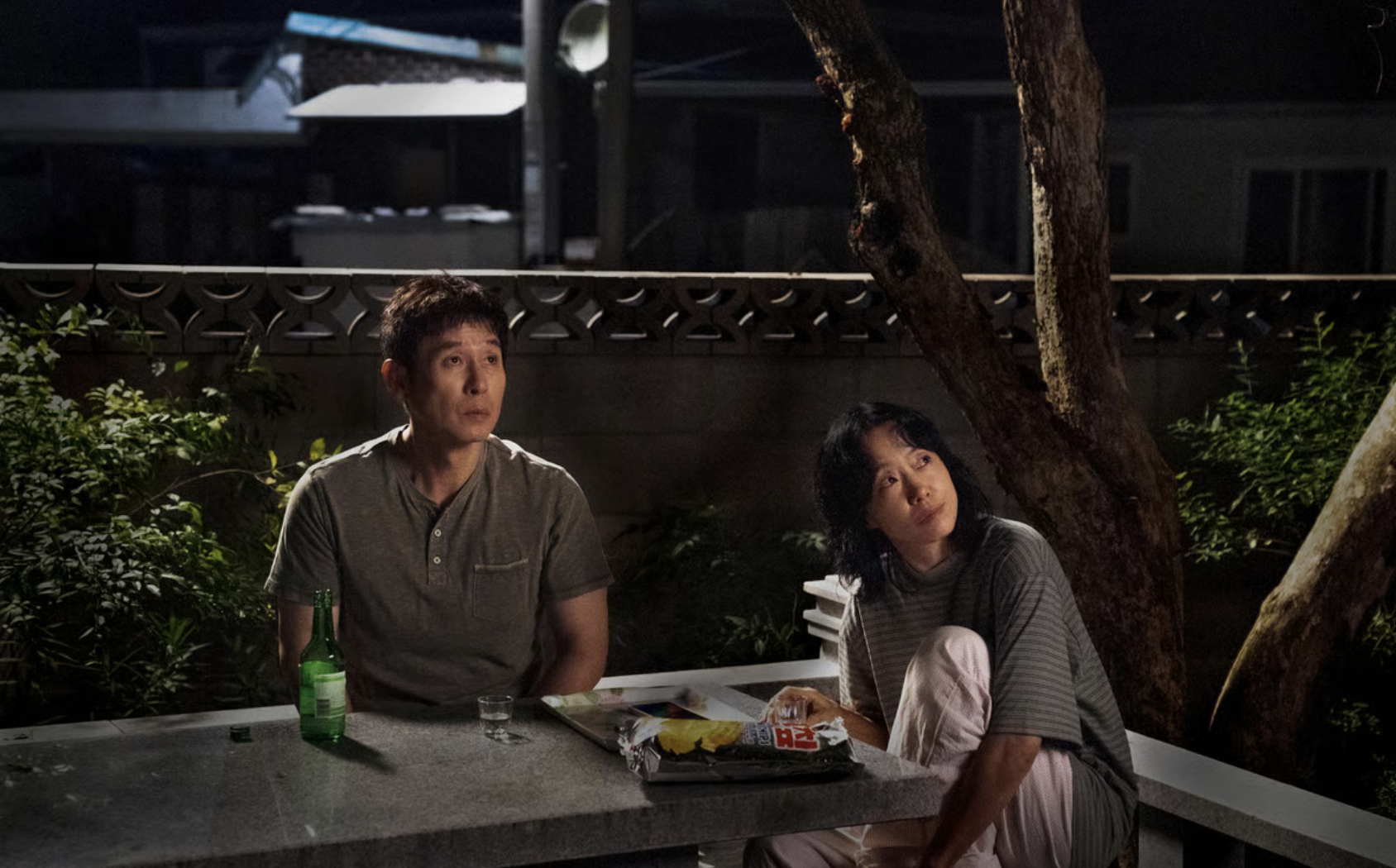
The four lead performances are among the film’s greatest assets. Jeon Do-yeon delivers an incredibly layered performance, revealing new sides of Mi-ok as the story unravels. Sul Kyung-gu embodies the quiet sadness of a man whose dignity has been stripped away by his former employer. As Ye-ji and Sang-woo remark, “his eyes are so sad.” Even before he is willing to open up about his situation, his pain is evident in his expression. Much like her role in Bong Joon-ho’s Parasite (2019), Cho Yeo-jeong once again plays a wealthy woman who seems somewhat disconnected from how the other half lives. Yet here, she displays a far greater sense of empathy. Zo In-sung, meanwhile, conveys Sang-woo’s enigmatic yet charismatic persona with ease, bringing an intriguing ambiguity to the character. It’s the shifting dynamics between the characters and the subdued tensions simmering beneath their interactions that keep the film fascinating from start to finish.
Source: Netflix
Ultimately, the “love” in the title Possible Love seems to be less about romantic love than about the possibility of human connection. Can we truly connect with people whose circumstances differ drastically from our own? Can we empathize with them and understand their pain, or will there always be a distance between those who experience hardship and those who merely observe it? Lee Chang-dong offers no easy answers, but that ambiguity is precisely what makes Possible Love so captivating. It’s a nuanced meditation on class, privilege, art, and empathy. There’s a deep sorrow that permeates the film, yet there is something undeniably beautiful in the notion that, no matter how different our lives may be, we’re all still looking at the same moon in the sky.
Possible Love will have its U.S. premiere at the 64th New York Film Festival on September 27, 2026. It will be released theatrically on October 23rd, followed by a Netflix release on November 6th.